Chernobyl Mushrooms to Protect NASA Astronauts: Revolutionary Discovery.

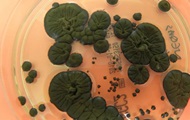
According to Korrespondent.net: NASA is interested in the unique properties of mushrooms found in the Chernobyl Exclusion Zone. These mushrooms are capable not only of surviving radiation but also of using it as a source of energy. This could represent a new frontier in protecting astronauts from cosmic rays during long missions.
Discovery of Mushrooms in Chernobyl
The first radiation-resistant dark mushrooms, Cladosporium sphaerospermum, were discovered in 1997 as a result of research by Ukrainian mycologist Nelly Zhdanova. These mushrooms colonized the most hazardous zones inside the damaged reactor No.4, where levels of ionizing radiation were extremely high.
Research and Results
Further studies showed that mushrooms not only endure radiation but even exhibit an attraction to it. Their pigment melanin plays a key role in this process. For instance, an experiment in 2007 established that under the influence of radioactive cesium, the mycelium grew 10% faster compared to control conditions. This phenomenon has been termed radiocynthesis, as the mushrooms use radiation as a source of energy.
Mushrooms on the International Space Station
Samples of the Chernobyl mushroom were sent to the ISS, where levels of cosmic radiation are significantly higher than on Earth. The research results amazed scientists: in space, the mushroom grew 21% faster and reduced the level of radiation around it.
Prospects for Space Missions
These studies open new horizons for creating biological radiation shields for space missions. Cosmic radiation is one of the biggest risks for flights to the Moon and Mars, and traditional metal shields are expensive and heavy, complicating their use.
NASA is also considering the concept of 'mycoarchitecture', which involves buildings that can be 'grown' on other planets. Mushroom structures could be lightweight for transportation, self-repairing, and effective in protecting against radiation.
Discoveries related to the Chernobyl mushrooms have the potential not only for space research but also for developing new radiation protection technologies on Earth. These penetrating organisms could become a crucial element in ensuring the safety of astronauts planning to explore other planets, as well as in other fields of science and technology where protection from radiation is needed.
Read also
- Antique Musket Balls Repurposed Into Solar Cells with 94% Efficiency
- South Korea Patents a Silent Engine for Air Taxis
- 144 FPS at 4K: A Gamer Pairs an RTX 3090 and RTX 3050 for Stunning Performance
- Snapdragon 8 Elite Gen 5: Qualcomm’s New Chip Targets Sub-$600 Smartphones
- Samsung Unveils Three New Odyssey Gaming Monitors: Specs and Features Revealed
- Plastic Waste Converted into Jet Fuel: New Breakthrough by Chinese Researchers