Putin Places National Guard Under Military Command Following Wagner Mutiny.

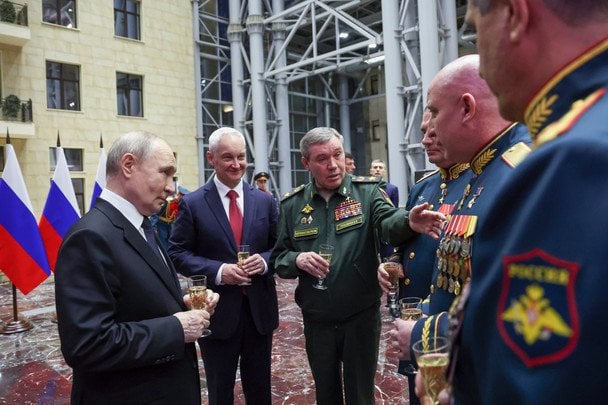
National Guard Now Under General Staff Control
According to TSN.ua: President Vladimir Putin has issued a decree transferring command of the National Guard, or Rosgvardiya, to Russia's General Staff. This 2023 reorganization of the nation's security apparatus appears to be a direct response to the force's inadequate performance during the Wagner Group's armed rebellion in June of that year. The move signals the Kremlin's intent to tighten its grip on all state security structures.
Established in 2016, the National Guard has been tasked with a wide range of duties, from public order to counter-terrorism. However, its hesitant response to the Wagner mutiny exposed significant operational shortcomings. This perceived failure likely served as the catalyst for its reassignment to direct military oversight, a significant shift in Russia's internal power dynamics.
Streamlining Russia's Security Resources
In a related development, Russia's Security Council plans to merge a portion of the Ministry of Emergency Situations' personnel with the National Guard. This integration would absorb the Ministry's rescue corps, which comprises roughly 50,000 employees, into Rosgvardiya. Analysts view this as part of a broader effort to consolidate and optimize Russia's sprawling security resources to better respond to domestic challenges.
These structural changes occur against the backdrop of Russia's costly war in Ukraine, which has resulted in an estimated 1.3 million Russian casualties, including approximately 350,000 killed. This staggering toll underscores the severe pressures facing the Russian state. Placing the National Guard under the General Staff may be a strategic attempt to bolster internal security and regime stability amid these compounding crises.
The reorganization of the National Guard and its merger with emergency personnel reflect the Kremlin's attempts to adapt its security architecture to current threats, both internal and external. Centralizing control over these forces is likely seen as vital for maintaining domestic stability and preserving Putin's political authority during a period of intense strain and uncertainty for his government.
Read also
- Sanctions and Oil Strikes: Former U.S. Ambassador Reveals What Could Force Putin to Shift His Stance
- Expert Reveals the True Price of the 'Oreshnik' Missile: Key Specs and Capabilities
- Putin Admits 700,000 Troops in Ukraine as Russia Expands Military to 2.4 Million
- Putin Admits Frontline Struggles and Issues ‘Oreshnik’ Threat: New Dangers for Ukraine
- Why the Kremlin Has Stepped Up Oreshnik Strikes: Russia Faces Reputational Damage in 2026
- Putin Acknowledges Russian Military Setbacks: 'Progress Not as Fast as We Would Like'