How China Gains From US-Israeli Strikes on Iran.

Military Tensions Between the US, Iran, and China in June 2025
According to Espreso.tv: In June 2025, military tensions between the United States, Iran, and China escalated sharply, fueled by conflicts involving Israel, the US, and Iran. A series of military strikes aimed at destroying Iran's nuclear facilities, along with Tehran's subsequent responses, marked the key events.
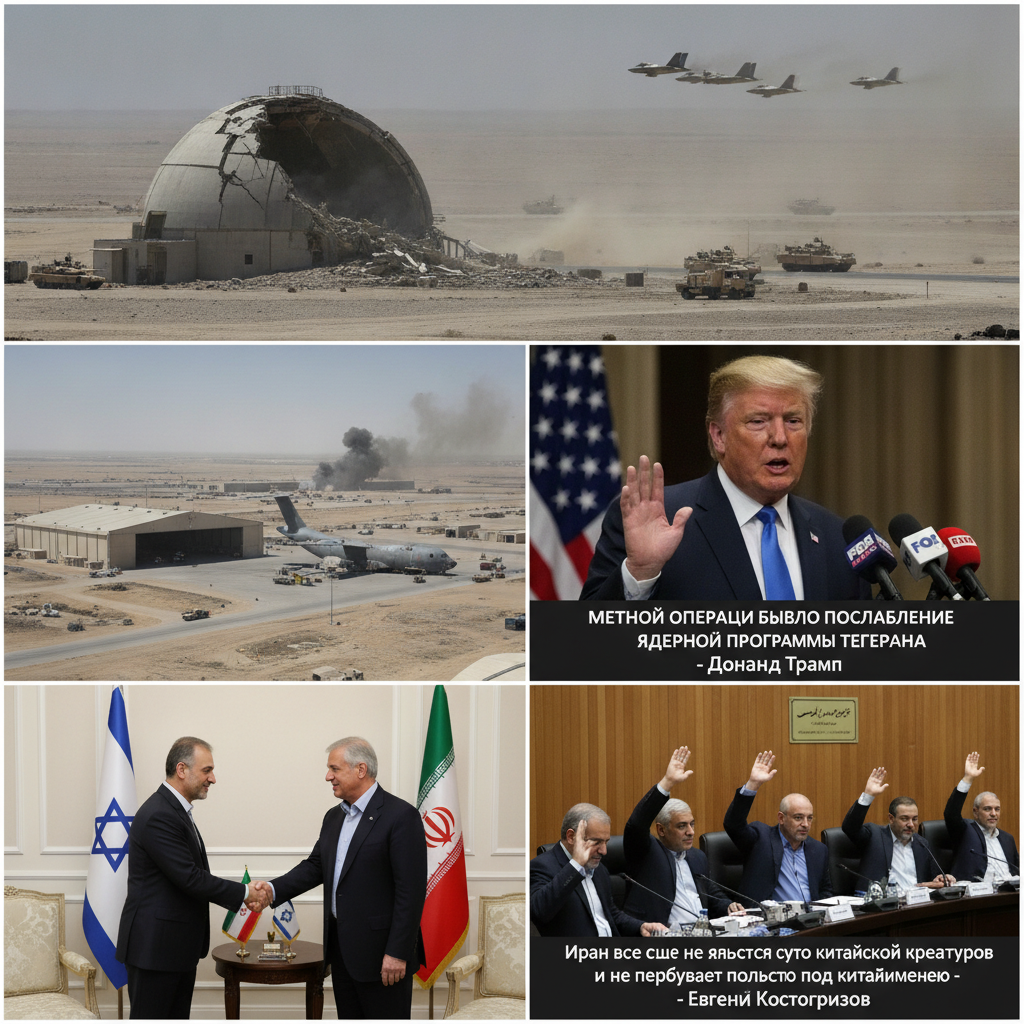
Israel launched attacks on Iranian nuclear and military sites on June 13, 2025, triggering an escalation. The US followed on June 21, striking three major Iranian nuclear facilities at Fordow, Natanz, and Isfahan. Iran retaliated on June 23 by attacking the US Al Udeid airbase in Qatar. These events highlight severe military strains in the region that threaten stability. However, on June 24, Israel and Iran agreed to a ceasefire, signaling a mutual desire to avoid further escalation. Nonetheless, later that month, Iran's parliament voted to suspend cooperation with the International Atomic Energy Agency (IAEA), indicating Tehran's intent to continue its nuclear program despite international pressure.
This period of conflict underscores the complex geopolitical landscape in the Middle East, where military actions can have far-reaching consequences for global security. Although the ceasefire suggests a willingness to de-escalate, the ongoing nuclear program remains a threat, while China's growing regional role presents new strategic challenges for the US and its allies.
Expert Analysis and Commentary
Analysts note the situation is difficult for the US. Yevgeniy Kostogryzov observed that
“on one hand, the fact that the US is currently fighting Iran without much confidence or favorable results certainly works to China’s advantage”. He also emphasized that
“Iran is still not purely a Chinese creation and is not entirely under Chinese influence”, suggesting Beijing may exploit the situation to strengthen its regional position.
Donald Trump, commenting on the operations' objectives, stated that
“the goal was to weaken Tehran’s nuclear program”. Yet Kostogryzov noted that if Trump’s primary aim were to counter China effectively, “he would have to set aside his pride.”
The serious military actions among Israel, the US, and Iran in June 2025 have introduced new challenges in international relations, particularly regarding China’s role in regional conflicts.
Read also
- American Blogger Laura Loomer Admits She Fell for Russian Disinformation
- Trump Approves Nuclear Deal with Saudi Arabia, Allowing Enrichment Without IAEA Oversight
- Pentagon Requests $67 Billion More as US War Costs Against Iran Hit $37.5 Billion
- Iran Faces Infrastructure Bombing Under New US Strategy Announced by Trump for Strait of Hormuz Attacks
- Ukraine’s Air Defense Gets a Boost: New Interceptor Missiles for Patriot Systems Discussed with NATO
- Putin Abandons Plans to Return Occupied Lands to Ukraine: What We Know About the So-Called 'Buffer Zones'