Abandoned Stations and Tunnels: What Kyiv Metro Hides from Passengers.

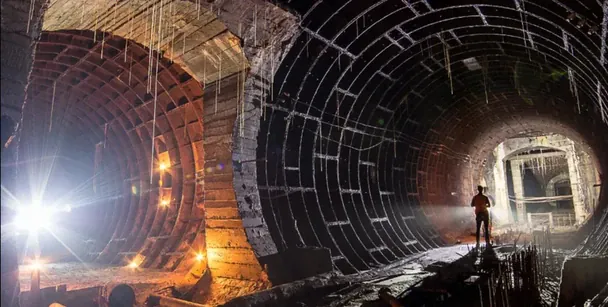
According to ТСН: Kyiv Metro is not just familiar routes and illuminated platforms that thousands of passengers use daily. It is also a vast network of conserved facilities, service branches, and technical labyrinths. Urban infrastructure researchers have lifted the veil and shown what this closed world, inaccessible to outsiders, looks like.
Echoes of the Past: Ghost Tunnels and Airlocks
One of the most interesting objects in the underground is the abandoned section between the stations "Khreshchatyk" and "Universitet". This part was decommissioned back in the late 1980s after the opening of the "Teatralna" station. Now there are no tracks, and the former routes have transformed into a component of the extensive ventilation system. The atmosphere here is created by old airlocks — massive metal doors designed to protect civilians in case of disasters. Many of them have already become part of history.
A special place in the architecture of the metro is occupied by "ghost stations". The most famous of them is "Lvivska Brama", whose construction was halted in 1997 due to problems with access to the surface. In addition to it, in the underground depths, there are time-frozen stations "Hertsen" and "Telychka", which are still waiting for their development in future city projects.
Secret Connections and Bunkers
Few passengers know about the existence of a service connection branch that links all three active metro lines for transferring trains between depots. However, the true scale of the underground is impressive in technical areas. Near "Maidan Nezalezhnosti", there is a complex transfer hub that was never completed. And near "Arsenalna", you can find an abandoned maintenance point.
One of the largest objects remains the unfinished diesel bunker from the late 80s — a gigantic underground labyrinth, whose size can be compared to an entire residential block.
As researchers note, despite the captivating appearance of these locations, the metro remains a strategic facility with an increased level of danger. Attempts to access service tunnels independently are not only illegal but can also be life-threatening due to high voltage and the specifics of the underground's operation.
Let us remind you that in Dnipro, passengers can enjoy marble with stunning artifacts in the metro — among the stones, there are real ammonite imprints dating back hundreds of millions of years.
And in Kyiv, the observation wheel in Podil has temporarily ceased operations due to safety threats to visitors. The attraction has been seized by court order.
The conservation and reconstruction of domestic metros open new opportunities for the development of urban infrastructure. Researching closed sections can become an important element in planning future projects and improving existing transport systems. At the same time, safety remains a priority, as subterranean labyrinths can conceal many secrets not only about the city's history but also about contemporary challenges.Read also
- Thunderstorms Mark the Start of Summer in Odesa: June 8 Weather and Sea Temperature Forecast
- How Ukrainians Are Rethinking Their Getaways: Travel Trends from the 2000s vs. 2026 Options
- New Stops Added to Brussels-Milan Night Train: Route Details from 2026
- How Foreigners Can Get a Driver's License in China and Understand the No-Overtaking Sign
- Ryanair’s 2026 Carry-On Rules: New Size Limits and Fees Announced
- Odesa Designated a Resort Zone: Annual Budget Boost of 300 Million UAH Expected