Six giant planets in the early solar system? What happened to them.

New theory: More gas giants than previously thought
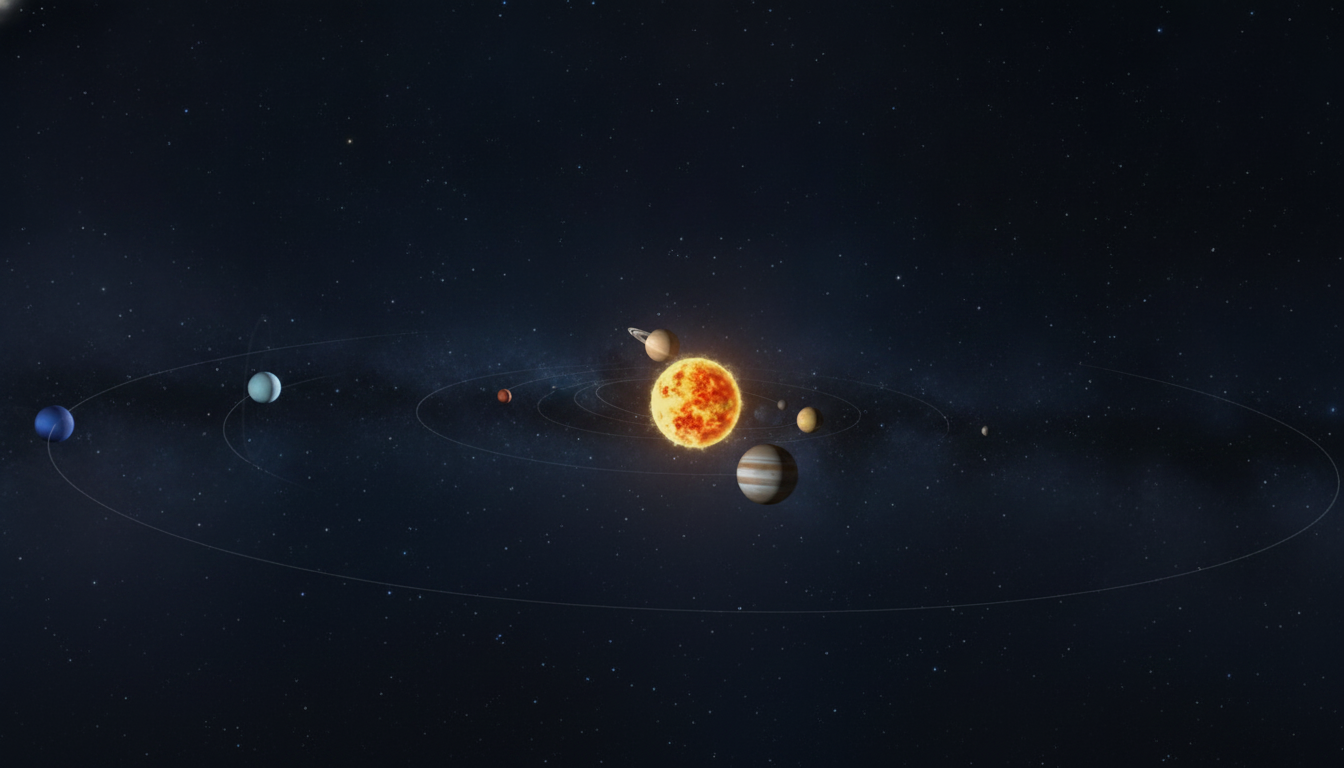
According to Novyny.live: Scientists suspect that our solar system may have harbored five or even six giant planets in its early phase. These are believed to have influenced the orbits of other celestial bodies before being ejected into interstellar space. This finding challenges the traditional view of the formation of the solar system, which today consists of eight planets and hundreds of moons.
As early as 2005, astronomers from Nice first introduced the idea of instability among the giant planets. They pointed out that the orbits of the planets raise questions, as their movements do not always meet expectations. Subsequent research, particularly in 2011, supported this assumption, as new evidence emerged of another giant planet in the early solar system.
Jupiter's moons and the uniqueness of Miranda
Using computer simulations that ran over a period of 20 million years, researchers examined the dynamics of the early system. Of 100,000 simulations conducted, 122 showed that five or six giant planets could indeed have existed. This discovery opens new perspectives for understanding the development of our planetary system and the influence of large objects on its structure.
Particular attention is paid to Jupiter's moons. Three of them - Io, Europa, and Ganymede - are in a 1:2:4 resonance, indicating complex gravitational interactions. As for Uranus's moon Miranda, it contains 50% more ice than the other satellites of the planet. This could suggest special formation and development conditions under the influence of the unstable giant planets.
The new research findings thus raise further questions: What happened to the moons of Uranus and other objects in the solar system? And were there actually two additional planets? These aspects remain the subject of further investigations in astronomy and planetary science.
This new data could fundamentally change our understanding not only of the development of the solar system but also of the mechanisms that generally shape planetary systems.
The study of gravitational interactions between planets and their moons, as well as the potential presence of unknown objects in the early formation phase of the system, highlights the complexity and dynamics of cosmic processes. This underscores the importance of continued research in this field to gain a more detailed picture of our place in the universe.
Read also
- Czechia receives 100 howitzers from South Korea, bringing total artillery destined for Ukraine to 190
- Targets Identified: Ukrainian Defense Forces Hit Six Warehouses in Russia and Crimea
- Five Turkish F-16 Jets Deploy to Estonia for NATO's Baltic Airspace Protection Mission
- Fuel Crisis From Ukrainian Strikes Leaves Kazakhstan’s President Perplexed About Russia’s War Aims
- 64 Russian Troops Captured, 144 Passports Eliminated: Ukrainian Assault Regiment's Operation in Focus
- Drone Units Hit 18 Power Substations in Crimea During 'Crimean Switch-Off' Operation