What Purple USB Ports Really Mean — and Why They Don’t Follow Official Standards.

Understanding USB Port Colors and Their Purpose
According to Novyny.live: In computing, the color of a USB port often gives users a quick hint about its speed, power, or generation. The USB Implementers Forum has established three official color codes: white for USB 1.0, black for USB 2.0, and blue for USB 3.0, 3.1, or SuperSpeed connections. These standardized colors help people instantly identify the capabilities of a port without needing to read tiny labels or check specifications.
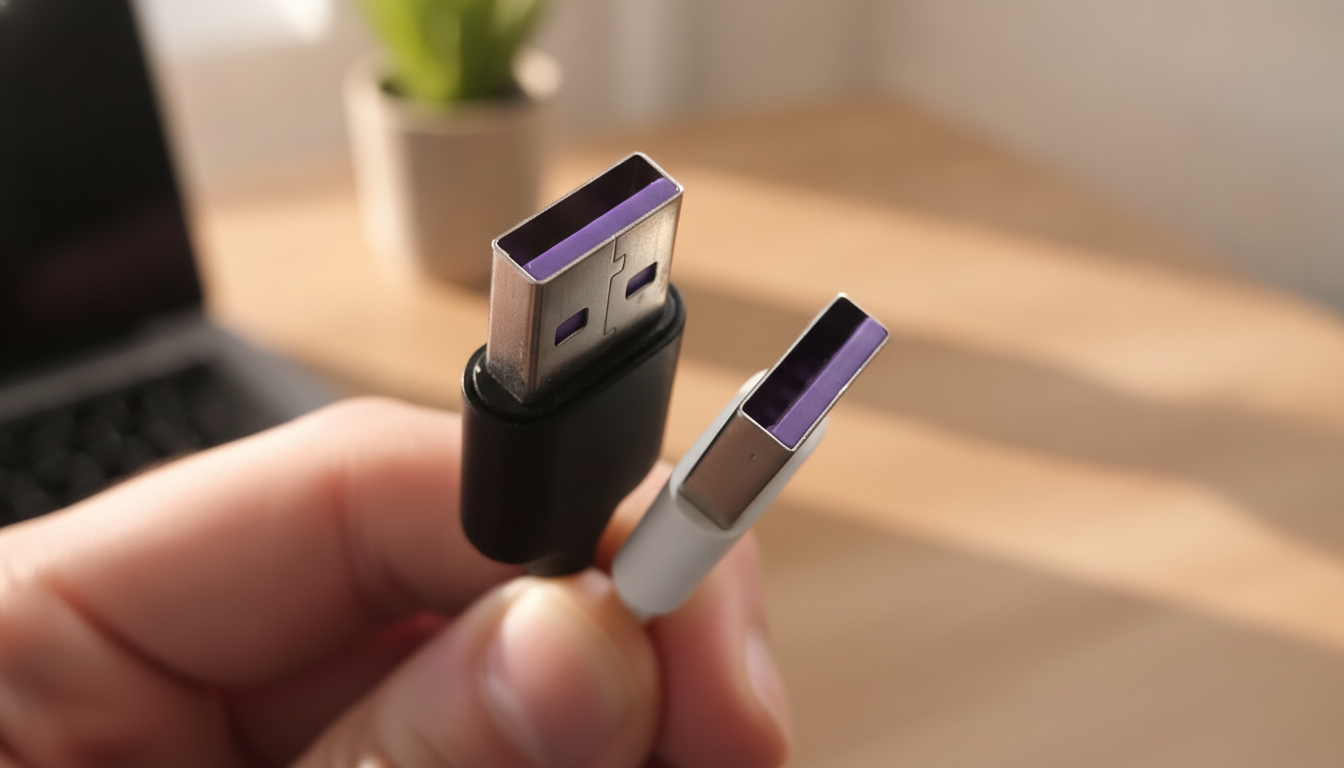
Purple ports, however, are a different story. While they are commonly associated with fast charging and can support power delivery of up to 40 watts, purple is not an official USB standard. Despite this, manufacturers like Huawei have made them popular—for instance, Huawei’s 25W Mini Charger features a purple port. Beyond purple, several other non-standard colors have also appeared on the market, each indicating different technologies.
Other USB Port Colors You Might Encounter
Beyond the official palette, manufacturers have introduced a range of additional colors:
- Red ports, which can indicate USB 3.2 or USB 3.1 Gen 2.
- Green ports, typically linked to Type-A or older Type-B connectors supporting Qualcomm Quick Charge.
- Orange USB-A and USB-C connectors found in Huawei’s SuperPower Wall Charger models rated at 100W and 66W.
Overall, the wide spectrum of USB port colors—from white to purple—plays an important role in making technology easier to use. They help users quickly identify different standards and connection capabilities at a glance.
Color coding simplifies the user experience, especially in a world filled with diverse devices and charging standards. By recognizing port colors, people can more easily find the right port for charging or data transfer, reducing the chance of connection errors. As technology continues to evolve, future innovations may bring even more colors and standards, further improving how users interact with their devices.
Read also
- Ukraine's Drone Forces Sink 183 Russian Shadow Fleet Vessels, Unleash New Missiles and Strike Crimea
- Ukrainian Firm SkyFall Unveils P1-SUN Jetkiller Interceptor Drone: Key Details Emerge
- World’s First 500 MW Impulse Hydropower Plant Under Construction in China: Trials Succeed
- Russia Launches Second Batch of 'Rassvet' Satellites — Can It Catch Up to Starlink?
- Japan Introduces Paid Cooling Booth for People—Here's What You Need to Know
- Serial Production Looms for Ukraine’s New Firefly Munition After Successful Tests