Scientists Uncover the Origin of the Atlantic's 'Royal Rift,' a Vast Submarine Chasm.

Probing the Royal Rift
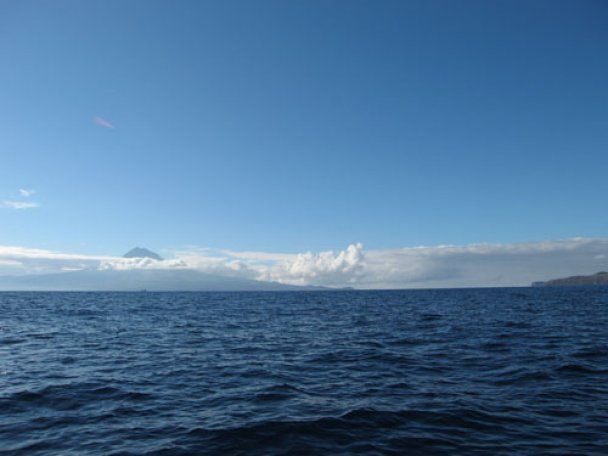
According to TSN.ua: An international research team has, for the first time, determined the cause behind the formation of the Royal Rift in the North Atlantic, a submarine canyon larger than the Grand Canyon. The investigation revealed that this massive structure was created by tectonic plate movements and elevated mantle temperatures. Located roughly a thousand kilometers west of Portugal, the Royal Rift is a staggering 500 kilometers long. This discovery sheds light on the powerful geological forces that shape the ocean floor, a realm less understood than the surface of Mars.
The research, led by Germany's GEOMAR Helmholtz Centre for Ocean Research, was based on materials gathered during the M168 expedition aboard the research vessel METEOR in 2020. On the eastern edge of the Royal Rift lies one of the Atlantic's deepest points, the Peake Deep. Between 37 and 24 million years ago, this area was the boundary between the Eurasian and African lithospheric plates.
Research Implications
The age of the volcanic rock samples analyzed in the study was determined at the University of Madison in the USA. This work opens new avenues for understanding geological processes in the oceans and could aid in studying similar structures worldwide. Such insights are crucial for geologists modeling the planet's tectonic evolution and assessing potential seabed resources.
The phenomenon holds significant importance for geology, as it allows for a better understanding of the tectonic processes that shape underwater landscapes. This, in turn, can influence research in other oceanic regions and improve our knowledge of Earth's dynamics. As scientific discoveries continue to expand our horizons, it is important to consider how such data can be used to predict natural phenomena and understand climate change in a global context.
Read also
- Ukrainian Special Operations Destroy Five Oil Tanks at Tamanneftegas Terminal
- NATO Drills Near the Suwałki Gap: Lithuania, Poland, and France Set Dates for Gallant Boar-2026
- General Staff Reveals Details of Strikes on Crimea Titan Plant and Russian Logistics
- In May, Ukraine’s Air Defense Neutralized 88% of Enemy Targets as Russia Intensifies Strikes
- Fighting in Kostiantynivka: Military Weighs Cutting Off the City to Trap Russian Forces
- Ukraine Regains 47 Square Kilometers: How Logistics Strikes Are Reshaping the Frontline