AI is Changing the US Nuclear Strategy: What it Means for Humanity in the Loop.

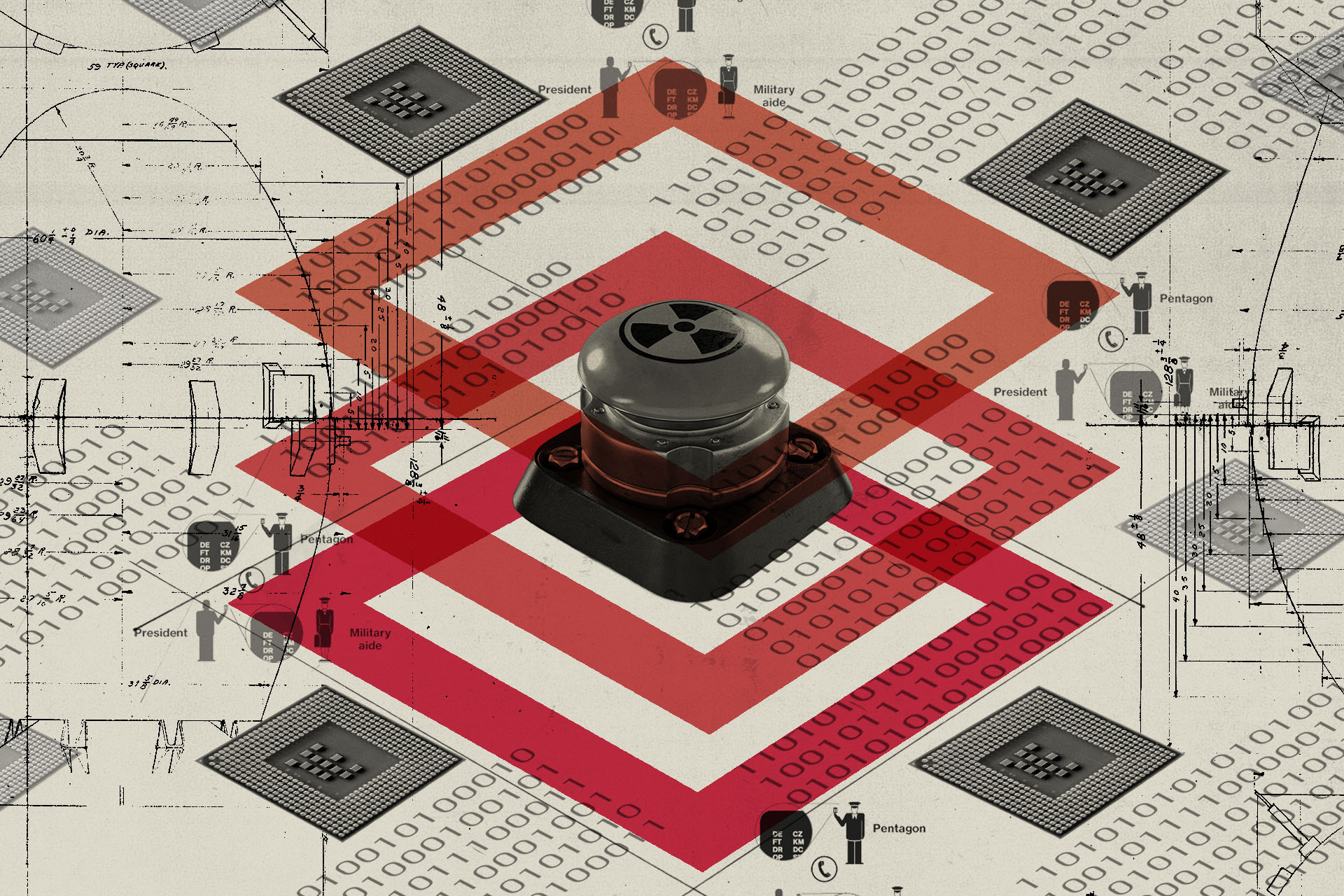
Decision-Making Speed in Nuclear Threats
According to Vox: It will take about 30 minutes for an intercontinental ballistic missile armed with a nuclear warhead to cover the distance from Russia to the United States. If launched from a submarine, the time could be even shorter. Once a launch is confirmed, the president receives a report, leaving him with only 2-3 minutes to decide whether to respond with an ICBM launch or risk losing the chance to retaliate.
This brief window for making any significant decision, especially on such a subject that could be the most consequential in human history. While many experts have studied ways to conduct nuclear warfare, critical decisions are likely to be made by leaders without adequate preparation and the ability to seek counsel.
Key Takeaways
- Recently, military leaders have shown increasing interest in integrating artificial intelligence into the command and control system of US nuclear forces, given its ability to quickly process large volumes of information and identify patterns.
- Stories about uncontrollable AIs taking control of nuclear weapons have become common in films such as WarGames or The Terminator, and likely influenced public perception on the issue.
- Despite the interest in AI, officials stress that computer systems will not gain control over the decision to launch nuclear weapons; last year, the presidents of the US and China issued a joint statement on this matter.
- Some scientists and former military argue that the more pressing risk is not from uncontrollable AIs but from the reliance on AI in decision-making, where the data might be unreliable and lead to catastrophic consequences.
So it’s no surprise that those responsible for US nuclear capability are looking for ways to automate parts of the process—specifically by using artificial intelligence. The idea is to give the US an advantage or at least buy some time.
However, for those concerned about the potential existing risk of nuclear weapons, the combination of these two risks looks like a nightmare. António Guterres, the UN Secretary-General, stated in September: “As long as nuclear weapons exist, any decision on their use must remain with humans and not with machines.”
Should We Combine AI and Nuclear Weapons?
To understand the risks associated with implementing AI into the nuclear system, it is important to first understand how it is used today. Despite its critical significance, many aspects of US nuclear command remain surprisingly low-tech, partly due to the desire to keep critical systems 'isolated' from larger networks to avoid cyberattacks or espionage.
By 2019, the communication system the president used to issue orders for a nuclear strike was still based on floppy disks. The US is currently modernizing its nuclear command, control, and communication, spending about a trillion dollars. The commander of STRATCOM, General Anthony Cotton, has called AI 'central' to this process.
Cotton noted during testimony this year that STRATCOM is looking for ways “to utilize AI/ML [machine learning] to assist in decision-making.”
Some roles for AI are entirely justified, such as in “predictive maintenance.” Theoretically, there could be a scenario where AI is given the authority to launch nuclear missiles in response to an attack if the president cannot be reached. However, the US is not currently moving towards creating such a solution.
This raises concerns for many as the combination of nuclear weapons and AI could be dangerous.
Why Should We Be Concerned About AI in Nuclear Matters?
In nuclear circles, it's often emphasized that it's crucial for “a human to be in the loop” when making decisions about the use of nuclear weapons. This probably also applies to Jack Shanahan.
Shanahan, a former Air Force general, spent some time overseeing nuclear forces. In his final appointment, he led the Pentagon's AI Center. He is concerned that AI is increasingly being integrated into the nuclear command system without a clear understanding of its impact on the entire system.
“It's all theory. It's doctrine, tabletop games, experiments, and models. It’s not real data.”
Retired Lieutenant General Jack Shanahan
Modern AI models are well-developed but still susceptible to errors. Existing systems can be vulnerable to cyberattacks or manipulation.
Thus, the calibration for participation in nuclear war is an activity in which “there are no real examples, except for two in 1945,” emphasizes Shanahan.
Modern AI models remain a “black box,” despite the need for implementation in nuclear systems. If skeptics' concerns about AI turn out to be true, scenarios may arise where a high-quality system deliberately misleads humans.
Speed in Nuclear Management
For Adam Louth, a nuclear strategist, these arguments ignore the crux of the matter. In 2019, he caused a stir among nuclear analysts, arguing that the US should create an analog to the Russian “dead hand” system.
This system, known as Perimeter, was developed by the Soviet Union in the 1980s and allows operators to launch the remainder of the country’s nuclear arsenal if a nuclear attack is confirmed, but Soviet leaders can no longer give orders.
Louth believes that AI could help the president make decisions at critical moments, considering already approved courses of action. “In a crisis, the system could say to the president: “You said if option number 17 happens, this is what you want to do,” Louth emphasized.
Louth does not claim that AI never makes mistakes. He emphasizes that it might reduce the number of errors compared to decisions made under human pressure.
Read also
- Antique Musket Balls Repurposed Into Solar Cells with 94% Efficiency
- South Korea Patents a Silent Engine for Air Taxis
- 144 FPS at 4K: A Gamer Pairs an RTX 3090 and RTX 3050 for Stunning Performance
- Snapdragon 8 Elite Gen 5: Qualcomm’s New Chip Targets Sub-$600 Smartphones
- Samsung Unveils Three New Odyssey Gaming Monitors: Specs and Features Revealed
- Plastic Waste Converted into Jet Fuel: New Breakthrough by Chinese Researchers