Orban and Zelenskyy Clash Over Hungary's Future and the EU's Stance on the War.

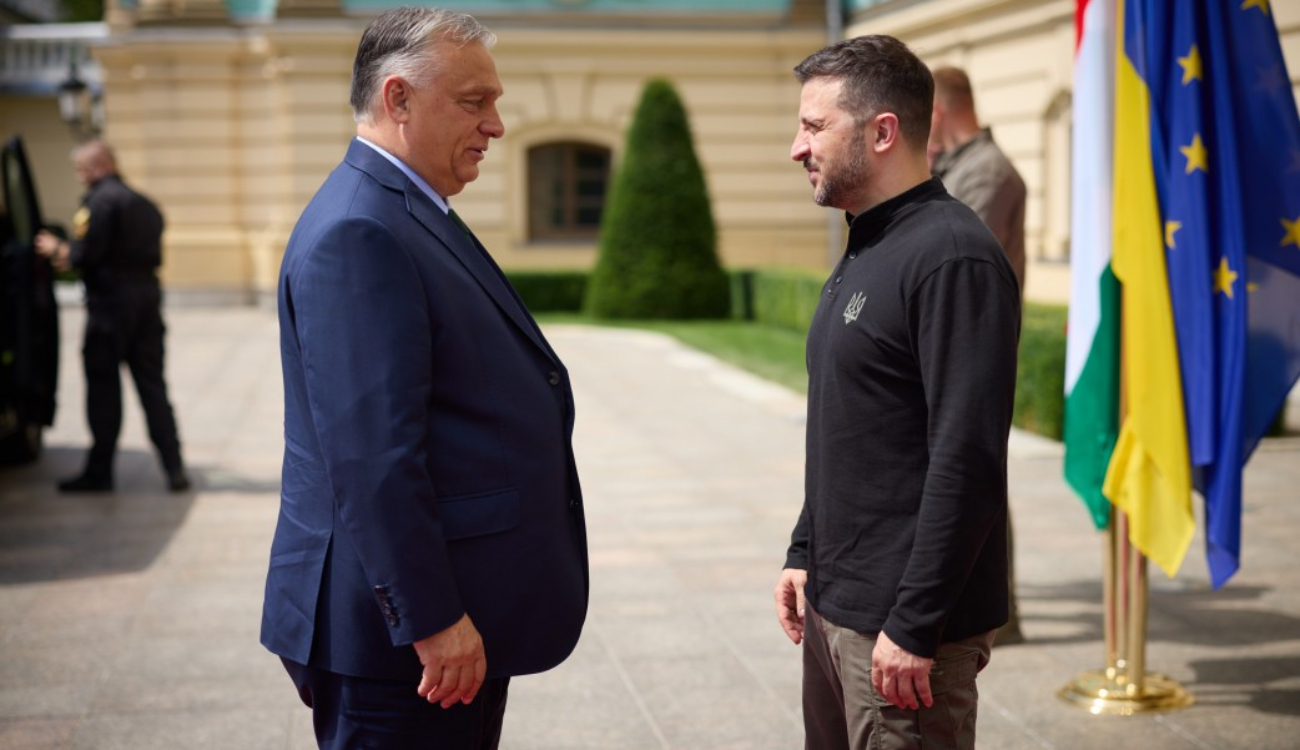
The Zelenskyy-Orban Dispute
According to UATV: The public argument between Ukrainian President Volodymyr Zelenskyy and Hungarian Prime Minister Viktor Orban highlights a deeper struggle over Hungary's political direction, the European Union's unified position against Russia's war, and the shifting balance of power in Central Europe. With Hungarian elections approaching, Orban has made Ukraine a central campaign issue, while Zelenskyy emphasizes his nation's role in defending European security. Zelenskyy has notably stated that 'it is Ukrainians who are holding the European front line.' This clash occurs as Hungary, a NATO and EU member, maintains a notably Russia-friendly stance compared to its allies.
Viktor Orban: 'This discussion is not about me or you. It is about the future of Hungary, Ukraine, and Europe.'
The exchange demonstrates how both leaders are leveraging issues related to the Ukraine conflict to bolster their positions in domestic political battles. Meanwhile, the opposition party 'Tisza' is polling 10 percentage points ahead of Orban's ruling 'Fidesz,' a development that could significantly complicate the political landscape for the incumbent prime minister.
It is important to note that Slovakia and Hungary remain the only EU nations still purchasing Russian oil. This continued reliance on Russian energy resources significantly influences the rhetoric of Hungarian politicians. Government representative János Lázár asserted: 'We guarantee that if you vote for us, Hungary will not participate in the war.'
Commenting on the situation, Péter Magyar noted that 'nobody pays attention to the propaganda anymore.'
Energy Policy and Its Consequences
In the context of energy policy, Robert Fico of Slovakia emphasized that 'I do not want to go into details, but as a country that has always been at the start of the pipeline.' These statements underscore the complex situation facing Hungary and its neighbors as they attempt to balance domestic political interests with external pressures stemming from Russian aggression.
Consequently, the conflict between Zelenskyy and Orban underscores not only the political ambitions of both leaders but also the broader, evolving geopolitical picture in Central Europe, shaped by the war in Ukraine and pressure from the Kremlin.
This ongoing dispute may impact future Ukraine-Hungary relations and influence dynamics within the EU, where member states' positions on the war and dependence on Russian energy are increasingly contentious. Observing the unfolding political events in Hungary provides a key to understanding wider regional trends, especially given the approaching elections and their potential effect on the country's domestic and foreign policy.
Read also
- Slovakia Won’t Fund Ukraine’s Military Aid, Fico Declares at NATO Summit in Ankara
- Slovak Prime Minister Says Talks Are the Only Path to Ending the War
- Ukraine Secures €10 Billion in Investments: 160 Deals Signed at Gdansk Conference
- Gdańsk Conference: Ukraine Receives First Installment of €90 Billion Loan
- Gdańsk Hosts Ukraine Recovery Conference: Fico and Svyrydenko to Discuss $10 Billion in Deals
- Hungary Blocks Ukraine’s EU Accession Again—Key Milestone Delayed