Climate Change Is Tearing Africa Apart: The Role of Drying Lakes in Continental Rift Acceleration.

Climate Shift in East Africa
According to TSN.ua: Over the past several thousand years, a major climate shift from wet to dry conditions in East Africa has accelerated the continent's tectonic breakup. Research indicates this climatic transition has significantly impacted geological processes, particularly the formation and widening of rifts.
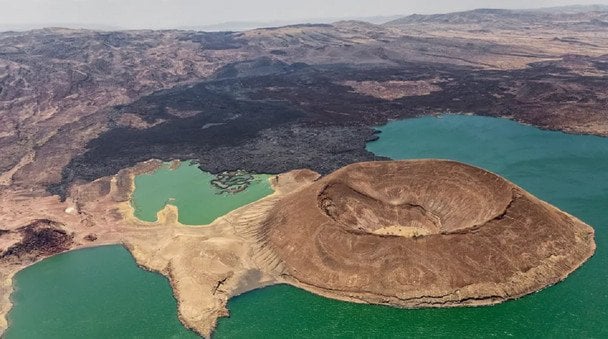
East Africa has been drying out for roughly the last 5,000 years. This followed the African Humid Period, which lasted from 9,600 to 5,300 years ago. During that wet era, water levels in Lake Turkana were about 150 meters higher than they are today. This massive lake has the following dimensions:
- a length of approximately 250 km,
- a width of up to 30 km,
- and a depth reaching 120 meters.
Following the end of this humid period, the rate of fault separation in the Lake Turkana area increased by an average of 0.17 mm per year. This finding provides a clear link between environmental change and deep-Earth mechanics. The overall rate of Africa's separation in this region is estimated at about 6.35 mm per year.
Researchers, including Christopher Scholz, note that the results demonstrate a two-way relationship between climate and tectonic activity. Scholz also emphasizes that fault formation appears to have intensified during this recent dry period.
Investigations at Lake Malawi
A separate research team is working on a project at Lake Malawi, where they are analyzing water level fluctuations over the last 1.4 million years. This work is crucial for understanding the long-term interplay between climate and geology. These studies may provide further insight into how climate change influences processes in the Earth's crust and could confirm the connection between climatic shifts and tectonic movement.
The research being conducted in East Africa holds significance beyond pure geology; it is vital for understanding how climate change alters fundamental natural processes. Unraveling the link between climatic variations and tectonic activity will aid in forecasting future geological events in the region. As climate change continues to produce serious consequences, such research could prove critical for helping local communities adapt to new environmental realities.
Read also
- Russia's Supply Line Crippled: Bridge Strikes in Chongar Cut 100 km of Logistics
- Germany Pledges €300 Million to Czech-Led Ammunition Plan, Securing 50,000 Shells for Ukraine
- Mariupol Port Destroyed by Azov and SBU Forces, Cutting Off Russia’s Sea Access
- Ukrainian Forces Push Back Russian Army on the Alexandrovsk Front: New Gains Reported
- Can Russia Capture Kramatorsk and Sloviansk? The Growing Pressure in Donetsk Region
- Ukrainian Drones Cripple Chongar Bridge to Crimea: Key Details on the FrontStrike Operation