Who Really Brings Christmas Gifts: From Odin to Befana.

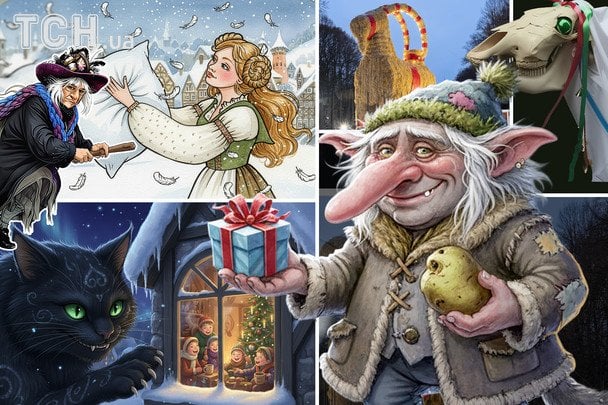
According to ТСН: In different parts of the world, various figures can be found who bring Christmas gifts. These can be kind old men, children, angels, witches, or even several characters at once. All these figures are united by a common concept — the gift-giver of Christmas gifts, which has formed under the influence of ancient beliefs, Christian traditions, and folklore.
Ancient Roots: Winter Solstice, Spirits, and Gods
Historians believe that the custom of giving gifts in autumn originated in pagan times. In Northern and Central Europe, an important holiday was the winter solstice — the shortest day and the longest night. People believe that at this time, the world of the living and the world of spirits are as close to each other as possible.
In Scandinavian traditions, the image of the gift-giver is often associated with the supreme god Odin, who traveled the sky during Yule, watching over the people. Children would leave food for his horse, hoping to receive gifts. This motif — leaving something at night and receiving a gift in the morning — has persisted in many European traditions to this day.
Christian Influence and the Figure of St. Nicholas
With the spread of Christianity, pagan notions did not disappear but transformed. The central figure became Saint Nicholas of Myra — a 4th-century bishop known for his generosity and help to the poor.
He is associated with the tradition of secret gift-giving to children. In the Middle Ages, St. Nicholas became the patron of children, travelers, and the needy, and the day of his commemoration — December 6 — turned into a special children's holiday.
Why Gift-Givers Are Different
Over time, various regions developed their own images of the Christmas gift-giver:
- In Germany and Austria, gifts may be brought by the baby Jesus or an angelic being;
- In France — Pere Noël, who comes on Christmas Eve;
- In Italy, alongside Christian figures, there exists Befana — an old woman on a broom, who brings gifts on Epiphany;
- In Northern Europe, there are folkloric characters associated with winter spirits and homes.
These figures can be both benevolent and stern — sometimes they generously reward obedient children, while other times they punish disobedience.
Modern Image and the Influence of Mass Culture
In the 19th century, the image of Santa Claus emerged in the USA, which combined traits of St. Nicholas, European folkloric characters, and a new urban culture. This image has become the most famous in the world and has largely displaced local traditions.
However, many countries still possess their own Christmas gift-givers, which are a part of cultural identity.
The Symbolism of Giving
Researchers emphasize: the image of the gift-giver is not just a fairy tale for children. It symbolizes ideas of generosity, care, social justice, and hope, which gain particular significance at the end of the year and in anticipation of a new cycle.
Therefore, Christmas characters — from St. Nicholas to folkloric beings — remain relevant in culture and are constantly reinterpreted.
This article discusses the various images of gift-givers that exist in different cultures during Christmas. Their features and traditions are rooted in ancient beliefs that have transformed under the influence of Christian traditions. The touching symbolism of giving common to all these images emphasizes ideas of generosity and care. This theme remains relevant today, as gift-giving continues to be an important part of the festive spirit.Read also
- Suitcase delivery to parcel lockers across 8 EU countries launched by InPost – pricing revealed
- Bus Service to Poland via Shehyni Checkpoint to Halt for 18 Months Starting June 15, 2026
- Over 10 Odesa Beach Zones Certified and Ready for Summer Season
- Anticipating Summer Ticket Surge, Ukrainian Railways Shares Booking Tips
- Europe's Airports Face Six-Hour Queues: IATA Warns of New Crisis
- Malmo to Narvik by Night Train: Snälltåget Launches New Service with Fares and Schedule