In Israel, the Stone of Pilate was found: the first evidence of the existence of the judge of Jesus.

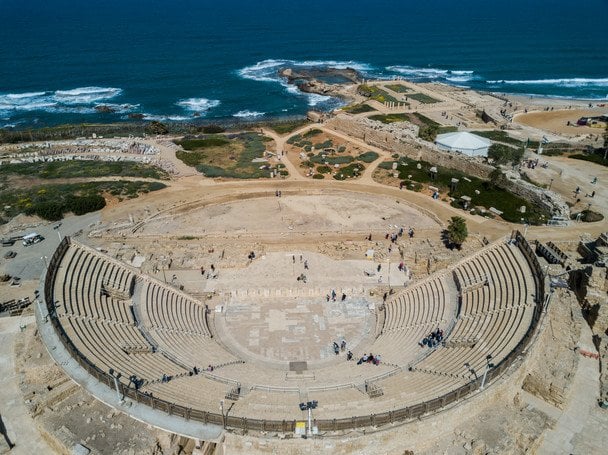
According to ТСН: Archaeologists have discovered the ancient Roman city of Caesarea Maritima on the coast of Israel, 45 km north of modern Tel Aviv. The ruins and artifacts found here are vivid testimonies to the existence of people, places, and events described in the Bible.
Among the impressive finds is the Stone of Pilate, which represents the first archaeological evidence of the existence of the official who presided over the trial against Jesus.
This artifact was found in June 1961 during excavations of a Roman theater. The engraved limestone was initially part of a dedication to Emperor Tiberius and refers to Pontius Pilate as the 'Prefect of Judea.'
Until this discovery, information about Pilate came only from written sources, including the New Testament and brief mentions by the historian Flavius Josephus and the writer Tacitus.
A portion of the inscription on the stone has survived, which states:
'To the divine Augustus Tiberius, Pontius Pilate, Prefect of Judea, has dedicated this.'
The original calcareous relic was transferred to the Israel Museum in Jerusalem, while a replica is exhibited in the archaeological park in Caesarea.
The inscription dates from the time when Pilate was governor, between 26 and 36 AD, corresponding to the era described in the Gospels.
In the Gospel of Luke, it says:
'In the fifteenth year of the reign of Emperor Tiberius, when Pontius Pilate was governor of Judea and Herod was tetrarch of Galilee.'
Pilate is mentioned in the Bible at least 50 times and depicted as a Roman authority who ultimately handed Jesus over for crucifixion.
After Caesarea was destroyed by Muslim troops in 1265, the city remained virtually untouched for centuries. Only a small group of residents used the ruins as a fishing village until the historical value of this city was recognized in the 20th century.
Since the beginning of excavations in the 1950s, researchers have discovered buildings from the Roman era, including the governor's palace and the praetorium, illustrating the legal system described in the New Testament.
Researchers have also announced a new discovery at the geological site of Durupinar in eastern Turkey, linked to the hypothesis about the possible location of the biblical Ark of Noah.
These finds underscore the significance of archaeology for understanding history, as each new artifact opens a window into humanity's past. They affirm the historicity of events and figures mentioned in sacred texts and promote further exploration of ancient cultures.
Read also
- Nearly 530 Drones Launched by Russia in a Single Week: Zelenskyy Highlights the Critical Weapon Needed
- Frontline Dynamics Shift: Chongar Bridge Destroyed, FP-5 Flamingo Missiles Deployed for the First Time
- Iran Identifies New Retaliatory Targets for Strikes Against the US: Bases in Three Nations
- Fuel Shortages and Logistics Nightmares Hit Russian Forces in Crimea After Ukrainian Strikes
- 530 Drones and Missiles Launched by Russia Against Ukraine in Three Days: Dozens Injured
- Japan Aims to Replace 14 Nuclear Reactors by 2050 in First Major Plan Since Fukushima