The United Kingdom plans to change property tax payments: what is known.

Changes in Stamp Duty Collection
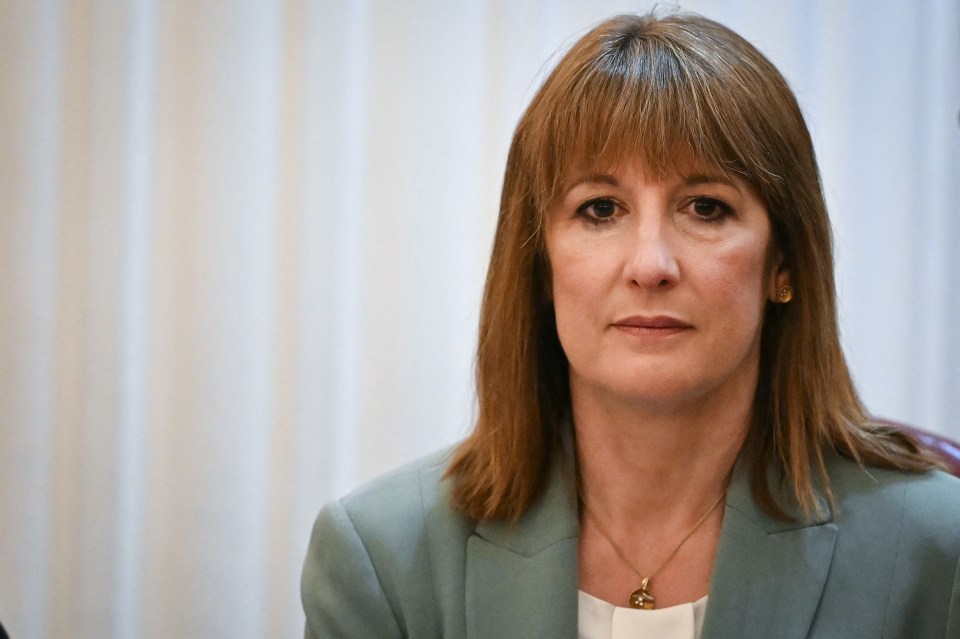
According to The Sun: Rachel Reeves is considering substantial changes to the stamp duty that could ease property buyers' tax payments. The Chancellor is planning a reform in the budget that would allow buyers to pay stamp duty over several years instead of a lump sum.
Rachel Reeves may introduce significant changes to stamp duty in her budgetThis proposal is being discussed, but the technical details may be clarified during negotiations with analysts from the Office for Budget Responsibility, which are set to begin in two weeks, according to City AM.
This change is just one of a series of measures that the Chancellor is considering to tackle the significant deficit in public finances.
However, the details of the plans will not be disclosed until budget announcement day.
According to a report from the Tony Blair Institute for Global Change, last year the introduction of a stamp duty reform was proposed through a government loan, allowing payments to be spread over several years.
This loan could be canceled if a person changes their residence within a certain period.
The Institute suggests that this period could be 20 years, as a typical homeowner lives in their property for about 26 years.
This could incentivize people to change their residence, bringing stamp duty closer to an annual property tax.
Stamp duty often becomes one of the main barriers preventing property buyers from moving.
Four out of five homeowners pay stamp duty, while two out of five first-time buyers also fall under this tax, according to Zoopla.
At the same time, the most significant burden falls on individuals buying homes in Southern England, where 60% of all stamp duty is paid.
Companies like Rightmove and Zoopla support a campaign for the ability to spread stamp duty costs over five years.
Richard Donnell, managing director of Zoopla, noted: “Reducing barriers for people moving is essential for economic growth and supporting more housing construction.”
He added that spreading payments would help achieve more moves, especially in areas with the highest housing prices.
However, other experts warn that changes to stamp duty could create instability in the market. Paul Broadhead, head of mortgage and housing policy at the Building Societies Association, stated: “We know from recent history that changes to stamp duty have a direct impact on the property market.”
“Speculation about changes in property taxes is unhelpful, as it can distort the market, affecting both consumer confidence and economic growth.”
He also emphasized that it is important that any changes do not add complexity to an already complicated property market.
A representative of the Treasury stated: “The Chancellor decides on tax policy during fiscal events. We do not comment on speculation regarding future changes to tax policy.”
Other Changes to Stamp Duty
Speculation is rising regarding measures the Chancellor may announce in the budget on November 26. Among them is a new housing tax that could replace stamp duty and council tax.
The Chancellor plans to explore ideas for a levy on homes valued over £500,000, according to The Guardian. The Treasury is considering a proportional property tax to be paid upon the sale of homes.
It is also reported that the reform could pave the way for a new local levy, replacing the council tax system based on outdated property value assessments from the 1990s.
Details of the measures, including thresholds or rates, will be disclosed on budget day.
Other Proposals Under Consideration
The Chancellor may also consider changes to tax reliefs for pensions. One way to replenish the Treasury is by removing tax reliefs for high-income individuals.
Currently, when you save for retirement, you receive tax relief based on your personal income tax rate. For basic rate taxpayers, it is a 20% boost, meaning for every £80 you pay into your pension, you get an additional £20.
But higher-rate taxpayers receive a 40% relief, turning a £60 contribution into £100. Meanwhile, the most favorable receive a 45% relief.
The Chancellor may end this practice and introduce a single flat-rate relief, likely at the basic rate level of 20%.
Another option could be to limit or even abolish the tax-free lump sum payment. This long-standing right allows individuals to take a quarter of their pension savings at once without paying tax.
Many retirees rely on this to pay off mortgages or reduce debt.
Additionally, there are reports that the Chancellor may ban salary sacrifice schemes. Many employers offer such schemes, allowing employees to agree to a slightly lower salary in exchange for contributions to their pension.
Since your salary is lower, both you and your employer save on national insurance. Abolishing salary sacrifice schemes could affect more than three million basic rate taxpayers, who see their salary reduced due to higher national insurance contributions.
However, experts warn that these changes could provoke a political and economic backlash.
Steve Webb, partner at LCP and former pensions minister, previously warned: “An attack on pension tax reliefs might seem superficially attractive for a Chancellor grappling with a deficit.”
“However, beneath the surface, there are numerous traps for the unwary, meaning reforms could yield far less than expected, destroy manifesto pledges to workers, or impose additional burdens on employers.”
If you have financial issues that need addressing, contact us at [email protected]
You can also join our Facebook group Sun Money Chats and Tips to share your tips and stories.
Read also
- Fire Point, a Ukrainian Manufacturer, Produces 200 Flamingo Missiles Monthly and Aims for Ballistic Capabilities
- Russia Weighs Seizing $40 Billion in Private Pension Funds to Finance Military Campaign
- As Russian Stocks Crash by Double Digits, the Wealthy Pivot to Crypto and Overseas Real Estate
- Trump Says Talks Possible as Oil Prices Crash After US and Iran Halt Attacks
- Sanctions Disguise Airline Bankruptcies as Rostec Plans a Restructuring of Russian Aviation
- Drone Strikes on CPC Terminal Drive Kazakhstan's Daily Oil Output Down to 133,200 Metric Tons