Sanctions and Fear Undermine the Kremlin's Billionaires: A Shift in Their Wartime Influence.

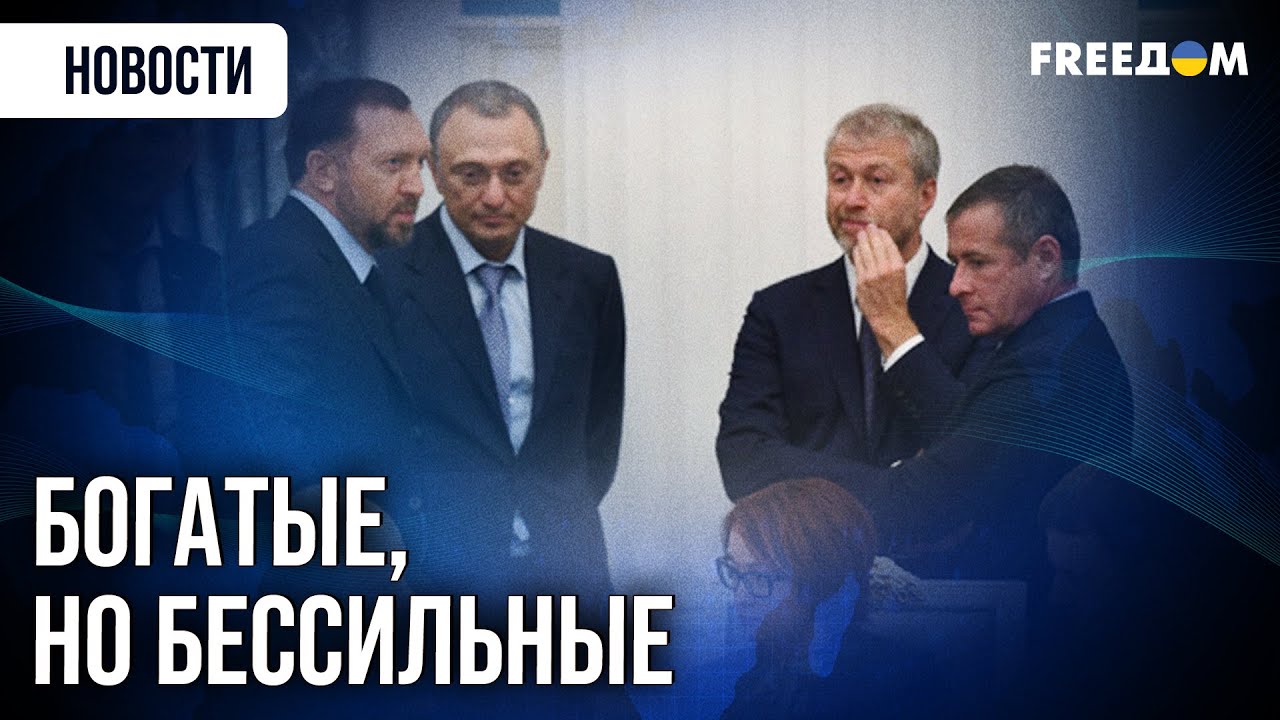
The Waning Power of Russia's Oligarchs in the Ukraine War
According to UATV: International sanctions and personal apprehension have dramatically reduced the role Russian oligarchs play in the war against Ukraine. According to Forbes, Russia is home to 140 oligarchs with a combined wealth of $580 billion, yet their political clout and ability to shape state decisions are now under severe threat. For context, these individuals once wielded immense power over Russia's political and economic direction. As of 2026, 81 of these billionaires continue to fund the aggression, but their influence is visibly eroding.
Prominent figures like Oleg Deripaska, who organizes the dispatch of 'volunteers' to the front, have voiced deep concerns.
"We are just stupidly losing everything we managed to mobilize in 2022-2023 through such hard and persistent labor," - Oleg Deripaska, highlighting the increasingly constrained capabilities of this elite class.
Another oligarch, Ruben Vardanyan, exemplifies this decline. He has been under Ukrainian sanctions since 2022 and was detained in Azerbaijan in 2023. Vardanyan previously served on the board of the 'Volga-Dnepr' holding company, which itself is sanctioned by the EU, US, and Canada. These events underscore how figures who once held significant sway are now feeling the direct consequences of global pressure.
Questions Emerge Over Leadership's Competence
Simultaneously, doubts are surfacing within Russian elite circles regarding the adequacy of President Vladimir Putin's leadership.
"Now among the elites surrounding Putin, a question is arising: is he even sane, this Putin?" - Ilya Neshchodovsky. This questioning points to growing unease and uncertainty among those who previously supported the Kremlin's aggressive policies.
Consequently, sanctions and fear are fundamentally altering the function of Russian oligarchs in the war. Their leverage is diminishing as the domestic political climate grows more tense, a development with potential long-term implications for both Russia's internal and foreign policy. The reduction of oligarchic influence on the country's political and economic processes signals a shift in the balance of power within Russian society.
This situation may intensify internal struggles for power and resources, as sanctions severely limit the oligarchs' options. Such internal friction could, in turn, impact the Kremlin's strategic calculations in its conflict with Ukraine and its broader international stance.
Read also
- Cracks in Russia’s Economy: Over a Third of Companies Now Operating at a Loss
- Russia’s Budget Deficit Hits 90% as Putin Pressures Oligarchs for Cash
- Right about the prostitution case of minors. The name of the oligarch Deripaska has disappeared from the indictment
- FT explained how Russians obtain Western brands despite sanctions
- "Madness": Russian oligarch Deripaska criticized the war against Ukraine due to enormous costs