The US Peace Plan Threatens Ukraine with Loss of Key Deposits: What Will Fall Under Russian Control.

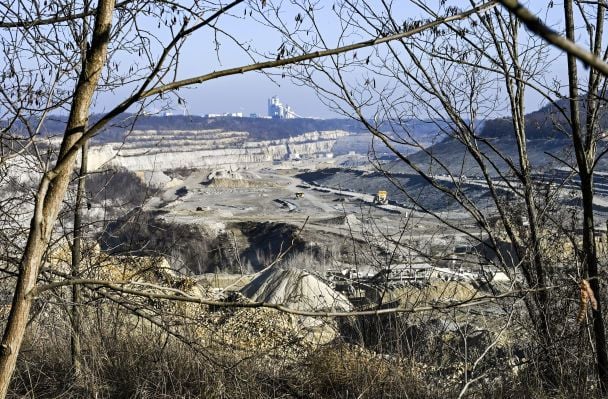
According to ТСН: Ukraine has significant reserves of minerals, including coal, gas, lithium, titanium, and rare elements. The most resource-rich areas are located in the southeast of the country, where a powerful industrial and mining base has developed.
According to Western media, the 'peace plan' developed in the US involves Russia retaining occupied territories, including the Donbas. If this scenario is implemented, Ukraine risks not only losing territories but also a significant part of its resource potential, which is important for both the country and the European Union.
Coal: The Backbone of Industrial Donbas
The Donbas has been Ukraine's main coal basin for more than two centuries: the first mine here opened in 1796. Reserves of coal in the occupied territories are estimated at 27.6 billion tons, with an additional 8 billion tons being prospective yet under-researched reserves. Currently, this information remains confidential due to martial law.
According to the State Geological Survey, if Ukraine loses the Donbas, it will only control about 33% of its coal reserves, not counting territories occupied since 2014. Most of the approximately 150 mines are already under Russian control.
In 2021, Ukraine produced 29 million tons of coal, of which 41% came from occupied or potentially threatened regions. However, many mines are technically outdated and economically unprofitable, while modernized mines in the Dnipropetrovsk region provide more than half of the total output.
Lithium, Rare Metals, and Titanium
The transition to 'green' energy requires lithium, an important element for batteries. Ukraine has some of the largest lithium reserves in Europe, sufficient for producing batteries for approximately 20 million electric vehicles.
There are four known lithium deposits, two of which are located in occupied territories. However, none of them are currently being exploited. Experts also note that the level of geological exploration in Ukraine is insufficient, and the potential may be significantly greater.
Critical elements such as tantalum, niobium, and cesium are also concentrated in the occupied territories. Ukraine has identified 37 deposits of critical minerals, eight of which are in occupied lands.
Additionally, Ukraine holds leading positions in Europe in terms of uranium, manganese, and titanium reserves. Major iron ore deposits are located east of the Dnipro, far from the hostilities.
Gas, Oil, and Nuclear Energy
Ukraine has the third-largest natural gas reserves in Europe, but they have only been partially developed. Major deposits are concentrated in the northeast, the west of the country, and in the Black Sea. Russia controls about 20% of Ukraine's gas reserves and approximately 150 gas production enterprises.
The issue is not a lack of gas, but limited demand and difficulties in sale. Regarding oil supply, the situation is similar — a large part of the reserves is in regions where there are no hostilities, but the Crimean deposits are already under Russian control.
Moreover, Ukraine is the largest producer of uranium in Europe, covering about half of its energy needs through nuclear generation. Major uranium deposits are located in central Ukraine and are not subject to hostilities.
Agriculture: Black Soil as a Strategic Resource
Ukraine has about 25% of the world's black soil reserves — one of the most fertile soil types. This makes our country a significant player in the global agricultural market, particularly in the production of wheat, sunflower, and rapeseed.
Since the beginning of the war, the area planted with wheat has decreased from 7.3 million hectares in 2021 to 6.3 million hectares. It is known that Russia controls about 1.6 million hectares of Ukrainian wheat fields, amounting to a quarter of all plantings. In 2025, approximately 7.2 million tons of wheat were harvested in the occupied territories, constituting about 25% of total production.
Additionally, 18% of the rapeseed and 15% of sunflower plantings remain under Russian control.
The Cost of Possible 'Peace'
In the event of a forced loss of the Donbas and other occupied territories, Ukraine may lose access to a significant portion of its natural resources. Even if many of them are currently undeveloped, this will lead to a decrease in economic potential, loss of industrial base, and complicate post-war recovery.
Thus, the question of territories in the possible 'peace plan' concerns not only borders but also control over resources that will shape Ukraine's economic future for many years to come.
It is noteworthy that US representatives demand that Ukraine cede non-occupied territory in the Donetsk and Luhansk regions as a condition for peace negotiations with Russia.
Read also
- UK PM Starmer Warns Russia Could Attack NATO by 2030, Pushing Britain to Fast-Track Defense Upgrades
- Romania Gets a New Prime Minister: Eugen Tomac Tasked with Forming Government
- US Skepticism Greets China’s Peace Plan: Can a Ceasefire Actually Happen?
- Ukraine’s Ombudsman Secures Prisoner Return Deal with Russia: First 186 Freed
- First EU Accession Negotiation Cluster Launched by Ukraine: Understanding the 'Fundamentals'
- Putin Responds to Zelensky's Letter: What He Said About a Meeting and Russia's War Aims