Britons reveal which foods are safe to eat after their expiration date.

According to The Sun: You may not realize it, but each year you throw away food worth hundreds of pounds that is still perfectly good to eat.
Misunderstandings around food labeling cost households 450 pounds a year, claims the food waste app Too Good To Go. Our experts explain how to stop this costly habit.
We explained what you need to know to protect your health and financesAccording to the charity WRAP, households are responsible for 70% of all food waste in the UK, which amounts to 10.7 million tons annually.
One of the main reasons for this is that many shoppers do not understand the difference between 'Use By' and 'Best Before' dates, leading to many delicious foods ending up in the bin.
This is quite a costly habit. And since 65% of Brits admit they do not fully trust their own judgment when assessing food, it is time to start acting smarter.
'I save £560 a year relying on my senses'
'I save £560 a year relying on my senses'
Clinical psychologist Dr. Marianne Trent, 41, believes that food expiry labels should only be seen as guidelines, not gospel.
A mother from Coventry saves at least £560 a year by trusting her intuition to decide whether food is safe for her family.
“I grew up with the idea that you shouldn’t trust expiry labels and rely on your eyes and nose,” says Dr. Trent.
“We can learn to trust our senses, which our ancestors used for generations to protect themselves.”
While she adheres to the 'use by' date for fresh meat, she relies on her own judgment for most other products.
If a product looks fine, has the same color as when it was fresh, and smells normal, she is ready to use it.
She says this approach is more effective than chasing discounts.
“I think buying food on discount can be a big mistake,” she warns.
Dr. Trent plans meals and trusts her senses, preventing waste and reducing her family’s food expenses. She noted that she has never gotten sick from eating expired food.
“The only time I ever got food poisoning was from a not-so-fresh prawn sandwich I bought from a shop,” she admits.
“And that was still within its use by date.”
Foods that NO ONE should eat after the 'Use By' date
When it comes to food safety, the 'Use By' date is a strict deadline.
Consuming food after this date can expose you to harmful bacteria such as Salmonella, E. coli, and Listeria, even if the product looks or smells completely fine.
The Food Standards Agency (FSA) warns that bacteria are not visible and cannot be detected by smell.
“Regarding food safety, 'Use By' dates are non-negotiable,” warns dietitian Jennaed Ruddock.
Jennaed and other food safety experts highlight the products that should be discarded as soon as the 'Use By' date has passed:
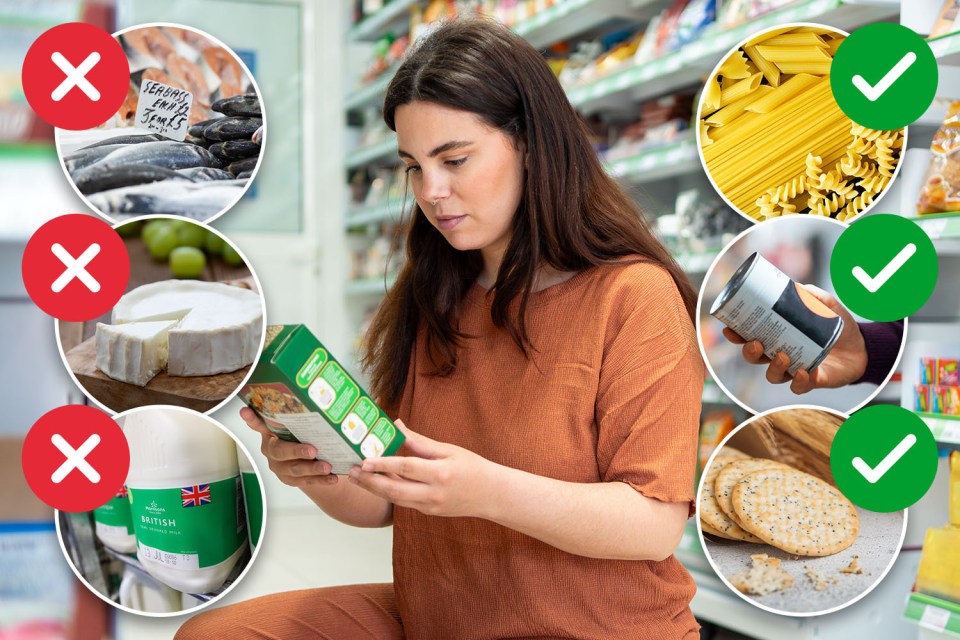
- Fresh meat, poultry, and fish: These are primary areas for dangerous bacteria.
- Pre-prepared chilled dishes and deli products: Ready-to-eat meals, leftovers, and deli items are particularly at risk from Listeria.
- Soft cheeses: Like Brie, Camembert, and blue cheese, are considered dangerous after the 'Use By' date.
- Dairy products: Fresh milk and unpasteurized dairy products carry high risks.
- Packaged salads and cut fruits: These products spoil quickly after packaging.
- Cooked sliced meat and pâtés: Such products can harbor dangerous bacteria without any visible signs.
- Cold smoked fish and prepared shellfish: Also fall under high risk.
As Tessa Clark, co-founder of the food-sharing app Olio, says: “The 'Use By' date relates to safety, so nothing should be eaten after this date.”
“The smell test should never be applied to these high risks,” she adds.
“Dangerous bacteria can be present without any smell or taste.”
Apps that can help you reduce food waste and save money
These seven apps can help you cut down on food waste and save money:
- Too Good To Go - Receive discounted 'magic bags' of surplus food from nearby restaurants, cafes, and bakeries. Free signup allows you to save money and reduce waste.
- OLIO - Share unwanted food and goods with neighbors for free. From leftovers to surplus items, Olio fosters a sharing community.
- Karma - Rescue meals from eateries at reduced prices, receiving full details on available offerings. Ideal for saving money and preventing food waste.
- FoodCloud - Connects supermarkets with charities so surplus food reaches those who need it.
- NoWaste - Track your food, plan meals, and receive reminders about expiration dates with this handy app.
- nosh - An AI-supported app that offers recipes and helps prioritize the use of food.
- Kitche - Scan receipts, track food, and get recipe ideas for leftovers to maximize kitchen resources.
Foods that you can consume after the 'Best Before' date
This is where you can save significantly.
The 'Best Before' date indicates only the guaranteed quality from the manufacturer.
After this date, your cookies might be slightly less crunchy, and chips may be softer, but they are usually perfectly safe to consume.
Shefali Lot, a dietitian from Which?, said: “Many supermarkets have removed 'best before' dates from fruit and vegetables, improving packaging information to cut down on food waste.”
“Expiry dates on some dairy and cheese products have also been changed to 'best before'.
“While quality may deteriorate, these products can still be safe to eat.”
Grocery expert Richard Price emphasized: “The key is to use your senses: look, smell, and taste before throwing away.”
This is the 'Look-Smell-Taste' label principle from Too Good To Go, now used on over six billion products.
Here are some products you can save from the bin even after the 'best before' date:
- Dry goods: Pasta, rice, lentils, oats, flour, and sugar can last for months, even years.
- Canned goods: Canned soup, beans, and tomatoes are fine for years if the can is undamaged.
- Cookies, crackers, and breakfast cereals: They may lose their crunch but remain viable.
- Chocolate and sweets: White 'bloom' on chocolate is perfectly safe.
- Hard cheeses: A small spot of mold on cheddar can simply be cut away.
- Long-lasting sauces: Ketchup, mustard, and soy sauce can stay good for quite some time.
- Butter and yogurt: These can last a week or more after the date. Check for smell or mold.
Remember: 'Use By' means safety, 'Best Before' means quality.
“If more shoppers were aware of this,” adds Richard, “they could save money and help reduce the massive food waste problem in the UK.”
FSA tips on meat, dates, and cooking
The Food Standards Agency (FSA) provides clear guidance to ensure your safety in the kitchen.
Here are their recommendations regarding labels:
'Use By' vs. 'Best Before'
- Use By: This date is marked on products that spoil quickly, such as fresh meat, fish, and prepared meals. This date is strict. Do not eat, cook, or freeze food after the 'Use By' date. This is dangerous, even if it looks fine.
- Best Before: This date relates to the quality of the product. It appears on many items. After this date, food can still be eaten, although quality may degrade. For these products, a “smell test” can be applied.
Freezing and defrosting rules
Freezing stops the growth of bacteria.
You can freeze food until midnight on the day of the 'use by' date.
After defrosting, food should be cooked and consumed within 24 hours.
Defrost food safely - in the refrigerator, cold water, or microwave, but not at room temperature.
Safe meat cooking
Cooking food to the right temperature is necessary to kill harmful bacteria.
The best way to check is to use a food thermometer. The middle of the product should reach at least 70°C for two minutes.
Here are the products that should always be cooked thoroughly:
- Poultry (chicken, turkey)
- Pork
- Minced products (burgers, sausages)
- Rolled joints
- Offal (liver, kidneys)
Steaks and whole pieces of beef or lamb can be served rare, as harmful bacteria usually only exist on the outer surface.
Read also
- Ukraine Launches Free AI-Powered Job Platform: What This Means for Job Seekers
- Facing Diesel Shortages, Russia Bans Exports and Turns to Imports for the First Time
- Kyrgyzstan Scrambles for Fuel as China and Belarus Step In to Replace Russia
- UDP Leadership Accused of Asset Theft: Losses Hit $7 Million
- Russia Faces Fuel Crisis: Putin Admits Shortages as Moscow Prepares to Import Petroleum Products
- Half a Million Bankruptcies in One Year: Russia’s Economy on the Brink of Collapse