A Mysterious Greek Skull: Could It Be a New Human Species or a Missing Evolutionary Link?.

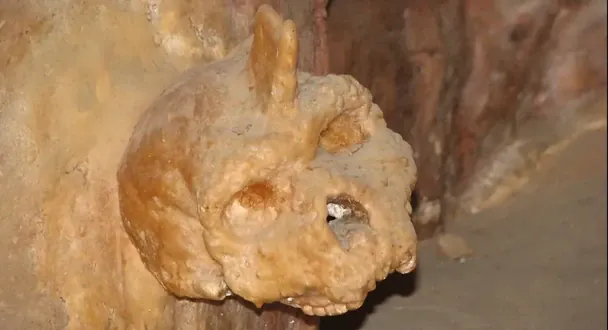
Discovery of a Skull in Greece
According to TSN.ua: A skull discovered in a cave near Thessaloniki during the 1960s has sparked intense scientific debate. Dating back approximately 300,000 years, its features do not match any known human species. The artifact's age has been particularly contentious, with initial studies offering a wide range of possible dates from 170,000 to 700,000 years old. This period was a dynamic time in human evolution, with multiple hominin species potentially coexisting.
New Research Findings
In 2025, researchers successfully established a minimum age for the skull of about 286,000 years (±9,000 years). A significant challenge for further analysis is the fact that the skull's lower jaw is missing. This discovery opens new avenues for studying human evolution and underscores the critical role of paleontological research in understanding our origins.
'The actual age could be somewhat older if the calcite did not form immediately after the skull entered the cave.' Professor Chris Stringer, paleoanthropologist at the Natural History Museum in London
Since the skull does not correspond to any known species, it may point to the existence of previously unknown forms of human ancestors, thereby expanding our knowledge of evolutionary stages. Scientists are continuing their investigations to determine how this skull fits into the broader picture of human and ancestral development.
Read also
- Ukrainian Armed Forces Set a Record: Over 8,600 Enemy Vehicles Destroyed in May
- Moscow Redirects Ukrainian Drones; Kyiv Pitches 'Drone Deal' to Shield Europe
- Investigation Concluded After Russian IL-18 Violates Finnish Airspace
- Iran Hit by US Strikes After Apache Helicopter Downed
- Ukrainian Forces Strike Ammunition Depots in Russia’s Belgorod Region: Inside the Successful Operation
- Finland Concludes Border Breach Probe: Russian IL-18 Jet Entered Its Airspace