Vadim Karp'yak on BZVP: Why the mobilized do not want to learn and what to do about it.

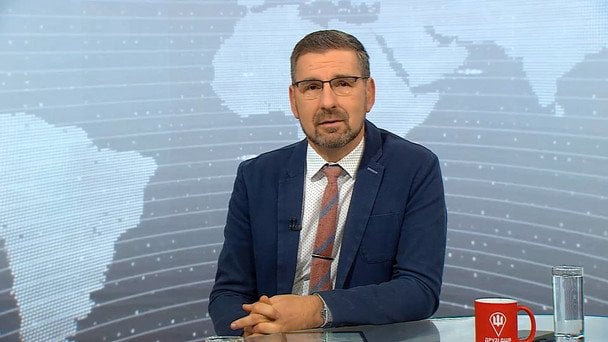
According to ТСН: Renowned Ukrainian journalist and former telethon host Vadim Karp'yak, who joined the ranks of the Defense Forces, completed basic military training and shared his impressions of service.
Karp'yak talked about his personal experience in the training camp of the 95th brigade at the 199th airborne training center. He emphasized that the training of recruits was at a high level, as much as possible under the current conditions.
“After almost two months, no one can say they are going to the combat zone unprepared. Shooting, tactical medicine, counter-drone tactics, electronic warfare, teamwork, engineering, topography, communication,” he noted.
According to him, 90% of the instructors at the training ground are people with real combat experience, and their advice is very valuable. However, Karp'yak noted that not all mobilized individuals understand the importance of training, which he explains as 'busification'.
“People brush off their preparation literally saying: ‘Why the hell do I need this?’. Partly the problem is elementary laziness. But not least, it plays a role that most found themselves in the training center not by their own will. Each mobilized person has their own story, according to which their mobilization is an act of the highest state injustice. Most often, these stories do not withstand the test of fact-checking,” the journalist writes.
Drawbacks of TCK
He also noted instances where the TCK mobilizes men despite their deferment documents. When these documents reach the unit, such mobilized individuals are removed from the list.
However, Karp'yak warned that the TCK system needs improvement, and radical changes in its structure during wartime could lead to a halt in mobilization and a collapse of the front.
Problems of SZS
He pointed out that the Psychological Support Service is more engaged in bureaucratic work—investigating cases of service failure rather than motivating fighters. Karp'yak believes that 'draconian' restrictions, such as the ban on phone usage, also negatively affect the psychological state of the military.
“This causes outrage among soldiers. Because if we are here to primarily protect our families, as we are told, it is important to maintain contact with them,” the serviceman explains.
Other correctable shortcomings
Another issue at the training grounds is the lack of a clear schedule for classes. Karp'yak cites the example of cadets who, after passing difficult tests, were sent off for night classes instead of receiving their insignias.
“...because of this, we foolishly lost a wonderful moment to create a good emotion for people related to the Armed Forces,” Karp'yak recounts.
Summarizing, Karp'yak draws attention to the need for improving training conditions and psychological preparation for soldiers, as their effectiveness in combat actions depends on this. It is important that the security and mobilization service not only fulfill their duties but also listen to the needs of servicemen to maintain their morale and readiness to perform tasks.
Read also
- Armenia's Parliamentary Election Sees Nearly 59% Voter Turnout as Polls Close
- Ukraine Should Develop Ballistic Weapons Jointly with Europe, Expert Urges
- Record Voter Turnout in Armenia’s Election as Pashinyan’s Party Takes the Lead
- Putin Rejects Zelenskyy’s Call for a Face-to-Face Meeting
- Zelenskyy Rules Out Ceding Donbas: Key Points from His Talk with Abramovich
- EU Intelligence Overhaul: What’s Next for the EU INTCEN by 2026