Serbian President Warns Nations Must Choose Between Sovereignty and Imperial Alliances.

Serbian President's Assessment of the Global Security Landscape
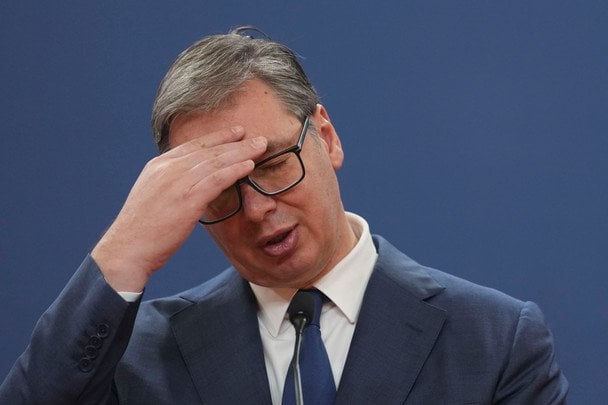
According to TSN.ua: Serbian President Aleksandar Vučić has delivered a stark warning about the state of global security, describing the world as increasingly perilous. He stated that nations now face a fundamental choice: to preserve their sovereignty or to align themselves with emerging imperial powers. Vučić characterized the past year as the most dangerous since the Second World War, pointing to widespread international instability. His comments reflect the deep anxieties of smaller states caught amid great power competition.
Forecasts for the Coming Years
President Vučić further predicted that 2023 will deteriorate further, and that 2024 promises to be even more challenging. He observed that the world is coming to resemble
"a space without rules or regulations,"where
"the big fish eats the small one."Vučić expressed concern that
"there has never been so little peace as there is now,"underscoring the urgency of his warnings. This bleak outlook is shared by many analysts observing the erosion of the post-Cold War order.
Amid these potential shifts, he also noted that the European Union may sign a long-term contract with Serbia for the procurement of ammunition. This detail highlights a growing interest in security cooperation against the backdrop of a worsening international climate. Vučić continues to actively comment on global events, including offering his perspective on the situation in Ukraine and the role of President Volodymyr Zelenskyy.
President Vučić's statements reflect widespread apprehension about global security and the trends observed on the international stage. The heightened interest in military cooperation between Serbia and the European Union may indicate a readiness by nations in the region to adapt to new challenges and threats. In an environment of escalating tension, it is crucial to monitor how these processes will affect stability in Central and Eastern Europe and the broader political landscape.
Read also
- US Skepticism Greets China’s Peace Plan: Can a Ceasefire Actually Happen?
- Ukraine’s Ombudsman Secures Prisoner Return Deal with Russia: First 186 Freed
- First EU Accession Negotiation Cluster Launched by Ukraine: Understanding the 'Fundamentals'
- Putin Responds to Zelensky's Letter: What He Said About a Meeting and Russia's War Aims
- Slovakia Backs Opening EU Accession Negotiation Clusters for Ukraine
- Georgia's Government Has Adopted Moscow's Stance on Ukraine, Says Zurabishvili