Driverless Cars Are Coming: How Cities Should Prepare for the Revolution.

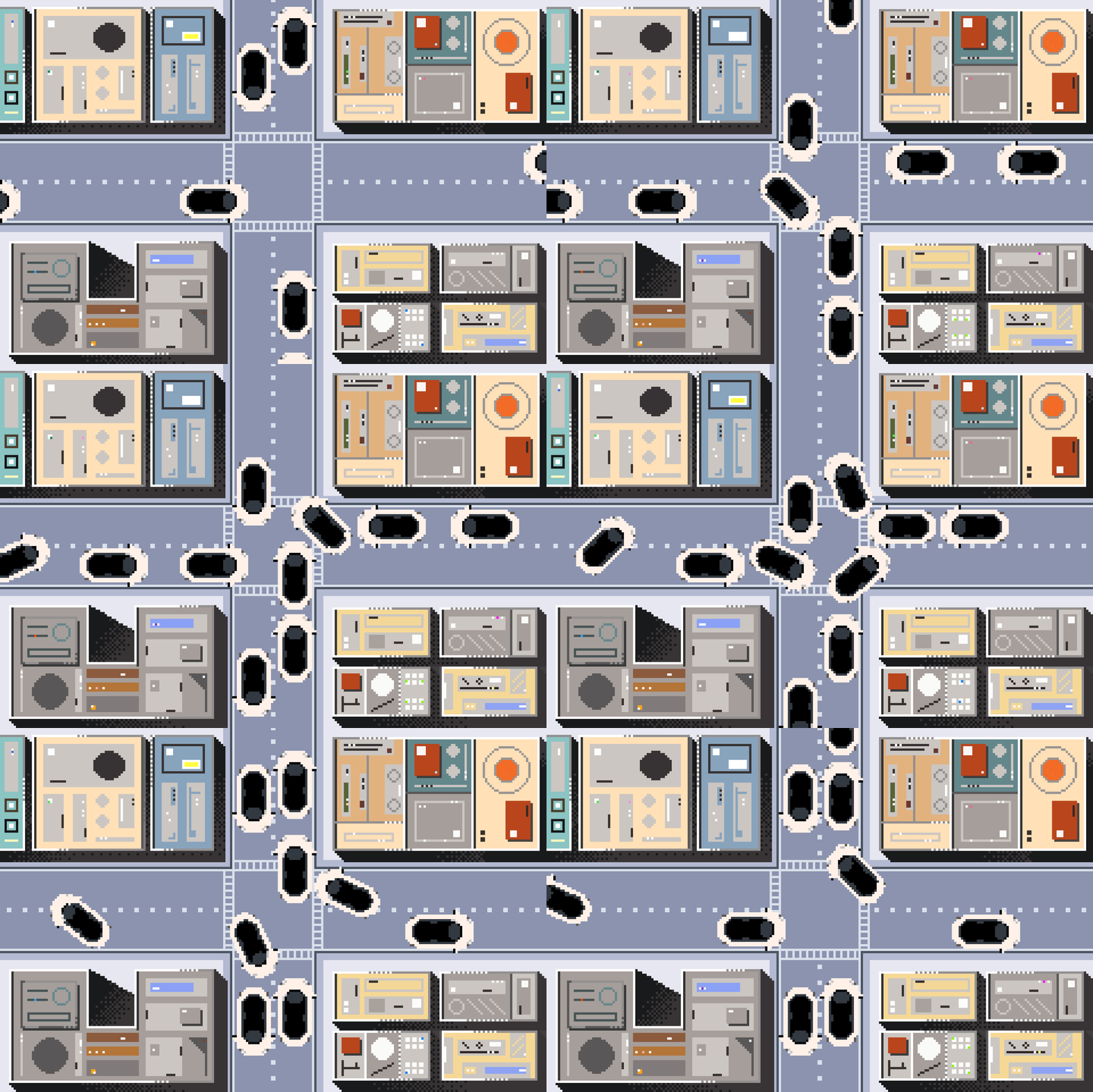
According to Vox: Years ago, the rapid development of cars in the United States changed city life. The fatality rate among pedestrians increased, and trams, unable to navigate through heavy traffic, ceased to exist. Drivers irritated residents with their loud horns.
To cope with the massive number of cars, local authorities filled green spaces, narrowed sidewalks for parking, and restricted pedestrians' freedom of movement. Generations of drivers became accustomed to having the advantage on the roads. America changed under the influence of cars, negatively impacting urban activity and quality of life.
A New Era of Autonomous Cars
Today, the launch of the era of driverless cars promises the biggest shift in the transportation system since the advent of cars. Just a few years ago, driverless vehicles were only available in San Francisco and Phoenix, but now companies like Waymo, Tesla, and Zoox transport hundreds of thousands of passengers weekly in autonomous vehicles in Austin, Los Angeles, and Las Vegas.
Delivery companies are also actively implementing autonomous solutions: they have ordered 20,000 robotaxis from Nuro. As venture capitalist Reilly Brennan noted, 'there is a genuine rush towards transportation automation.'
Autonomous cars have many advantages: they cannot drive drunk, do not get distracted, and do not tire. Rides become more comfortable and enjoyable. The growing accessibility of these technologies will likely encourage people to use them more often.
Challenges for Cities
However, this could be catastrophic for cities, leading to severe traffic jams and deepening the divide between drivers using autonomous cars and those relying on public transport. Over the past 15 years, the rise in popularity of ride-hailing services has resulted in increased overall driving and worsened traffic conditions.
Autonomous vehicles cannot just integrate into the already existing transportation infrastructure. If cities do not update their regulations, it may repeat the mistakes of the last century.
City leaders must act now to ensure that driverless cars improve urban life rather than harm it. This will also enhance residents' quality of life, regardless of how quickly autonomous cars appear on the streets.
Proposals for Infrastructure Renewal
Here are several steps to implement:
Introduce congestion pricing
Currently, the rollout of robotaxis is slow. For instance, Waymo only has about 300 vehicles in Los Angeles County. To achieve universal accessibility, the number of cars must significantly increase, and the cost of technology must decrease.
Manage street parking
Autonomous cars change our perception of parking. Robotaxis do not need to search for parking spots; they simply continue to move. But the question arises: where exactly should they stop?
Stop building new parking spaces
When autonomous cars hit the streets, the need for parking will decrease. Cities can reduce the number of parking spaces and use these areas for housing or parks. This will lay the foundation for the successful implementation of driverless vehicles.
Automate compliance monitoring
In the Bay Area, driverless cars create confusion on the streets, interrupting emergency service traffic or accidentally stopping at intersections. Difficulties in enforcement allow companies to violate laws.
Address current and future problems
There is a significant difference between a city where the number of autonomous cars is limited to a few hundred and one where there are tens of thousands. City leaders must make informed policy decisions now to enhance urban life, regardless of how fast the autonomous future arrives.
With the development of autonomous transport, regulation and enforcement will also become a major issue. Many cities may face new challenges, and it is important to consider past experiences to avoid repeating old mistakes. We need to rethink how our infrastructure will evolve in the new reality to ensure comfort and safety for all residents.
Read also
- Antique Musket Balls Repurposed Into Solar Cells with 94% Efficiency
- South Korea Patents a Silent Engine for Air Taxis
- 144 FPS at 4K: A Gamer Pairs an RTX 3090 and RTX 3050 for Stunning Performance
- Snapdragon 8 Elite Gen 5: Qualcomm’s New Chip Targets Sub-$600 Smartphones
- Samsung Unveils Three New Odyssey Gaming Monitors: Specs and Features Revealed
- Plastic Waste Converted into Jet Fuel: New Breakthrough by Chinese Researchers