Confrontation in the USA: How Ordinary People Are Stopping Billion-Dollar Data Centers for AI.

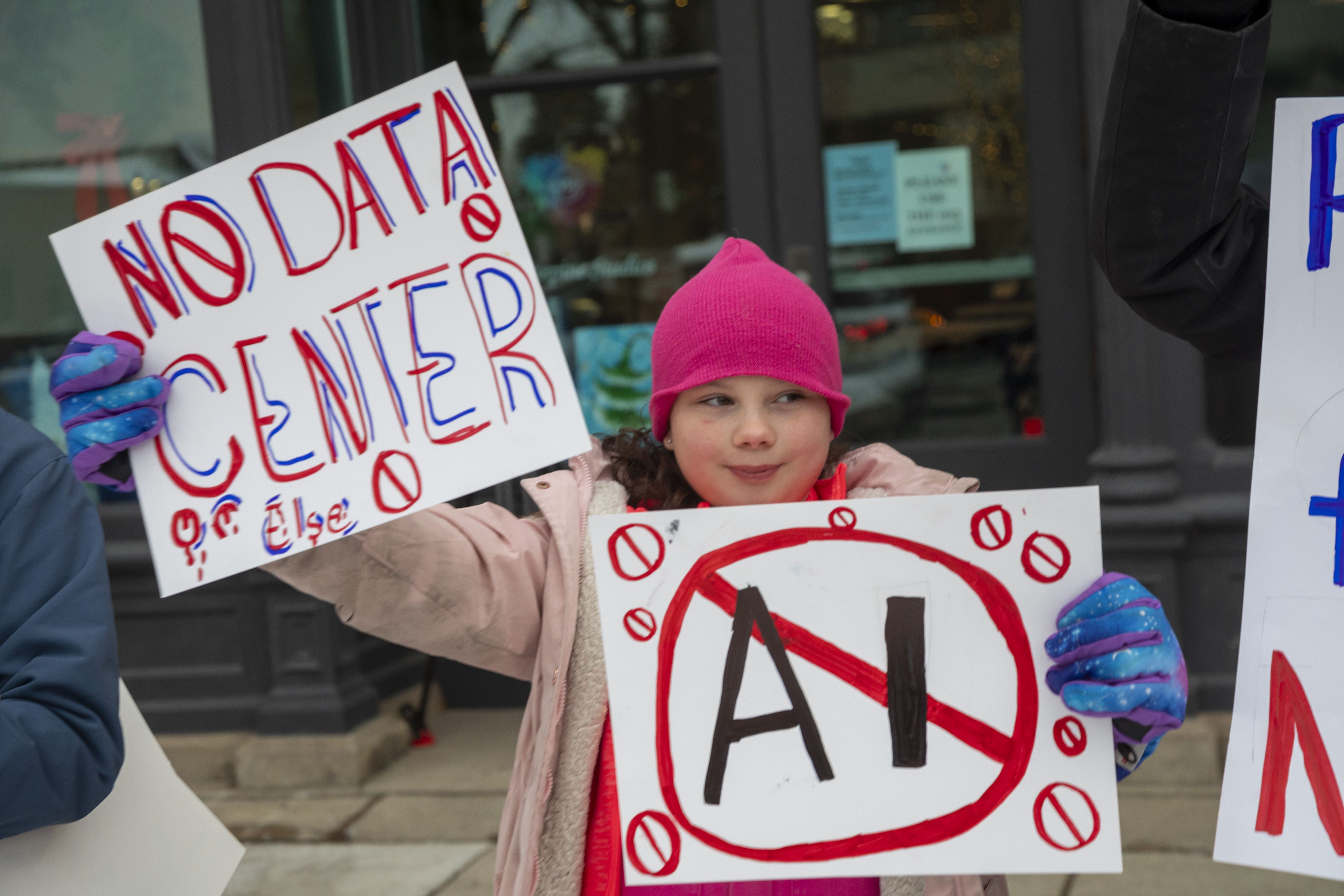
According to Vox: For over a hundred years, the steel mill in Conshohocken, Pennsylvania, has been a source of jobs for thousands of people and a cornerstone of the local economy. However, after the previous owner went bankrupt in the 1970s, the enterprise underwent many changes. Last summer, the mill stopped operations indefinitely and was put up for sale.
This is a familiar story of economic decline. The Trump administration promised to revive American manufacturing, but no progress has been made so far. However, the remnants of industrial past in Conshohocken might serve as a foundation for new economic realities rooted in artificial intelligence. A local developer decided to transform the old steel mill into a large data processing center.
“I propose giving artificial intelligence the chance to grow by replacing 19th-century manufacturing with a 21st-century product,” said developer Brian O'Neill at a Plymouth planning agency meeting in October.
Numerous billion-dollar data center projects are being implemented in the USA, with even larger investments planned in the near future. President Donald Trump and representatives of the Democratic Party support these projects, which are presented locally as beneficial to the economy: promises of significant tax revenue without additional burdens on infrastructure.
“The annual profit of the building I propose will be $21 million a year. That's without traffic, without kids in schools, just cash flow,” emphasized O'Neill.
The proposal received a positive response from politicians, but it did not gain support from local residents.
“For residents living near data processing centers, there are no benefits,” highlighted Genevieve Boland, who lives just a few blocks from the old mill.
Dissatisfaction with similar projects is growing in various communities across the country against the backdrop of the AI economy boom, and this process may significantly influence the political and economic future.
Populist Resistance to Data Centers
Immediately after the announcement of the planned data processing center, Boland and her neighbor Patty Smith began organizing neighbors, distributing flyers, and actively discussing the issue on Facebook.
Their calls resonated: neighbors shared concerns about noise, light, potential environmental pollution, and rising electricity prices — these fears became commonplace in other communities where data processing centers quickly emerge.
“It’s obvious that utility bills will rise, and I don't want to see that,” expressed Mark Muziak, who also lives near the mill.
Pennsylvania is part of a regional electrical grid, where many new data processing centers have opened in recent years, resulting in increased electricity costs. Last year in New Jersey, electricity rates rose by about 20%, becoming a contentious issue in the gubernatorial elections.
Resistance to data processing centralization is starting to appear in news pages, but already has serious consequences: in the second quarter of this year, 20 data processing center projects valued at nearly $100 billion were canceled or suspended due to local residents' opposition, according to a report by the Data Center Watch project.
How Data Center Resistance is Shaping Politics
Opposition to data processing centers does not have a clear ideology.
“One of the striking findings was that opposition to these centers turned out to be bipartisan,” asserts Miguel Villa, an analyst at 10a labs.
Democratic gubernatorial candidates in New Jersey and Virginia included criticism of certain aspects of data processing center construction in their electoral campaigns, but the reaction to these projects has so far manifested at the local level.
In Georgia, two Democrats achieved notable victories in the Public Service Commission elections, responsible for regulating climate and energy policies, considering rising electricity rates due to the data center boom.
Several local elections in Virginia — where the most data processing centers in the world are concentrated — have taken place with a focus on discussing issues related to these projects. Democrat John Macauf, who ran in a conservative district, based his campaign on criticizing generous benefits for data processing centers.
“We knocked on 80-100 doors a day, and during these meetings had about 15 conversations; more than ten of them were about data processing centers,” said Macauf.
At this moment, more Democrats than Republicans are using opposition to data processing centers as a political strategy, but this does not exclude the involvement of Republicans. In Florida, James Fishback, a right-wing gubernatorial candidate, is making opposition to data processing centers a key point of his campaign. Republican Senator Josh Hawley from Missouri has also voiced opposition to data processing centers.
In the suburbs of Philadelphia, the steel mill in Conshohocken seems set to remain vacant for a while longer: the developer who planned to transform it into a data processing center unexpectedly withdrew his application due to legal difficulties.
Boland and Smith, the neighbors who are organizing the resistance, expressed relief but are not planning to stop. They intend to continue their fight along with other activists they have been communicating with in recent weeks. Boland recently created a website to coordinate protests at the state level.
“Data processing centers are everywhere, but that doesn’t mean they should appear in your backyard,” she noted. “This can be changed.”
Against the backdrop of the growing popularity of artificial intelligence, such protests may signal possible hurdles for further development in this industry, as local communities become increasingly active in protecting their interests.
Read also
- Trump Approves Nuclear Deal with Saudi Arabia, Allowing Enrichment Without IAEA Oversight
- Pentagon Requests $67 Billion More as US War Costs Against Iran Hit $37.5 Billion
- Iran Faces Infrastructure Bombing Under New US Strategy Announced by Trump for Strait of Hormuz Attacks
- Ukraine’s Air Defense Gets a Boost: New Interceptor Missiles for Patriot Systems Discussed with NATO
- Putin Abandons Plans to Return Occupied Lands to Ukraine: What We Know About the So-Called 'Buffer Zones'
- Trump Endorses FIFA's Ban on Balogun and Backs New UN Secretary-General Pick