Protests in Nepal: former first lady killed during riots over social media ban.


Violence in Nepal after the social media ban
According to The Sun: The former first lady of Nepal was killed in fierce protests that erupted following the imposition of a ban on social media. At least 19 people have died as a result of the unfolding events.
Protesters from Generation Z set fire to the Nepalese parliament and the home of four-time Prime Minister KP Sharma Oli, forcing him to resign.
Protesters flee after the burning of Singha Durbar, which houses various ministries of Nepal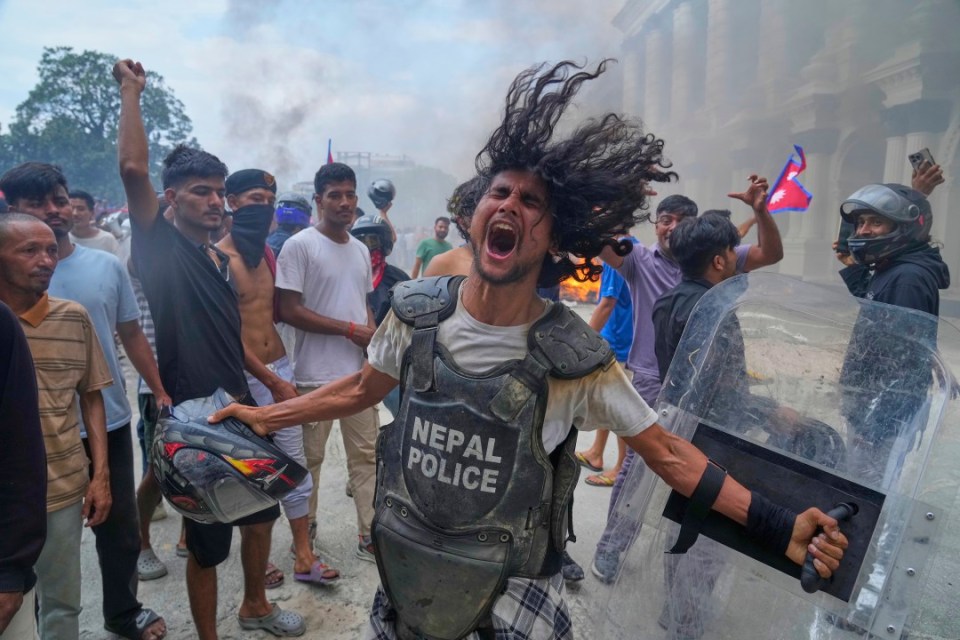 Protester throws a photograph of the Prime Minister of Nepal into the fireProtester in a bulletproof vest with a shield taken from the police shouts slogans
Rajyalakshmi Chitrakar, the wife of former Prime Minister Jhalanath Khanal, died when she was trapped in her home.
During protests that started earlier this week, at least 500 people have been injured.
Kathmandu, the capital of the country, was filled with thick black smoke as military helicopters attempted to disperse the crowd.
Stunning photos showcase the fire engulfing the Singha Durbar palace as the crowd gathered outside.
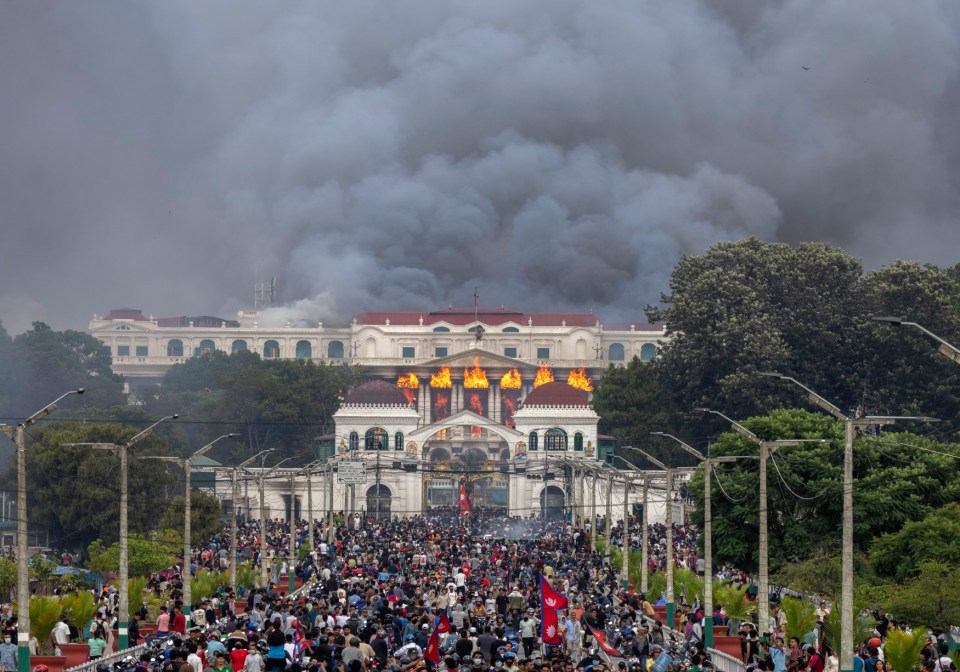
Protesters, mainly young men, ruthlessly stormed the city armed with hunting rifles and set fire to the Supreme Court.
The office of the Attorney General, the Prime Minister's residence, Parliament, and other politicians' homes also caught fire.
Rajendra Badhai, a member of parliament, stated:
“Kathmandu is burning. Smoke fills the capital as protesters set many important offices ablaze.”
Fire and smoke billow from the Singha Durbar palaceAmid the chaos, four-time Prime Minister Oli stepped down to facilitate “further efforts towards a constitutional political resolution.”
Guided by the “emergency situation” in the country, he stated:
“I hereby resign from the position of Prime Minister, effective immediately, in accordance with Article 77(1)a of the Constitution.”
Yesterday, protesters faced tear gas and water cannons while attempting to protect political residences.
But the police dealing with the rioters were forced to retreat when the crowd surrounded the parliament building.
Protests erupted after the government blocked over a dozen social media platforms, including Facebook, X, and YouTube, for refusing to comply with new legislation. Officials said the regulations were necessary to prevent the spread of fake news and internet fraud.
Critics—many of whom are students—harshly condemned this decision, deeming it censorship, and took to the streets in large numbers demanding an end to corruption.
According to the Kathmandu Post, the protests are not only linked to social media but also reflect growing distrust towards the 'corrupt' regime.
They wrote:
“This is not only about social media - it's about trust, corruption, and an entire generation that refuses to stay silent.”
Officials called for calm during the ongoing protests and expressed their condolences to the families of the deceased.
The appeal reads:
“With the resignation of Prime Minister KP Sharma Oli now accepted, we sincerely urge all citizens to maintain calm and avoid further harm to life and property.”
The events in Nepal have been a result of deep societal dissatisfaction with the government and its actions. The protests indicate a crisis of trust between the government and citizens, likely leading to further protests and changes in the political situation in the country. Nepal faces daunting challenges that will require attention and action from the new government.
Read also
- Satellite Imagery Reveals Anti-Drone Cages Installed on Russian Submarines in Novorossiysk
- Seven Aircraft Destroyed in Strike on Saky Airfield, Ukraine Intensifies Crimea Campaign
- Ukraine Seizes the Offensive: Former U.S. Envoy Analyzes Strikes on Russia’s Energy Grid
- Denmark Unveils Its Largest Military Aid Package for Ukraine Yet: A Staggering Amount
- Half of Russia’s Crimean Air Fleet Destroyed by Ukrainian Drones, Grounding a Key Regiment
- Ukrainian Forces Strike Crimea: Bridges, EW Station, and Russian Intelligence Hit