Collapse of the Ocean Current AMOC: Europe Faces Centuries of Dry Summers.

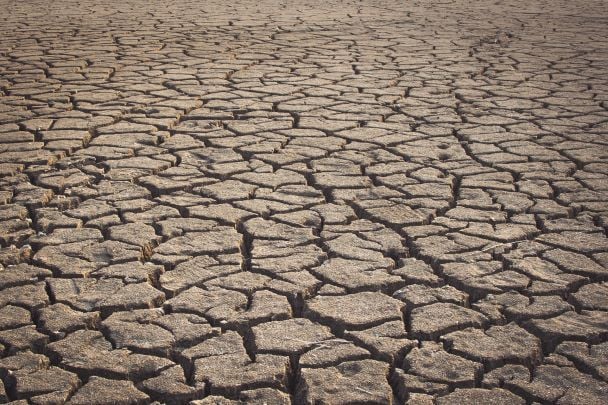
According to ТСН: Europe may face serious climate changes if a crucial ocean current that currently creates comfortable conditions on the continent stops. Research shows that in the event of the collapse of the Atlantic Meridional Overturning Circulation (AMOC), hot and dry summers in Europe could last for hundreds of years.
Scientists from Utrecht University conducted the first comprehensive study of the impact of various climate scenarios on summer precipitation in Europe under the conditions of AMOC's disappearance. This current transports warm waters from the south to the north, providing the continent with a milder climate and intense summer precipitation.
Research and Modeling
The team of researchers conducted eight simulations, each covering a period of over a thousand years. Some models accounted for pre-industrial levels of greenhouse gas emissions, while others considered realistic scenarios such as RCP4.5, which anticipates stabilization of emissions by mid-century, and RCP8.5, where emissions show significant increases. In several scenarios, large volumes of freshwater entering the Atlantic could be the result of melting glaciers, which in turn would affect the salinity of the water and the density of oceanic masses, threatening AMOC.
Research Results
The results demonstrated that even with stabilized emissions (RCP4.5), the duration of dry seasons in Europe increases by 8% if AMOC remains stable, and by 28% in the event of its collapse. Certain regions are particularly threatened by intensified dryness. For instance, in Sweden, the duration of dry periods increases by 54% with the current functioning and by 72% without it. In Spain, these figures are 40% and 60% respectively, which could exacerbate the already existing water resource crisis.
Although the study is very detailed, some experts believe that the conditions for the collapse of AMOC require unrealistic volumes of freshwater. Nevertheless, climatologist John Robson emphasized that the findings of this research should be taken as a warning about the potential consequences of extreme scenarios.
Other scientists, including Stefan Rahmstorf, emphasize the real risk of weakening AMOC. They warn that if this current system stops, its consequences could be felt for at least a thousand years and will result from decisions made today.
The study highlights that global warming is already leading to drier summers in Europe, and the disruption of AMOC will only exacerbate this trend, creating climatic conditions that the continent will have to cope with for generations.
Read also
- Ukraine Strikes Russian Refinery and Targets in Crimea: Details of the Operation
- NATO and the EU Are Strengthening Drone Defenses on the Eastern Flank: What’s About to Change
- Ukraine Gains the Upper Hand in the War: What Shifted the Battlefield Dynamics
- Even Without a Defeat, Ukraine Could Still Lose the War: Rethinking What 'Victory' Really Means
- Norway Steps Up Nuclear Safety Support for Ukraine Following Chernobyl Attack
- Ukraine Cuts Off Crimea from Russia: Traffic on the R-280 Highway Plummets by 71%