Antarctica's Gravity Anomaly and Its Global Climate Impact.

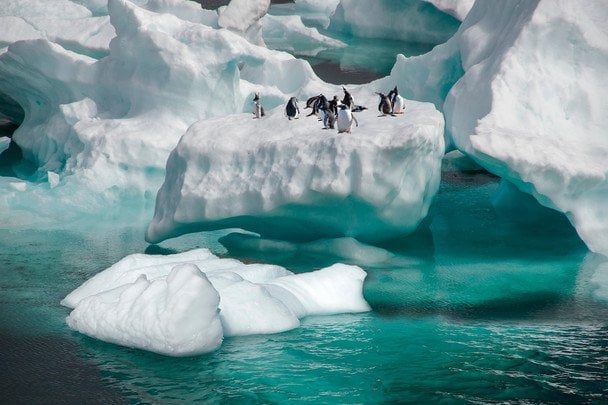
Investigating Antarctica's Gravity Anomaly
According to TSN.ua: Scientists studying a massive gravitational anomaly in Antarctica have found it offers crucial insights into the evolution of the ice sheet and its global climate effects. Known as the Antarctic Geoid Low (AGL), this region is characterized by a significantly weaker gravitational pull. This 'gravity hole' formed tens of millions of years ago and presents a compelling scientific puzzle for researchers. Understanding such anomalies is key to modeling past and future sea-level changes.
Research published in the journal Scientific Reports details how scientists reconstructed geophysical processes dating back 70 million years. This work revealed that the gravitational low intensified approximately 30 to 50 million years ago. This discovery is vital for comprehending how shifts in gravity influence the Antarctic ice sheet and, consequently, global sea levels.
Global Climate Consequences
The ocean level around Antarctica is lower than the global average, a phenomenon also potentially linked to this gravitational anomaly. Researchers note that Earth's gravity varies based on the mass and density of underlying rock, making the study of such features highly relevant for global climate science. These gravitational variations directly affect how water is distributed across the planet's oceans.
"Imagine we are doing a CT scan of the entire Earth. But instead of using X-rays, we use earthquakes." — Alessandro Forte
Thus, Antarctica's gravity hole is not only a unique geophysical feature but also a critical indicator for studying climate change. This research underscores Antarctica's central role in scientific inquiry and its profound influence on the global climate system. The continent, also notable for being the site where the first huskies arrived in 1899, remains a focal point for intense scientific investigation and discovery.
The study of this Antarctic anomaly opens new avenues for understanding the geophysical processes driving climatic shifts. A deeper investigation of such features could help scientists better predict the consequences of global warming and sea-level rise, which is critically important for coastal regions worldwide. This work highlights Antarctica's importance as a key subject for research in the context of global environmental change.
Read also
- Moscow Redirects Ukrainian Drones; Kyiv Pitches 'Drone Deal' to Shield Europe
- Investigation Concluded After Russian IL-18 Violates Finnish Airspace
- Iran Hit by US Strikes After Apache Helicopter Downed
- Ukrainian Forces Strike Ammunition Depots in Russia’s Belgorod Region: Inside the Successful Operation
- Finland Concludes Border Breach Probe: Russian IL-18 Jet Entered Its Airspace
- Ukrainian Forces Strike 36 Russian Targets: Moscow’s Daily Losses Revealed