Trump Responds to Greenland's Rejection of U.S. Annexation.

U.S. President's Remarks
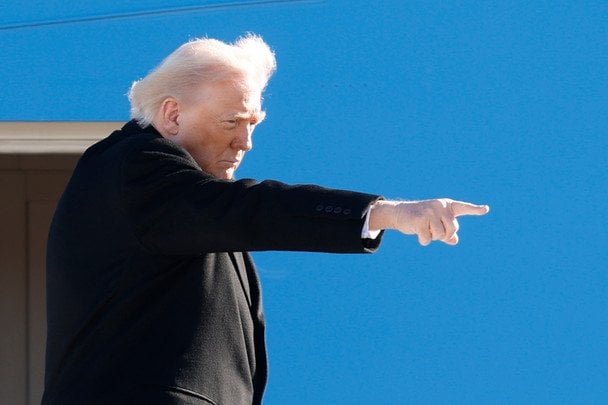
According to TSN.ua: U.S. President Donald Trump has addressed the clear desire of Greenland's residents not to become part of the United States. He noted that he has not yet had the opportunity to speak with them directly. Trump suggested that once such a conversation takes place, the Greenlanders might reconsider their stance.
The Situation in Greenland
The people of Greenland have unequivocally expressed their opposition to joining the United States. This position became public through statements by reporters, who emphasized that Greenlanders made it clear they do not wish to be part of the U.S. Furthermore, in 2025, the United States attempted to gather intelligence on military installations in Greenland, bypassing official channels of cooperation with the Danish government.
Trump expressed hope for a positive dialogue, although direct communication with the island's inhabitants has not yet occurred.
This situation highlights the complexity of relations between the U.S. and Greenland, as well as the importance of considering local opinion in international affairs. Greenland is a vast, autonomous territory of Denmark with significant strategic importance in the Arctic. The Greenlanders' desire to preserve their autonomy and cultural identity could pose a significant obstacle to any U.S. integration efforts, even if such proposals are made at a political level. Future dialogue and discussion will be crucial for understanding the needs and concerns of the Greenlandic people.
Read also
- U.S. Role in Zelenskyy’s Letter to Putin: Analyst Weighs In on Diplomatic Channels
- Trump Endorses a Meeting Between Zelensky and Putin: Peace Proposal Sent to the Kremlin
- AI-Driven Simulation Reveals How a US-China War Over Taiwan Could Ignite
- Trump Backs Proposal for Zelensky-Putin Meeting: What We Know So Far
- Rubio Announces $400 Million Aid Package for Ukraine: Could This Shift Russia’s Stance?
- Expanding Ukraine’s Footprint in the Middle East: Countering the Russian-Iranian Threat