Cloning Humans: Why the Scientific Breakthrough of 1996 Never Became Reality.

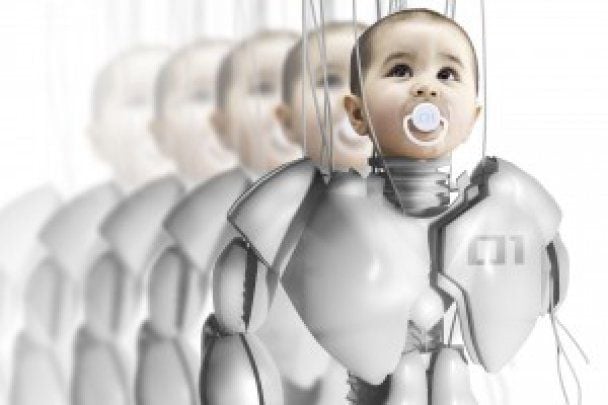
According to ТСН: In 1996, the world was surprised by the news that ushered in a new era in science: the birth of the sheep Dolly. It became the first mammal to be cloned from an adult organism's cell. At that time, the media and the scientific community were full of optimism and hoped for the rapid emergence of the first cloned human.
From Great Hopes to Harsh Reality
By the end of the 1990s, it was believed that this technology would solve many problems. The main hopes were placed on:
Genetic Healing: Cloning was seen as a method to eradicate hereditary diseases.
Overcoming Defects: It was believed that this process would help humanity eliminate congenital defects.
Turning Point
However, just three years later, the initial euphoria turned into concern. In 1999, French researchers published results that questioned the safety of the technology. Scientists discovered that cloning can significantly increase the risk of congenital anomalies.
This discovery led to a reevaluation of the ethical and biological limits of scientific experiments. After the birth of Dolly, numerous unfounded claims about the creation of cloned humans emerged. For example, French chemist Brigitte Boisselier claimed in 2002 to have created the first cloned human named Eve but could not provide any evidence.
Problems of Mammal Cloning
Cloning is a general term that encompasses various processes for producing 'genetically identical copies.' In the potential cloning of a human, methods of 'reproductive cloning' are used, where a 'mature somatic cell,' such as a skin cell, is used. The DNA of this cell is inserted into an egg cell from a donor from which the nucleus has been removed.
Then, the egg cell begins to develop and is eventually implanted into the uterus of a woman. Despite the successful cloning of other mammals, humans have not yet been included on that list.
“I believe there are no compelling reasons to create human clones. Cloning humans is a particularly dramatic step...”
The problems associated with human cloning are numerous and diverse: psychological, social, and physiological risks, including a high risk of early death due to congenital defects. Moreover, there is concern that cloning could become a tool for eugenics.
Cloning of mammals often led to developmental anomalies, and another significant problem is that cloning does not create an exact copy of the original.
“We all know about clones - identical twins are clones of each other...”
Thus, a clone would only be genetically similar to the original but would possess its own identity, moral principles, and unique characteristics that distinguish it from the original.
Cloning Humans is Ethically Unacceptable
Regardless of moral considerations, human cloning could theoretically be used for research; however, according to Greeley, this is 'ethically unacceptable.'
Furthermore, as medicine advances, the benefits of a clone become less relevant. The idea of using cloned embryos to obtain stem cells has lost its value after the discovery of induced pluripotent stem cells (iPS cells).
Shinya Yamanaka, a Japanese researcher, made this discovery by reverting mature cells back to an embryonic state using only a few genetic factors. This development opened up possibilities for 'creating an unlimited source of cells for therapeutic purposes.'
Instead of embryos, skin cells can be used. This technological advancement has actually made the concept of using cloned embryos scientifically viable.
Today, iPS cells are used for disease modeling, drug research, and regenerative medicine.
Moreover, the editing of germline cells has recently become a topic of public discussion due to the possibility of creating 'super children.' This process raises controversies and requires further studies.
Scientists have revived extinct prairie wolves for the first time. Three genetically modified wolves resembling the extinct prairie wolves are now actively living in a protected area in the USA.
Thus, the question of cloning remains open as technologies evolve and ethical boundaries continue to be debated. Technologies for gene editing and creating cells to meet medical needs could represent a radical step into the future.
It remains to be seen how these scientific advances will impact society as a whole: for the complete realization of the potential of science depends not only on discoveries but also on the ethical, legal, and social issues that arise alongside new possibilities.
Read also
- AI-Designed Universal Coronavirus Vaccine Successfully Tested in the UK
- Earth Set for Minor Geomagnetic Storm on June 13: What It Means for You
- Doctors in Ukraine to Lose Deferment: Who Can Sign a Military Contract and How
- Medical Confidentiality in Ukraine: Fines for Breaching Patient Privacy
- Groundbreaking Heart and Cancer Surgeries Successfully Performed in Ukraine
- Doctors Sound the Alarm: Up to 80% of Patients Hide Critical Health Information