Organic Molecules Detected in Comet ATLAS: Implications for the Search for Life.

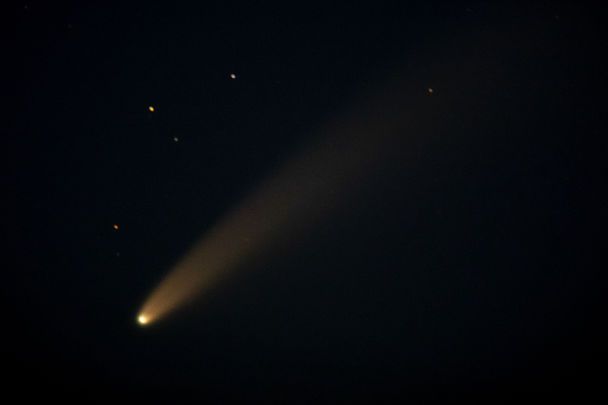
The Flyby of Comet 3I/ATLAS
According to TSN.ua: Comet 3I/ATLAS, discovered in July 2025, passed by Earth and released a cloud of organic molecules significant for biological processes. This celestial object reached speeds of approximately 221,000 km/h during its journey.
In December 2025, the comet made its closest approach to Earth, coming within about 270 million kilometers. During this flyby, it ejected a number of key organic compounds, including:
- Methanol
- Cyanide
- Methane
These substances are considered fundamental building blocks and could play a crucial role in understanding biological processes both on Earth and elsewhere in the cosmos.
The Significance of Cometary Research
Comet 3I/ATLAS reached its perihelion, or closest point to the Sun, in late October 2025, marking a key phase for observation. Studying comets like this one and their chemical makeup helps scientists investigate the origins of life on Earth and the potential for life on other planets. Comets are often described as frozen time capsules from the early solar system.
"The flyby of Comet 3I/ATLAS and the ejection of organic molecules opens new avenues for research in astrophysics and astrobiology." - Source unknown
This event underscores the importance of studying cosmic objects to understand the processes that can foster the development of life, both on our planet and beyond. Given that comets are potential sources of water and organic material, their investigation may provide vital clues about the conditions conducive to life arising in other parts of the universe.
Read also
- Moscow Redirects Ukrainian Drones; Kyiv Pitches 'Drone Deal' to Shield Europe
- Investigation Concluded After Russian IL-18 Violates Finnish Airspace
- Iran Hit by US Strikes After Apache Helicopter Downed
- Ukrainian Forces Strike Ammunition Depots in Russia’s Belgorod Region: Inside the Successful Operation
- Finland Concludes Border Breach Probe: Russian IL-18 Jet Entered Its Airspace
- Ukrainian Forces Strike 36 Russian Targets: Moscow’s Daily Losses Revealed