The World's Runaway Glaciers: A Small Fraction Poses a Major Threat.

Analyzing Glacier Behavior
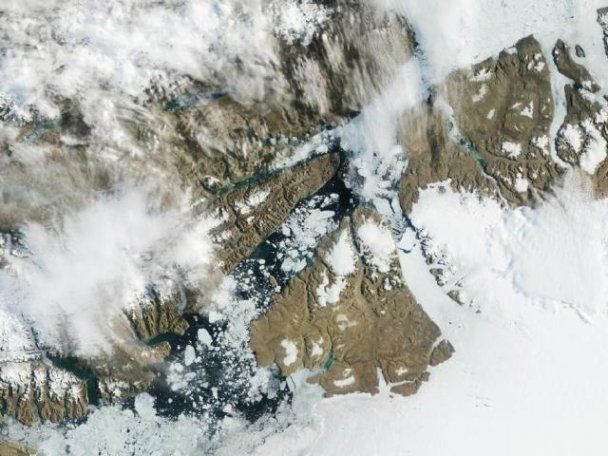
According to TSN.ua: An international research team has studied the behavior of over 3,000 glaciers capable of surging at speeds up to 60 meters per day. This phenomenon, known as glacial surging, presents a severe threat to mountain regions. While these surging glaciers constitute only 1% of the world's total glacier count, they account for a disproportionate 16% of the global ice-covered area. The highest concentrations of these fast-moving glaciers are found in the Arctic, the Himalayas, and the Andes.
The Dangers of Rapid Glacial Movement
The study revealed that the Nathorstbreen glacier on Svalbard advanced 15 kilometers in just ten years, illustrating the dangerously rapid pace at which these ice masses can move. The potential consequences are devastating on a global scale; for instance, the complete collapse of the Thwaites Glacier alone could raise global sea levels by 65 centimeters, threatening coastal communities worldwide.
Beyond sea-level rise, surging glaciers create immediate regional hazards:
- The Shisper glacier blocked the Karakoram Highway, a vital transport link between Pakistan and China, disrupting travel and trade.
- They can form unstable glacial lakes, which may burst and cause catastrophic flooding downstream.
- The rapid movement creates deep crevasses, posing a significant danger to tourists and mountaineers in these areas.
These findings underscore the critical need for continuous glacier monitoring and proactive measures to prevent potential disasters triggered by their intense activity. Glacial surges are complex events influenced by factors like meltwater and bedrock geology, making them difficult to predict.
The research highlights serious environmental challenges with far-reaching global implications. Ongoing observation of glaciers and the development of climate adaptation strategies are becoming essential to mitigate the risks associated with their dynamic behavior. Such efforts are crucial not only for protecting fragile ecosystems but also for safeguarding the lives and livelihoods of millions of people living in vulnerable mountain and coastal regions.
Read also
- Moscow Redirects Ukrainian Drones; Kyiv Pitches 'Drone Deal' to Shield Europe
- Investigation Concluded After Russian IL-18 Violates Finnish Airspace
- Iran Hit by US Strikes After Apache Helicopter Downed
- Ukrainian Forces Strike Ammunition Depots in Russia’s Belgorod Region: Inside the Successful Operation
- Finland Concludes Border Breach Probe: Russian IL-18 Jet Entered Its Airspace
- Ukrainian Forces Strike 36 Russian Targets: Moscow’s Daily Losses Revealed