Sargasso Sea Without Shores: Why This Oceanic Anomaly Is Vital.

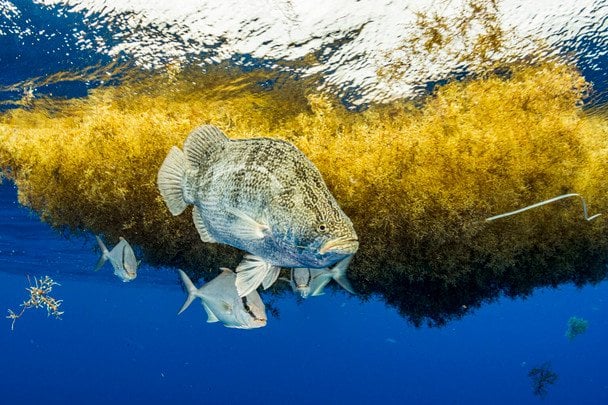
According to ТСН: The Sargasso Sea, located deep in the North Atlantic approximately 950 kilometers from the Florida coast, is a unique aquatic region that forms a sort of 'floating island' against ocean currents. Its calm surface is always covered with golden blooms of sargassum – floating seaweed from which it gets its name.
Sargassum stays afloat thanks to tiny gas bubbles, forming clusters that become homes for a variety of marine species: shrimp, fry, crabs, and numerous microorganisms. Scientists call these floating objects 'ecological oases of the open ocean' as they provide shelter and nourishment for living beings far from the mainland.
Historical Context
The mysterious silence of the Sargasso Sea was known to sailors even before the era of satellite imagery. Christopher Columbus, during his journey in 1492, mentioned storms that left sailing ships immobile. This phenomenon is explained by the North Atlantic subtropical gyre that traps floating material in the center of the ocean.
Life in the Sargasso Sea
This aquatic region provides crucial places for the migration of many species. Porbeagle sharks actively hunt for small fish and shrimp here, and the larvae of European and American eels are born in the sargassum beds. Currents carry the fry to the rivers of North America and Europe, and adult eels travel about 4800 kilometers back to spawning grounds, which remains a mystery for scientists.
The Sargasso Sea also plays an important role in climate processes: in summer, its water temperature reaches 28–30 °C, while in winter it drops to 18–20 °C. According to observations, since the 1980s, the surface water temperature has risen by about one degree, complicating the mixing of ocean layers and reducing oxygen in the depths.
Ecological Challenges
Recently, this aquatic region has also become a site of plastic waste accumulation, creating new challenges for the ecosystem. Powerful currents sweep away plastic bags and remnants of fishing gear, which can pose a danger to young sea turtles.
To protect this unique ecosystem, the Sargasso Sea Commission was created in 2014, calling on countries to choose shipping routes that avoid the seaweed beds and work on reducing plastic pollution.
Scientists warn that any changes in this area can affect eel populations, the availability of food for whales, and atmospheric processes in Europe. Despite appearing as a regular blue spot without shores on the map, the Sargasso Sea is one of the key elements that determine the balance of our oceans and climate.
Thus, the Sargasso Sea not only attracts scientists with its uniqueness but also emphasizes the importance of preserving marine ecosystems in light of global ecological changes. Without attention to these issues, we risk losing this natural treasure, which has a tremendous impact on life in the ocean and on land.
Read also
- Suitcase delivery to parcel lockers across 8 EU countries launched by InPost – pricing revealed
- Bus Service to Poland via Shehyni Checkpoint to Halt for 18 Months Starting June 15, 2026
- Over 10 Odesa Beach Zones Certified and Ready for Summer Season
- Anticipating Summer Ticket Surge, Ukrainian Railways Shares Booking Tips
- Europe's Airports Face Six-Hour Queues: IATA Warns of New Crisis
- Malmo to Narvik by Night Train: Snälltåget Launches New Service with Fares and Schedule