Where to Find the World's Clearest, Most Perfectly Blue Waters.

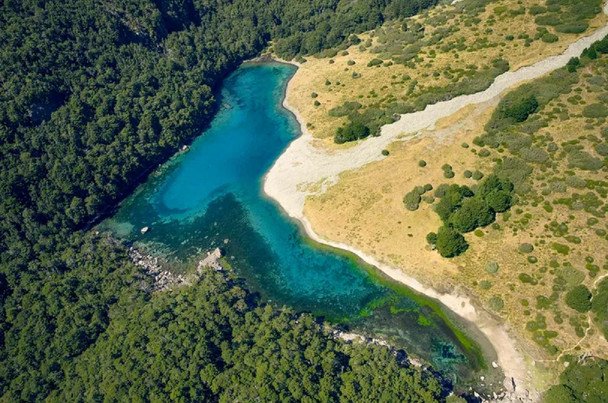
Discovering the Planet's Most Transparent Waters
According to TSN.ua: Earth's bodies of water display a vast spectrum of colors and clarity, influenced by their chemical composition and the presence of suspended particles. Two locations stand out for their exceptionally clear and vividly blue waters:
- Lake Rotomairewhenua in New Zealand;
- The Weddell Sea in the Southern Ocean.
These sites are not only breathtakingly beautiful but also boast remarkable scientific measurements of visibility. For travelers and scientists alike, such clarity is a rare and captivating phenomenon.
Lake Rotomairewhenua, also known as the Blue Lake, holds the title of the world's clearest freshwater lake. Visibility in its waters reaches approximately 80 meters, making it a unique natural wonder. The difference between the clarity of the Blue Lake and optically pure water is negligible, highlighting the lake's exceptional purity.
Another stunning example is the Weddell Sea, where in 1986 scientists recorded a Secchi disk visible at a depth of 79 meters. This indicates extraordinary conditions for observing the underwater realm. Furthermore, according to NASA satellite analysis from 2017, the largest single area of the bluest water on Earth was recorded in the South Pacific Ocean.
The Ecological Implications of Crystal-Clear Water
Paradoxically, regions with the highest water clarity often support less marine life due to a scarcity of nutrients. This underscores that crystal-clear water can be linked to ecological conditions that do not always foster a diverse underwater ecosystem. Therefore, these perfectly blue bodies of water attract attention not only for their beauty but also for the complex environmental processes at work within them.
The high-transparency waters of Lake Rotomairewhenua and the Weddell Sea are more than natural marvels; they are also indicators of the ecological health of their regions. These sites serve as crucial subjects for scientific research, helping to study the impact of climatic and environmental factors on water quality. Research into these unique ecosystems can help unravel the intricate relationships between water clarity, marine life, and the overall state of the environment.
Read also
- Bus Service to Poland via Shehyni Checkpoint to Halt for 18 Months Starting June 15, 2026
- Over 10 Odesa Beach Zones Certified and Ready for Summer Season
- Anticipating Summer Ticket Surge, Ukrainian Railways Shares Booking Tips
- Europe's Airports Face Six-Hour Queues: IATA Warns of New Crisis
- Malmo to Narvik by Night Train: Snälltåget Launches New Service with Fares and Schedule
- Ukrainians Struggle to Buy Train Tickets as Ukrzaliznytsia Rolls Out New Summer Schedule