Innovative solar cells achieve 90% efficiency retention despite shading and negative voltages as low as -40V.

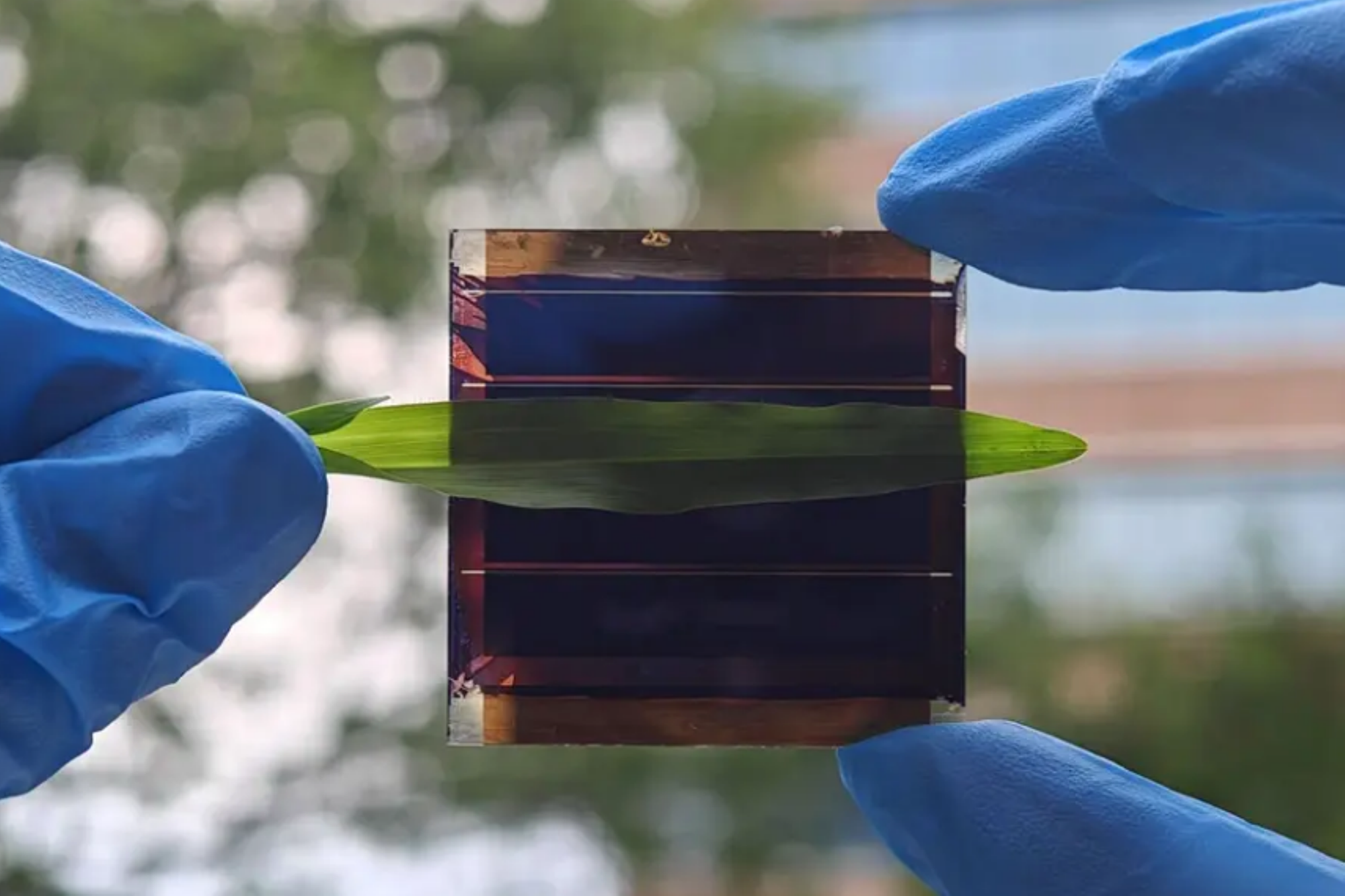
A novel perovskite-organic tandem solar cell
According to ITC.ua — Техно: Hong Kong Polytechnic University (PolyU) has unveiled a new perovskite-organic tandem solar cell that demonstrates remarkable efficiency stability under harsh conditions. This innovative device retains over 90% of its initial efficiency even when shaded or subjected to negative voltages of up to -40V. Researchers believe this breakthrough could significantly enhance the reliability of solar cells deployed in diverse climates. Shading and reverse bias are common causes of solar panel degradation, making this advancement particularly relevant for real-world applications.
The thin-film solar cells developed at PolyU withstood rigorous testing, maintaining over 90% efficiency after exposure to a reverse voltage of -40V. Enhanced organic solar cells exhibited a breakdown voltage exceeding -35V. Experiments yielded impressive data:
- Following 12 hours of operation at -20V, cells preserved 90% of their original efficiency.
- After 2000 hours at -4.5V, efficiency remained at 97%.
Owing to these attributes, the novel tandem solar cells have reached a power conversion efficiency of over 26%.
Significance of the study and technological outlook
Researchers found that hidden defects can cause solar cell damage, and they identified the source of damage during reverse bias. Tandem structures play a key role in protecting the perovskite layer, ensuring stability. Li Gang, one of the researchers, stated:
'We have achieved significant progress in the stability of organic solar cells (OSCs) and perovskite-organic tandem solar cells (POTSCs) under harsh reverse bias conditions.' - Li Gang
The study confirming these results was published in Nature Materials, underscoring the importance of these achievements for renewable energy. Innovations in this field could substantially impact the future development of solar power technologies.
The development of new tandem solar cells with such high stability and efficiency opens up new possibilities for deploying solar energy across various climates. This could boost the adoption of renewable energy sources, as these technologies become more reliable and accessible for widespread use. In the context of global efforts to reduce carbon emissions and transition to clean energy, such innovations could prove critical for achieving sustainable development goals.
Read also
- Anthropic Denies Leak After Over 200 Claude Conversations Appear in Google Searches
- SMIC, Hua Hong, and ChangXin Are First Recipients as China Begins Mass Production of DUV Lithography Systems
- AI Frame Fusion for Gaming and Video: Qualcomm Announces Snapdragon 8 Elite Gen 6 Pro
- Ukraine's Drone Output Outstrips U.S. by 30-to-1, Pentagon Reports
- World's Largest Offshore Converter Station Goes Live – 6 Billion kWh Transmitted Each Year
- Detection Systems Falter as Russian FPV Drones Transition to Frequencies Exceeding 6 GHz