The EU approved 90 billion euros for Ukraine: why it failed to use Russian assets.

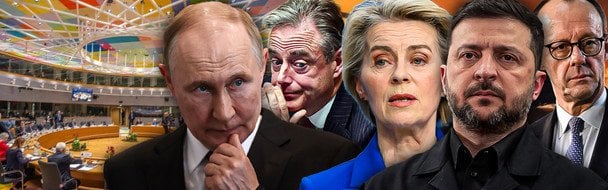
According to ТСН: While thousands of farmers protested in Brussels against the EU's trade deal with South America, blocking roads with their tractors, EU leaders spent over 16 hours trying to reach an agreement on further support for Ukraine for the next two years. EU foreign policy chief Kaja Kallas emphasized that there is no 'Plan B' for Ukraine - 90 billion euros through borrowing from the EU. She stressed that only 'Plan A' is being considered - providing Kyiv with a reparations loan of 140 billion euros, which would be secured by the frozen assets of the Central Bank of the Russian Federation. Meanwhile, President of the European Council Antonio Costa added that EU leaders would not leave the summit without a corresponding decision.
But on the night of Friday, December 19, summit participants found themselves in a difficult situation. Prime Minister of Belgium Bart De Wever, together with other countries, failed to persuade the use of frozen Russian assets for loans to Ukraine. They understand that if Europe does not take advantage of these assets, Trump and Putin might do so, as they propose in their plan to jointly use the blocked funds.
The need for financing Ukraine
Since the beginning of the full-scale Russian invasion, Kyiv has been urging Western allies to make a decision on the confiscation of Russian assets for financial support for reconstruction and defense. This issue has become particularly urgent after Donald Trump's return to the White House, as the USA is no longer providing active assistance to Ukraine. According to IMF estimates, Ukraine's external financing for 2026-2029 will amount to approximately 52 billion euros, while for 2026 alone, Ukraine needs about 60 billion dollars for defense.
Prior to the summit, Polish Prime Minister Donald Tusk urged EU leaders: 'Now we have a simple choice: either money today, or blood tomorrow. And I am not talking only about Ukraine, I am talking about Europe.' To convince his colleagues, German Chancellor Friedrich Merz decided to grant access to the assets of the Central Bank of the Russian Federation, frozen in Germany, but this did not convince De Wever and his supporters.
Problems with using assets
Belgium's Prime Minister noted that he would not agree to the use of Russian assets if there are no guarantees for their return, which required the creation of a mechanism for fair risk distribution and consideration of assets in other countries. The situation at the summit concluded with a transition to 'Plan B' - providing Ukraine with a 90 billion euros zero-interest loan, which does not have to be repaid if Russia does not pay reparations. These funds will be collected through borrowings secured by the EU budget.
Resistance from some EU countries
Among the countries that supported Belgium's position, in addition to Hungary, Slovakia, and the Czech Republic, were also Italy, France, Bulgaria, and Malta. At the same time, some countries, such as Germany and Latvia, proposed to vote by majority on the decision regarding the use of Russian assets. However, Belgian diplomats pointed out that in that case, the funds from the Euroclear depository would not be able to be released.
Did this summit resolve the issue of using Russian assets? No. Leaders of EU countries called for continued work on the legal and technical aspects of providing reparations loans to Ukraine. Head of the EPP Manfred Weber expressed hope that a solution would be found regarding the use of these assets to cover the 90 billion euros loan that Ukraine will receive as a result of the summit.
'Russia must see that for 2026-2027, Ukraine is secured with funds. This is a signal to Russia that Ukraine will not fall', emphasized Volodymyr Zelensky. However, the inability of the EU to reach an agreement on the use of frozen assets after nearly five years of conflict indicates a partial victory for Russia, as the indecision of the bloc countries demonstrates the effectiveness of Russian blackmail and intimidation.
This situation underscores the seriousness of the challenges faced by EU countries in seeking effective mechanisms to support Ukraine. Without a positive decision regarding the use of Russian assets, Kyiv may find itself in a difficult financial situation, which will also impact the security of the European continent as a whole.
Read also
- Ukraine Honors 705 Children Killed in War While Fighting to Bring Back Those Abducted
- Trump Backs Direct Talks Between Zelensky and Putin: Key Details
- An Open Letter from Zelensky to Putin: A Proposal for a Meeting to End the War
- Tusk Blames Ukraine for UPA Dispute: What Decision Will Zelensky Make?
- Top Leaders from France, Britain, and Germany Plan Talks with Zelensky: Is a Peace Deal with Putin on the Horizon?
- Push to Drop Math from Ukraine's University Entrance Exam Sparks Alarm Over National Defense