Presidential Elections in Poland: A Test of Overcoming Populism in Europe.

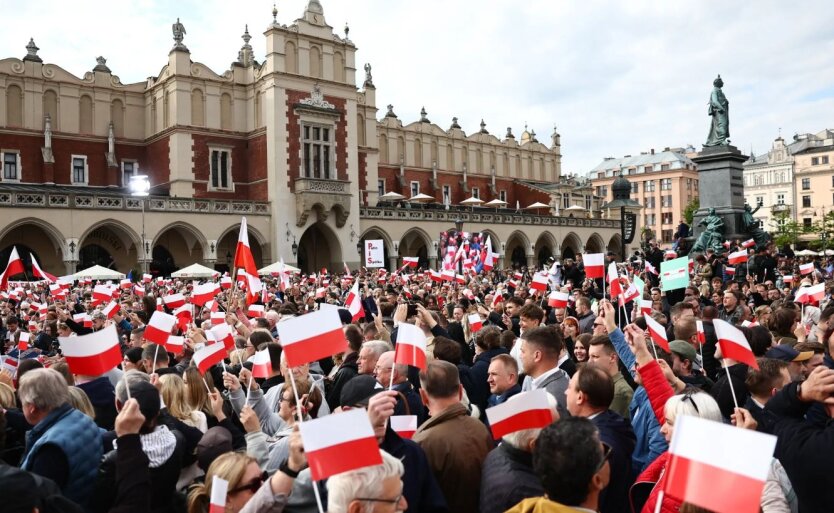
Presidential Elections in Poland: The Fight for the Country's Future
The nationalist party 'Law and Justice' has governed Poland for eight years, but now the incumbent president Andrzej Duda is competing for re-election against Rafal Trzaskowski from the 'Civic Coalition' of Prime Minister Donald Tusk.
In this first round confrontation, Trzaskowski outperformed his opponent from PiS, Karol Nawrocki, but both advanced to the second round, which will take place on June 1st. Trzaskowski is counting on support from other candidates of the ruling coalition, while Nawrocki aims to attract voters from various political orientations.
According to the official results of the first round of voting, the mayor of Warsaw received 31.4%, surpassing his rival who garnered 29.5%.
Experts noted that the competition in Poland is important for the entire EU, as countries with stable rights are showing a trend towards populism. The results of the elections in Poland will also determine future policies regarding security, weapons, and migration in the region.
It seems that the future of the country will depend on how the votes are distributed in the second round. According to polls, Trzaskowski is ahead of Nawrocki, but voters still have an important say in shaping the future political course.
Read also
- Wheat Prices Surge After Ukrainian Drones Halt Shipping in the Sea of Azov
- Over Half a Million Russians Declared Bankrupt as Economy Cracks Under Pressure
- Ukraine’s Inflation Trend Shifts: Fuel Costs Drop While Service Prices Climb
- Fear of a New Mobilization Wave Drives Russians to Mass-Buy Property Abroad
- Moscow Admits Fuel Shortage for First Time Amid Drone Strikes: Long Lines at Gas Stations and Crisis Affecting 50 Million Russians
- World Bank Disburses $3.35 Billion to Ukraine: Here’s How the Funds Will Be Used