Russia is reviving the GUGI special unit for maritime sabotage: what is known about the threat.

According to The Sun: Russia is upgrading its most powerful underwater unit for conducting sabotage, as stated by the Commander-in-Chief of the Royal Navy.
General Sir Gwyn Jenkins noted that Moscow is intensifying its Main Directorate for Deep-Sea Research.
This unit, known as GUGI, controls a fleet of spy ships and sabotage submarines capable of mapping and damaging underwater cables.
At his first press conference as the new First Sea Lord, General Jenkins remarked that Russia continues to invest in its Northern Fleet despite the ongoing war with Ukraine.
He added:
“We see their latest submarines already in operational use, as well as the restoration of GUGI's capabilities.”
Vladimir Putin recently stated that his submarines “are beneath the Arctic ice,” allowing them to 'disappear from radar.'
Putin claimed that these submarines are a 'military advantage' for Russia.
The Kremlin leader also emphasized that research in this area 'among other things' is extremely important for Moscow.
General Jenkins spoke against the backdrop of Britain signing a £10 billion deal with Norway for the sale of five specialized frigates for anti-submarine warfare.
He noted that GUGI 'has been operating quietly for some time,' but warned:
“It looks like they are coming back.”
The general also underscored that Britain and its allies still have a military advantage thanks to cooperation with the US and Norway.
However, he added:
“The Russians are showing us that we cannot afford to be complacent.”
NATO allies are using special devices placed on the seabed to detect Russian submarines near Greenland, Iceland, and Britain.
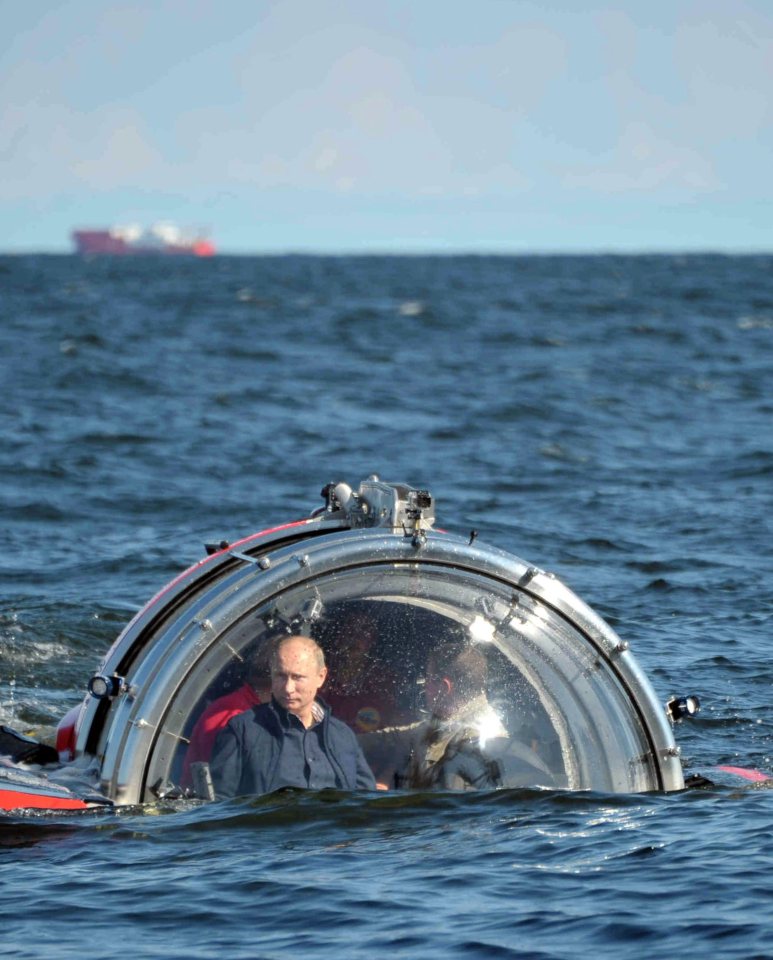
EPA Putin observes from a transparent dome of a submersible.At the heart of these statements is the activation of Russian military operations in the Arctic Ocean, which may pose a significant challenge to regional security. The enhancement of maritime forces and new agreements with allies underline Britain's and its partners' commitment to maintaining stability amid rising tensions.
Monitoring the activities of the Russian fleet could be critically important for a preventive strategy and ensuring the security of maritime routes connecting various NATO countries. In light of recent events, this situation should be closely monitored, as it will affect the geopolitical situation in the region as a whole.
Read also
- Zelenskyy at Kyiv Strike Site: Norway Willing to Fund 200 Missiles, Yet None Delivered
- Ukraine's Strikes Are Causing the Kremlin to Lose Its Grip on Propagandists, ISW Finds
- Fuel Crisis Engulfs Most Russian Regions After Ukrainian Drones Devastate Oil Infrastructure
- Russia to Urgently Import 400,000 Tons of Gasoline Each Month: Here’s Why
- NATO Reveals Russian Losses: 35,000 Troops Killed or Wounded in a Single Month
- Ukraine’s Defense Forces Strike Ufa Oil Refinery for a Second Time, Over 1,300 km from the Front Lines