Up to 43% of Russia’s Oil Refining Capacity Lost as Ukrainian Strikes Trigger Fuel Shortages.

Fuel Crisis Deepens in Russia
According to Слово і Діло — Інфографіка: Russia is facing a worsening fuel deficit, driven by Ukrainian attacks on its oil refining infrastructure. These strikes have destroyed or disabled between 25% and 43% of the country’s refining capacity. During the summer months, domestic fuel consumption averages around 110,000 metric tons per day. To make up for the shortfall, Moscow now plans to import roughly 400,000 tons of gasoline from India each month.
Neighboring Nations Keep Refineries Running
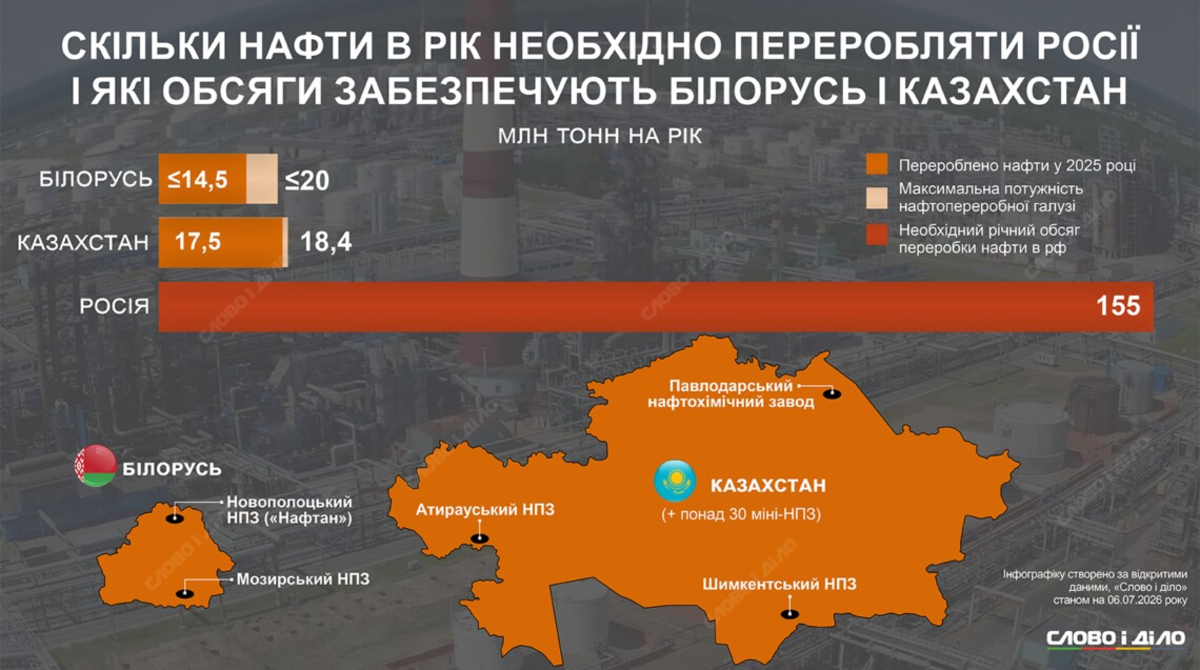
Meanwhile, Belarus and Kazakhstan continue to operate their own refineries at a steady pace. Belarus processed 14.5 million tons of crude oil last year, with domestic consumption accounting for 6 million tons. According to Ukrainian President Volodymyr Zelenskyy, Belarusian gasoline exports to Russia have surged thirteenfold.
Kazakhstan, for its part, refined 17.5 million tons of crude oil in the past year. By comparison, Russia’s annual refining requirement stands at 155 million tons—a target that now seems increasingly difficult to meet amid the capacity losses.
Key refineries in the region include Belarus’s Mozyr and Novopolotsk (Naftan) plants, as well as Kazakhstan’s Atyrau, Shymkent, and Pavlodar facilities. These installations play a critical role in supplying fuel to their respective countries and, indirectly, to Russia. However, the situation inside Russia demands urgent action to prevent the fuel shortage from escalating further.
The fuel deficit carries significant economic and political consequences. Russia’s growing reliance on imports could heighten its vulnerability to external shocks, including global market volatility and international sanctions. At the same time, the continued operation of refineries in Belarus and Kazakhstan may shift the regional balance of power, elevating the importance of these two countries as fuel suppliers to Russia and potentially reshaping their economic ties.
Read also
- Peace Appeal From Kazakh Leader During Putin Meeting
- Over 1,000 Drone Strikes Carried Out as Zelenskyy Announces Completion of Long-Range Strike Plan
- Zelensky and Top Military Command Outline Response Plan to Russian Strikes
- EU Adopts 21st Sanctions Package Against Russia: What the New Restrictions Target
- Deadly Strikes Hit Kyiv Region and Sloviansk: 11 Killed, Dozens Wounded
- Ukrainian Forces Strike Kirov’s Avitek Plant: Key Military Components Under Sanctions