Cold Water Prices Surge Across Ukrainian Cities: In Some Areas, Costs Have Doubled or Tripled.

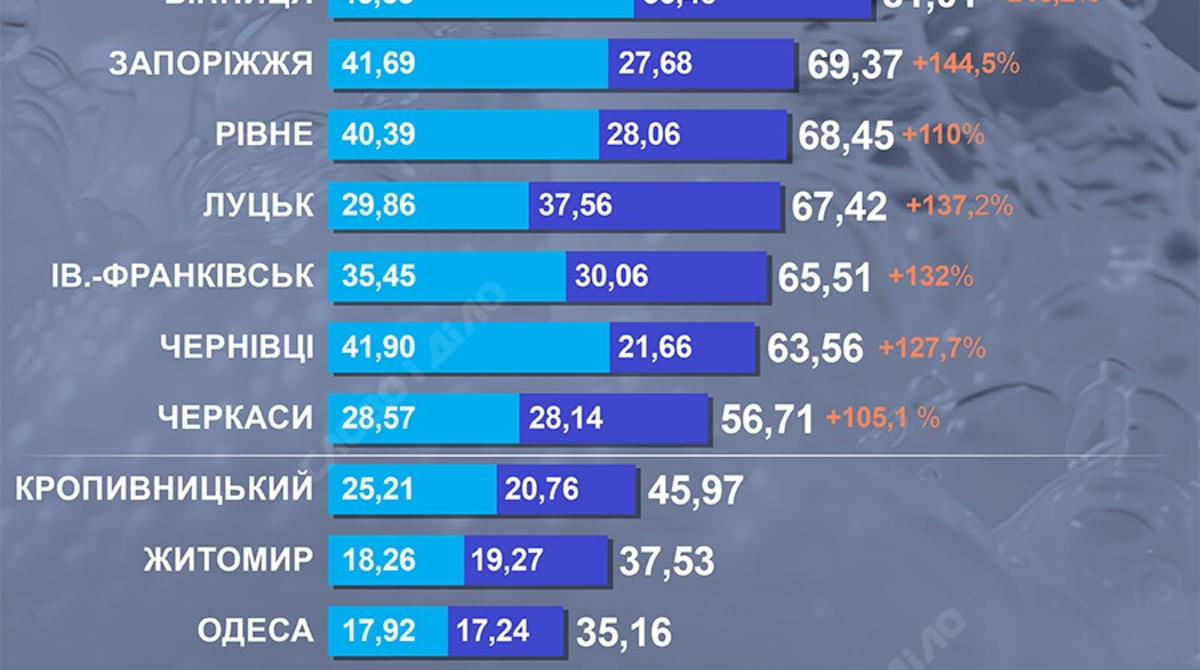
Sharp Increases in Cold Water Tariffs Across Ukraine
According to Слово і Діло — Інфографіка: In July 2023, many regional capitals in Ukraine experienced a dramatic rise in cold water tariffs. For instance, prices in cities such as Vinnytsia, Dnipro, and Ternopil have doubled or even tripled. This follows a prolonged freeze on utility rates, which has sparked widespread public concern.
How Tariffs Have Changed in Different Cities
The steepest hike occurred in Vinnytsia, where the cost per cubic meter surged by over 216%. Dnipro saw a 161.2% increase, while Zaporizhzhia’s rose by 144.5%. Other cities also faced significant adjustments:
- Chernivtsi: up by 127.7%
- Uzhhorod: up by 112.9%
- Rivne: up by 110%
- Cherkasy: up by 105.1%
Currently, the most expensive cold water is in Uzhhorod, at 91.24 Ukrainian hryvnias per cubic meter, while the cheapest is in Kharkiv, at 24.51 hryvnias. In Lviv, the tariff stands at 25.88 hryvnias, and in Khmelnytskyi, it is 27.39 hryvnias.
Notably, older water tariffs remain unchanged in several cities, including Kropyvnytskyi, Zhytomyr, Odesa, Mykolaiv, Poltava, Kramatorsk, Sumy, Chernihiv, Kherson, Kyiv, Khmelnytskyi, Lviv, and Kharkiv. Against this backdrop, the Cabinet of Ministers has requested a delay on further tariff increases until December 2025, but the utility situation remains tense.
These tariff changes have raised alarm among Ukrainian residents, as rising water costs could impact the overall standard of living. The situation demands close monitoring and government action, given that utility pricing has always been a pressing issue for Ukrainians.
The July 2023 cold water tariff hikes in Ukraine are a critical development requiring attention from both citizens and state authorities. This increase may strain household budgets, especially amid the economic challenges the country faces. It is essential to track the government's next steps in mitigating negative effects and ensuring the affordability of essential services.
Read also
- Ukraine's Foreign Direct Investment Drops to $2.6 Billion: A Look at Shifting Capital Inflows
- Ukraine’s Strikes Slash Russia’s Oil Export Revenue from $253 Billion to $158 Billion
- EU imports of Ukrainian chocolate hit record high: over 32,000 tonnes shipped in a single year
- How Czech Republic Imports Russian Wood Despite EU Sanctions: A Closer Look at the Scheme
- Up to 43% of Russia’s Oil Refining Capacity Lost as Ukrainian Strikes Trigger Fuel Shortages
- Ukrainian Poultry Exports Surpass $1 Billion for the First Time