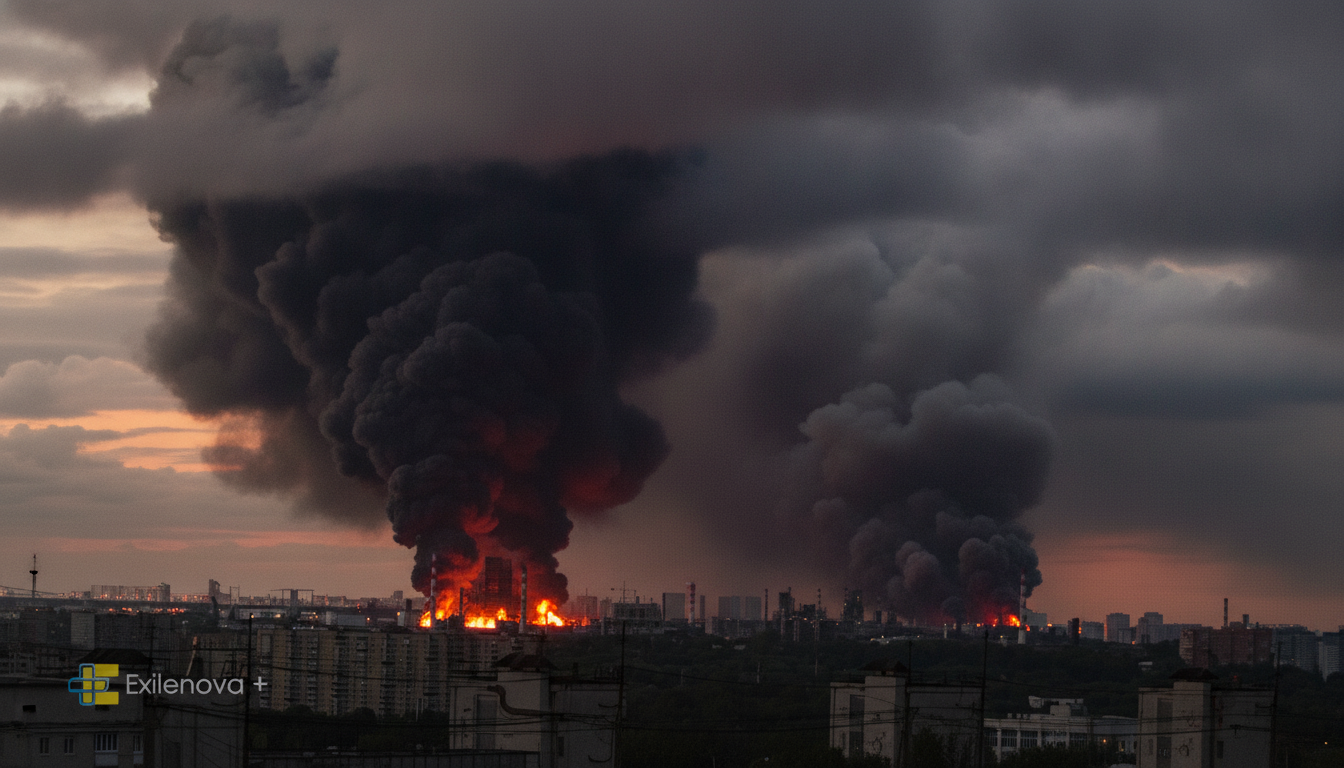
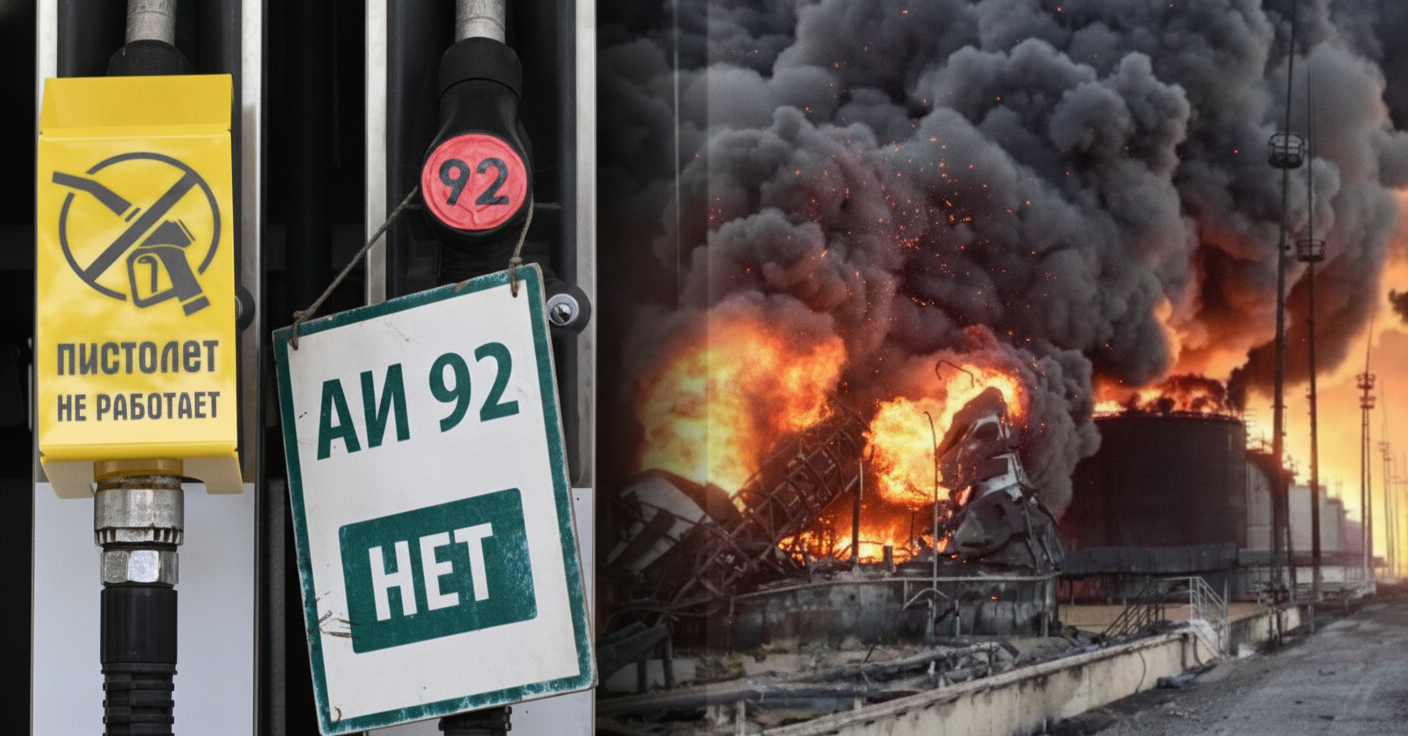
Ukraine’s Strikes Slash Russia’s Oil Export Revenue from $253 Billion to $158 Billion.

How Ukrainian Attacks Are Reshaping Russia’s Oil Export Landscape
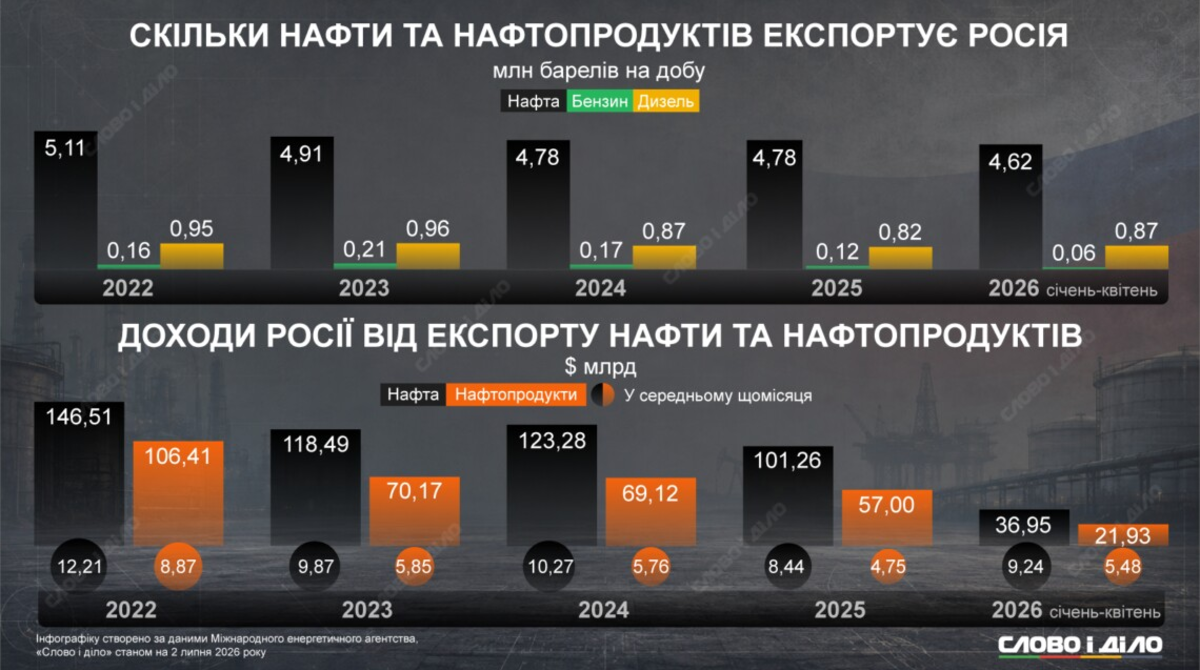
According to Слово і Діло — Інфографіка: The impact of Ukrainian strikes on Russia’s crude oil and petroleum product exports is becoming increasingly evident, particularly when examining data from 2022 through 2026. In 2022, Russia exported an average of 5.11 million barrels of crude oil per day, alongside 0.16 million barrels of gasoline and 0.95 million barrels of diesel daily. That year, revenue from crude oil exports reached $146.51 billion, while petroleum product sales brought in $106.41 billion.
Export Volumes on the Decline
By 2023, export volumes began to drop, a shift that analysts attribute to the effects of Ukrainian attacks. Russia exported 4.91 million barrels of crude oil per day, 0.21 million barrels of gasoline, and 0.96 million barrels of diesel. Revenue from oil sales fell to $118.49 billion, and income from petroleum products dropped to $70.17 billion. Projections for 2024 indicate a further decline, with crude oil exports at 4.78 million barrels per day, gasoline at 0.17 million, and diesel at 0.87 million.
Data shows that in 2025, Russia earned $101.26 billion from oil sales and $57 billion from petroleum products. However, by 2026, crude oil exports had fallen to 4.62 million barrels per day, continuing the downward trend. This decline stems from a combination of factors: Russia’s oil price premium in 2022, the imposition of international sanctions, and the growing impact of widespread Ukrainian strikes, along with disruptions related to the Strait of Hormuz blockade. These elements have driven revenue losses in 2023-2024 and are expected to further constrain export prospects in 2025-2026.
The sustained reduction in Russian oil and petroleum product exports carries serious economic implications for the country. Research indicates that Ukrainian attacks and global sanctions are significantly undermining Russia’s ability to sustain the energy export revenues that underpin much of its economy. Looking ahead, these pressures are likely to intensify, potentially forcing shifts in Russia’s energy policy. As the situation remains fluid, monitoring developments in this sector will be crucial for understanding broader economic trends.
Read also
- Water Bills Set to Surge in July 2026: Who Will See Their Subsidies Adjusted
- Up to 500,000 UAH in Compensation for Destroyed Homes: Inside Ukraine’s Housing Recovery Program
- Fuel Crisis Grips Russia as 2026 Refinery Attacks Surge 11-Fold
- Dollar Rises as Euro Declines: What’s Driving the Currency Shift in Ukraine
- Putin’s Approval Ratings Plummet as Russia Faces Record Budget Deficit and Economic Crisis
- Drone Strikes Trigger Fuel Shortage in Russia, Driving Surge in Demand for Workhorses