Turkey decided to capitalize on Alexander the Great.

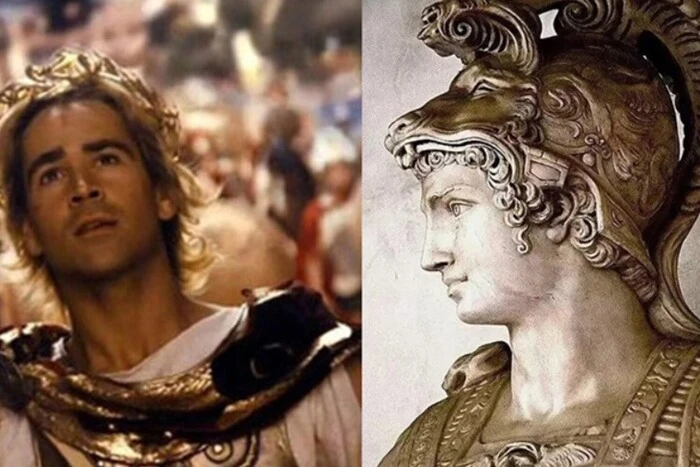
Turkish archaeologists have reported that they found the site where an important battle of Alexander the Great took place over 2300 years ago. Researchers discovered the battlefield near the Biga River in the Çanakkale Province in Turkey. In the past, this river was known as Granicus.
The event, which took place in 334 B.C., was Alexander the Great's first significant victory in his campaign against the Achaemenid Persian Empire. It was important as it led to the conquest of Asia Minor - the territory corresponding to modern-day Turkey.
After his victory in this battle, Alexander the Great continued his conquest of Western Anatolia and much of Asia, expanding his empire all the way to India. His reign lasted from 336 to 323 B.C. and is considered one of the most successful in world history.
Archaeologist Reyhan Korke from Çanakkale University emphasizes that the Battle of Granicus holds great significance in world history.
Furthermore, prolonged excavations at the Church of St. Nicholas in Antalya have led to the discovery of a sarcophagus that may contain the remains of the saint. The sarcophagus was found beneath the church's floor, which had been covered with layers of dust and dirt after an earthquake and tsunami in the Middle Ages.
Read also
- Zelensky’s Addresses Set Records: Mobilization and Demobilization Deepen Societal Rifts
- Over 150 Attendees Gather at Aspen Institute in Chernivtsi: How War Reshapes Social Cohesion
- Prosthetic Mannequins Debut in Ukraine: A Bold Statement on Inclusion
- OSCE Records 20,610 Deported Ukrainian Children in Report on Russian Crimes
- Two million for the shelter: LEROY MERLIN equips a safe hiding place in Fastiv Hospital
- Russian Forces Refuse to Evacuate Children from Kreminna, Using Them as Human Shields