British tourist in the Philippines picks up a deadly octopus: how he survived.

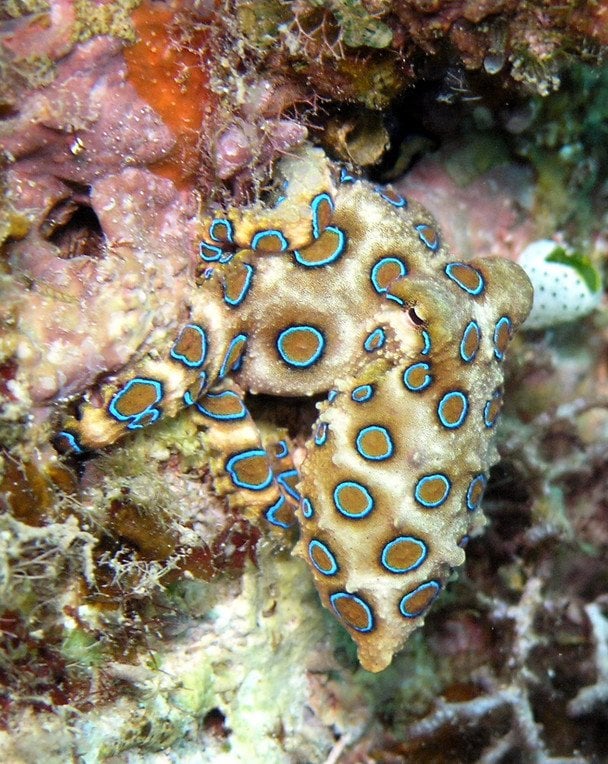
According to ТСН: A British tourist happily avoided a dangerous situation while vacationing in the Philippines when he accidentally picked up one of the planet's most poisonous residents – a blue-ringed octopus. He mistook the small creature for a harmless baby and even filmed it.
The video quickly gained popularity on Instagram, and user comments along with warnings from experts eventually made the man realize the seriousness of the situation. Only then did he learn that he had been holding a creature whose venom can kill a person in just a few minutes.
Description of the dangerous octopus
The blue-ringed octopus usually weighs no more than an apple, but it is extremely dangerous. Its body contains tetrodotoxin – a powerful neurotoxin which, according to scientists, is a thousand times stronger than cyanide. The venom blocks nerve impulses, causing rapid paralysis and difficulty breathing, which can lead to death within 10 to 30 minutes. A person often remains conscious.
Unfortunately, there is no antidote for this venom. The only chance for survival is urgent medical assistance and breathing support until the toxin loses its effect. Without this, a blue-ringed octopus bite can be fatal.
Where blue-ringed octopuses live
These mollusks inhabit the coastal waters of the Indo-Pacific region, particularly near the Philippines, Australia, Indonesia, and Japan. They often hide among rocks, corals, or on sandy bottoms, which can lead them to benear tourists, divers, and vacationers.
Marine biologists believe that in this case, the man was just lucky, as blue-ringed octopuses are not aggressive and usually bite only in case of threat. This incident serves as a reminder to travelers that they should not touch unknown and brightly colored marine creatures, as their attractiveness may conceal deadly danger.
Recall that in the Taiwanese city of Pingtung, a man fainted on the street after being bitten by his pet snake, which he was carrying around his neck.
The next case involving a blue-ringed octopus once again emphasizes the necessity of caution when interacting with wild animals. Despite the potential for stunning photos and videos, it is important to remember the risks associated with unfamiliar creatures in their natural habitat. Travelers should remain attentive and cautious, as some of them may be life-threatening.Read also
- Suitcase delivery to parcel lockers across 8 EU countries launched by InPost – pricing revealed
- Bus Service to Poland via Shehyni Checkpoint to Halt for 18 Months Starting June 15, 2026
- Over 10 Odesa Beach Zones Certified and Ready for Summer Season
- Anticipating Summer Ticket Surge, Ukrainian Railways Shares Booking Tips
- Europe's Airports Face Six-Hour Queues: IATA Warns of New Crisis
- Malmo to Narvik by Night Train: Snälltåget Launches New Service with Fares and Schedule