A rare bird spotted in Tuzly Estuary National Park: the curlew sandpiper is migrating south.

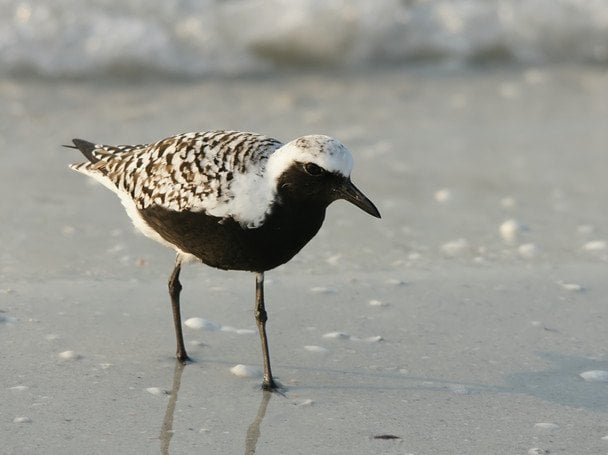
According to ТСН: A curlew sandpiper was spotted in the National Park "Tuzly Estuary" — one of the most recognizable waders, migrating through the territory of Ukraine.
This was reported by Ivan Rusev, a Doctor of Biological Sciences and a park employee.
"While it's still warm, it will feed in the national park with other waders, and then it will fly further south," the report says.
Description of the bird
This species — Pluvialis squatarola — nests in the tundras of Eurasia and North America, and during seasonal migrations, it can be seen almost throughout Ukraine. The curlew sandpiper is a medium-sized bird: its weight is 170–225 g, and its wingspan can reach up to 79 cm. The male's breeding plumage is characterized by contrasting black and white areas, while during the non-breeding season, the bird has a more modest gray-brown appearance.
Statistics and reproduction
The population of this species is estimated at nearly 700,000 individuals; however, ornithologists note that their numbers are gradually decreasing. During reproduction, the curlew sandpiper forms a clutch of four eggs, which can be colored from pink to brown or olive with characteristic dark spots. Both parents incubate the clutch for about 23 days, and the young birds become independent in about a month and a half.
Diet and habitat
The curlew sandpiper feeds on insects, their larvae, seeds, and plant stems, and in winter it switches to a diet of mollusks, polychaete worms, and crustaceans.
It should be noted that the National Nature Park "Tuzly Estuary" is carrying out work on catching and ringing birds. Despite the constant explosions, about four thousand godwits — rare coastal birds listed in the Red Book of Ukraine — are currently located in the reserve.
The curlew sandpiper is an important part of the ecosystem, as it helps regulate the number of invertebrates. Observations of this bird can provide useful information about changes in the environment, as well as help understand migration routes. Therefore, it is pleasant that specialists show interest in monitoring and protecting them.
Read also
- Buses from Ukraine to Poland Suspended for 18 Months Due to Repairs at Shehyni-Medyka Border Crossing
- Suitcase delivery to parcel lockers across 8 EU countries launched by InPost – pricing revealed
- Bus Service to Poland via Shehyni Checkpoint to Halt for 18 Months Starting June 15, 2026
- Over 10 Odesa Beach Zones Certified and Ready for Summer Season
- Anticipating Summer Ticket Surge, Ukrainian Railways Shares Booking Tips
- Europe's Airports Face Six-Hour Queues: IATA Warns of New Crisis