U.S. Supreme Court Strikes Down Ban on Conversion Therapy in a 6-3 Ruling.

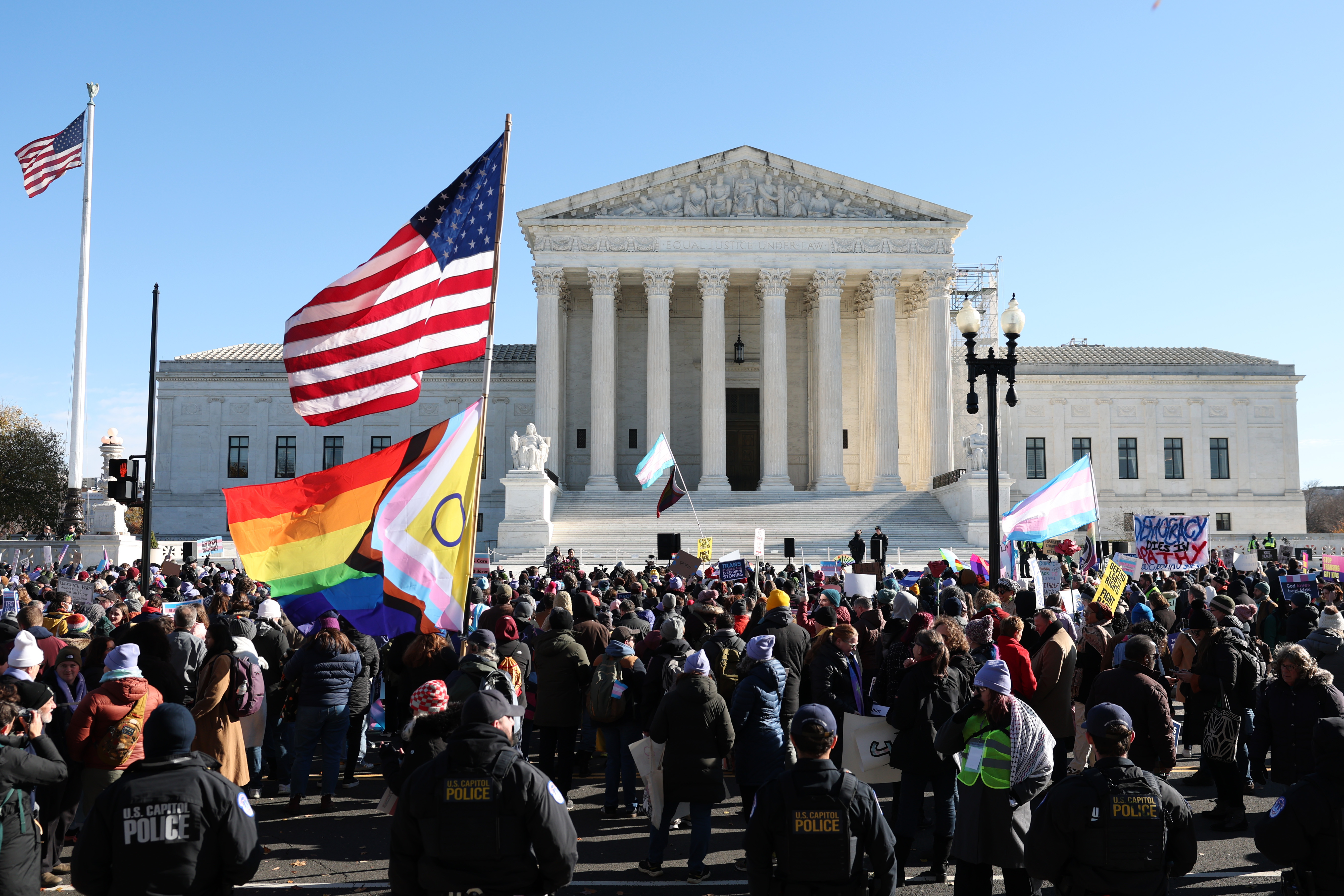
Court Victory in 'Chiles v. Salazar'
According to Vox - Загальний: The case 'Chiles v. Salazar' challenged a Colorado statute that prohibited therapists from offering 'conversion therapy' aimed at changing LGBTQ+ patients to heterosexual. The U.S. Supreme Court, by a 6-3 majority, ruled the law unconstitutional, citing 'viewpoint discrimination.' This landmark decision marks a significant development in the legal landscape for LGBTQ+ rights and highlights the Court's stance on conversion therapy.
The Supreme Court’s current 6-3 conservative majority shaped the outcome. Among those siding with the majority were liberal justices Sonia Sotomayor and Elena Kagan. Justice Ketanji Brown Jackson dissented. Writing for the majority, Justice Neil Gorsuch argued that Colorado’s law violated the First Amendment by discriminating against specific viewpoints. Conversion therapy, which seeks to alter a person’s sexual orientation, is rejected by all major medical and mental health organizations. The American Psychological Association has warned that it 'poses significant risks of harm.' Justice Elena Kagan further noted that the law 'regulates speech based on its own 'hostility' to targeted messages,' raising concerns about free expression and personal autonomy.
Impact of the Decision
This ruling could have profound implications for professional practice, emphasizing the need for evidence-based treatments and the protection of patient rights. It may also serve as a precedent for future cases, underscoring the importance of safeguarding LGBTQ+ rights within the legal system. By striking down the ban, the Court has reinforced the principle that therapeutic discussions cannot be censored based on ideological disagreement.
The Supreme Court’s decision is likely to reshape approaches to treating LGBTQ+ patients across the United States, highlighting the necessity of adhering to ethical and scientific standards in psychological care. It could also strengthen the legal framework for combating discrimination based on sexual orientation, serving as a key element in broader minority rights advocacy. In the context of global trends toward recognizing LGBTQ+ rights, this ruling sends a powerful signal to other nations about the importance of reviewing their own policies in this area.
Read also
- Russian Font Found on Banknote Featuring Ukrainian Poet Stus; NBU to Redesign the Bill
- 501 Fallen Repatriated to Ukraine; Over 300 Died While in Captivity
- Ukraine Receives 522 Bodies in Its Largest-Ever Repatriation Operation
- Statehood Day Marked Across Ukraine with Prayer Services and Public Gatherings
- From Survival to Growth: How Education and Its People Are Reshaping Kharkiv
- 23 Children Rescued from Occupied Territories: A New Win for Ukraine’s Bring Kids Back UA Initiative