Maduro's Arrest in the US: Why Russia Did Not Protect Its Ally in Venezuela.

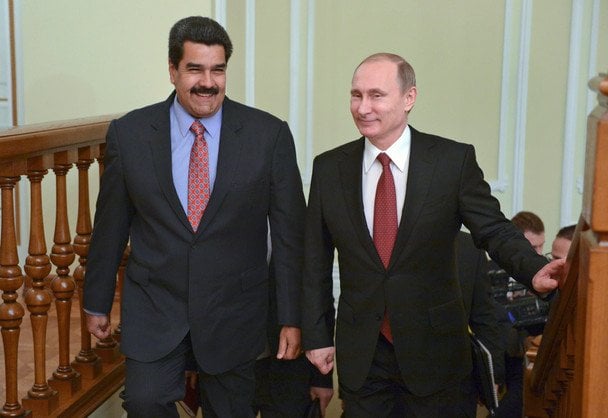
According to ТСН: For the Kremlin, the consequences of Nicholas Maduro's capture in the US could be significant, as it strikes at Russia's regional influence and Vladimir Putin's ego.
Maduro's ally, who recently signed a 'strategic partnership' agreement with Russia, has suddenly lost power and found himself behind bars in New York.
'For the Kremlin, the key considerations in relations with Venezuela have been geopolitical rather than economic from the very beginning. Venezuela has lost its former strategic significance for the Kremlin, and the years-long attempt to create an anti-American stronghold in the region has ended in failure.'
According to reports, the American operation faced no serious resistance from Russian air defense systems, such as the S-300, Buk, and Pantsir, which were deployed in Venezuela. Russia also responded cautiously to the capture of a tanker carrying Venezuelan oil that was under its protection. This occurred after a lengthy attempt by the Kremlin to turn Venezuela into an anti-American object in Latin America.
Experts note that Russia could not or did not want to genuinely help its ally. Moscow's restraint is also related to a desire not to aggravate relations with American President Donald Trump.
'The Americans understood very well that Russia could do nothing for Maduro.'
Recall that on the night of January 3, at least seven explosions were heard in Caracas during an attack ordered by Trump, which targeted several military facilities in Venezuela, including the 'La Carlota' airbase and 'Fuerte Tiuna,' the La Guaira seaport, the Defense Minister's residence, and the 'El Volcan' signal antenna.
Nicholas Maduro and his wife Cilia Flores were detained and taken to the United States, accused of narco-terrorism, cocaine importation, illegal possession of weapons and explosives, and conspiracy against the United States.
In November 2025, Trump and Maduro had a phone conversation during which the American president hinted that the Venezuelan leader had limited time to voluntarily leave the presidency.
Thus, the capture of Maduro highlights the increasing vulnerability of Russian influence in Latin America and indicates potential changes in the global geopolitical situation. For the Kremlin, this event could pose an even greater challenge, as the loss of one of its key allies threatens Russia's strategic ambitions in the region.
Read also
- Pentagon Chief Leaves NATO Meeting in Brussels Early: Here’s What We Know
- Ukraine Launches Its First EU Accession Negotiation Cluster: What It Means for Citizens
- Polish Lawmaker Sparks Outrage by Calling for Normalized Ties with Russia
- Kyiv Lawmaker Slams Metro Fare Hike: Annual Costs Could Reach 46,000 Hryvnias for Residents
- New EU Accession Talks with Ukraine Set for Summer, von der Leyen Announces
- Russia's Offensive in Donetsk Loses Momentum: Expert Points to a Turning Point