American Women Massively Want to Leave the US: What Makes Women Dream of Emigration.

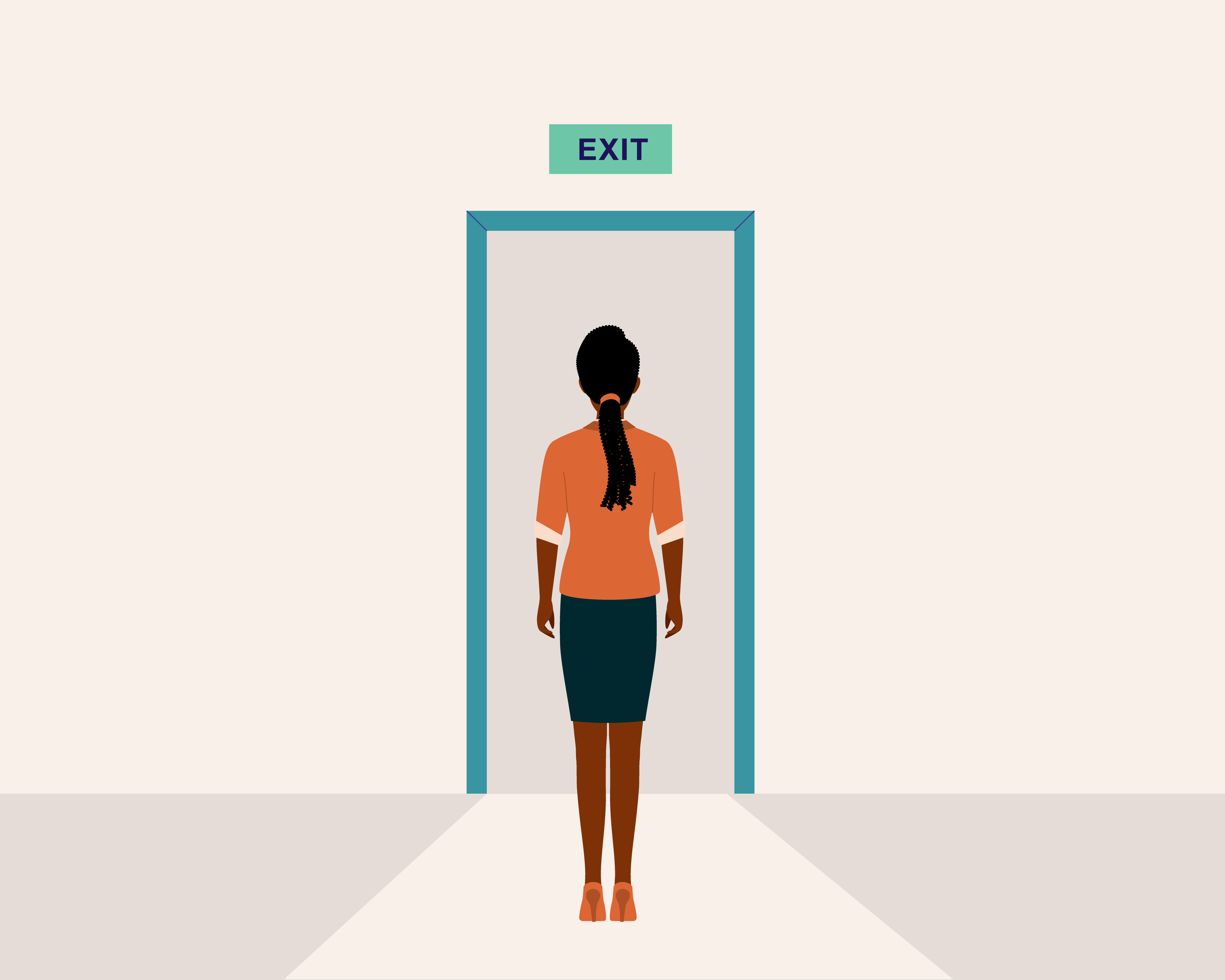
According to Vox: It seems that young American women are eager to leave the US. According to a Gallup survey, 40% of women aged 15-44 expressed a desire to leave the country permanently if given the chance. This figure has increased tenfold since 2014 and is not observed among other demographic groups in the US or among young women in other developed countries.
Women’s desire to leave the country is likely partly related to Donald Trump. Gallup found that this trend emerged in the summer of 2016 after Trump became the Republican Party's nominee for the presidential elections. This desire continued to grow during Joe Biden’s presidency, but there is a 25% difference in the desire to leave the country between those who approve of the president and those who do not. This suggests that the desire to escape from Trump plays a certain role in dreams of emigration.
However, the desire to leave America can also manifest in apolitical forms.
In a recent BBC article, a 31-year-old woman is mentioned who moved from Los Angeles to Lisbon in 2021.
“In the US, there is no strong work-life balance,”she said.
“I wanted to live somewhere with a different rhythm, different cultures, and learn a new language.”In Portugal, she feels that
“she has become a whole person again.”
Of course, who wouldn't want a better work-life balance than what exists in the US? Who wouldn't want more than minimal social support, a capitalist culture of 'working to live', and the belief that everything must be earned, including things like childcare and health insurance, which in other countries are considered human rights for which governments take responsibility?
Childcare Costs
It seems that childcare is becoming the last straw for women — as it becomes increasingly mandatory and challenging to fulfill every day.
In the same BBC article, a 34-year-old woman is quoted who moved from the US to Uruguay after the Supreme Court overturned Roe v. Wade in 2022.
“I have children, and I do not plan to have more, but the increased control over women’s bodies scared me,”she said.
“People do not realize how backward the US is on maternal care, parental leave, and healthcare until they leave the country.”
Maternal Issues in the US
America is an unfriendly place for those with children. Childcare costs are so high that they can 'consume' one parent's earnings, often leading women to leave their jobs to care for their children. Parental leave is rarely mandatory. Press secretary Caroline Levitt boasted about her decision to return to work just three days after giving birth. The US has the highest maternal mortality rate among high-income countries, and this has been ongoing for a long time.
Thus, the question arises: why not just leave? Leave to where one does not have to choose between work and children, where they can leave behind all the stresses of capitalism and the pressures of family life. Where one can have children and still have the opportunity to spend time with them.
We often talk about the idea of escaping America and its inadequate social support as a liberating, progressive action, as if leaving the US, a person has the chance to become James Baldwin in Paris. But the idea of escaping the trap of work exhaustion has dark echoes in contemporary American pop culture.
Traditional Women’s Roles
Influencers in the 'trad wife' style have become some of the most discussed figures on social media, as their content combines aesthetic appeal with political controversy. Trad wives share their lives online as homemakers and mothers. Many of them are slim and traditionally beautiful, posting videos about preparing their children’s favorite meals and looking made up in bright kitchens.
More controversial creators who identify themselves as 'trad wives' promote the idea of living according to biblical principles, submitting to their husbands, and contemplating how much better life is when women stay out of the workforce.
The influence of 'trad wives' began to rise in 2016 when prototype Alena Kate Pettit published her first book Ladies Like Us. In 2020, the popularity of these influencers exceeded a narrow circle as people forced to stay home started romanticizing domestic routine.
Escape from Reality
Much has been written about the escape in the style of 'romantasy', and why this trend is growing as a way to cope with the horrors uncovered by the Me Too movement and its harsh backlash. Romantasy allows, it is believed, women to fantasize about avoiding unpredictable and potentially dangerous men, choosing fairies or good blue aliens instead.
I started to view the fantasy of escaping the US and the 'trad wife' fantasy as versions of the same escape, translated into motherhood. Both fantasies soften the traps that American capitalism places before women. They pertain to finding a way to balance work and family without allowing either to ruin their life.
These fantasies are also among the most powerful and widespread that women face today. This should be acknowledged, and perhaps that is why happy endings are popular for frustrated careerists in Christmas movies — either a return home or settling in small, idyllic European countries.
It has been nine years since the infamous Access Hollywood tape, after which Donald Trump was elected. Seven years have passed since the outrage over Trump’s election, which led to the harsh reaction of the Me Too movement. Three years have gone by since Trump-appointed judges overturned the Roe v. Wade decision, stripping women of their federal legal possibility for abortion. And two years since Trump was found liable for sexual assault against E. Jean Carroll, and one year since America elected him for a second term.
American women have been actively fighting for feminist rights for years, suing government entities, exposing employers; they have shared their most intimate stories of harassment and discrimination, risking their careers and even losing them.
But all this ultimately yielded virtually no results. Now, as the backlash against Me Too continues, women’s fantasies are focused on their weary refusal — on the desire to give up.
Why not imagine leaving work? Why not fantasize about escaping home? Perhaps a woman thinks that losing in such a situation is already impossible. So, if the struggle is fruitless, why not simply leave the battlefield?
Read also
- Three Ukrainians Without Documents Rescued from Occupied Territories Under Bring Kids Back UA Initiative
- Ukraine’s first underground kindergarten opens in Kharkiv, accommodating 260 children
- Ukraine's ports crippled by Russian strikes: 28 vessels hit, 21 killed
- 24 Children Rescued from Occupied Territories by Save Ukraine, Including Injured 13-Year-Old Anhelina
- Woman Faces Up to 7.5 Years in Prison After Attacking Children for Speaking Ukrainian in Poland
- One of the Most Recognizable Voices on Ukrainian Radio, Journalist Oleksandr, Has Passed Away