The Kremlin has not provided evidence of an attack on Valdai: ISW reveals its true goals.

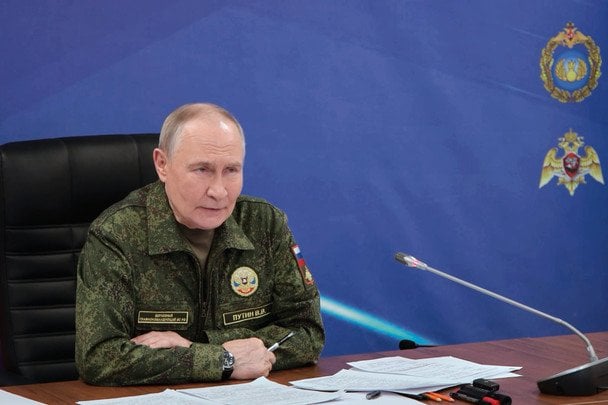
According to ТСН: The Kremlin continues to refuse to provide any evidence for its claims regarding the so-called 'attack' by Ukrainian drones on Vladimir Putin's residence located in Valdai on the night of December 29. They consider it unnecessary.
This is noted in the report by the Institute for the Study of War (ISW).
Contradictions in Kremlin Statements
Analysts point out the Kremlin's attempts to correct inconsistencies in its previous statements regarding strikes on December 28-29. The ISW report states that no videos or testimonies, which usually confirm serious shelling, have yet been presented to substantiate the Kremlin's claims about the threat to Putin's residence in the Novgorod region.
'Kremlin officials are using an alleged Ukrainian strike in the Novgorod region to justify Russia's ongoing insistence that both Ukraine and the West capitulate to Russia's initial demands of 2021-2022,' the report states.
Following the alleged attack on Valdai, Dmitry Peskov, the Kremlin spokesman, stated that Russia would 'strengthen' its negotiating position but would not publicly disclose this new position. He also emphasized that Moscow would continue the dialogue, primarily with the United States.
Statements from Russian Officials
The ISW also notes that several members of the State Duma of Russia echoed Peskov's words. One even urged the Kremlin to present Ukraine with a peace plan between the US and Russia as a fait accompli. Another deputy cynically remarked that the Russian Federation can currently 'only' negotiate Ukraine's capitulation.
The Russian Foreign Minister Sergey Lavrov, in an interview with the propaganda media Russia Today, reiterated Russia's initial demands presented by President Putin at the beginning of the full-scale invasion in 2022. Among the demands are Ukraine's neutrality, demilitarization, and denazification. Lavrov also confirmed Russia's demands for the recognition of the Luhansk, Donetsk, Zaporizhia, and Kherson regions, as well as Crimea, as part of Russia. He noted that Moscow is 'convinced' that the ultimatums voiced by Russia to the US and Europe in December 2021 could serve as a 'starting point' for peace negotiations.
American experts note that many of the initial Russian demands reiterated by Lavrov contradict the recent 20-point peace plan by the US, Ukraine, and Europe.
'ISW assesses that the Kremlin may intend to use the so-called 'strike' by Ukraine on Putin's residence to justify a refusal of any peace proposals stemming from the recent bilateral US-Ukrainian and multilateral US-Ukrainian-European negotiations,' the report states.
Furthermore, the Kremlin's statements regarding Russia's ultimatums from 2021 indicate that RF's goals in the war are not limited to Ukraine alone. A peace agreement that does not consider Russia's demands towards NATO and the West outside Ukraine will not satisfy the Putin regime.
It is worth noting that Lavrov mentioned a possible 'attack' on Putin's residence in the Novgorod region, yet it remains unknown where the 'Fuhrer' himself was during these events. His administration is convinced that 'this topic must not be publicly discussed.'
Following this, the Kremlin threatened to respond to the 'attack' on the state residence. Dmitry Peskov noted that he 'knows how, what, and when to respond' to this. According to him, 'Kyiv's attempt to attack the residence' is an attempt to disrupt the negotiation process and is aimed against the peaceful efforts of the US president.
Thus, questions regarding possible peace negotiations remain open, but the surge in tensions caused by the situation surrounding Putin's residence may complicate them. Each side continues to uphold its positions, indicating the complexity of further peace initiatives and progress in negotiations.
Read also
- Lavrov Threatens Ukraine Over Language: Moscow Pledges to 'Restore Rights'
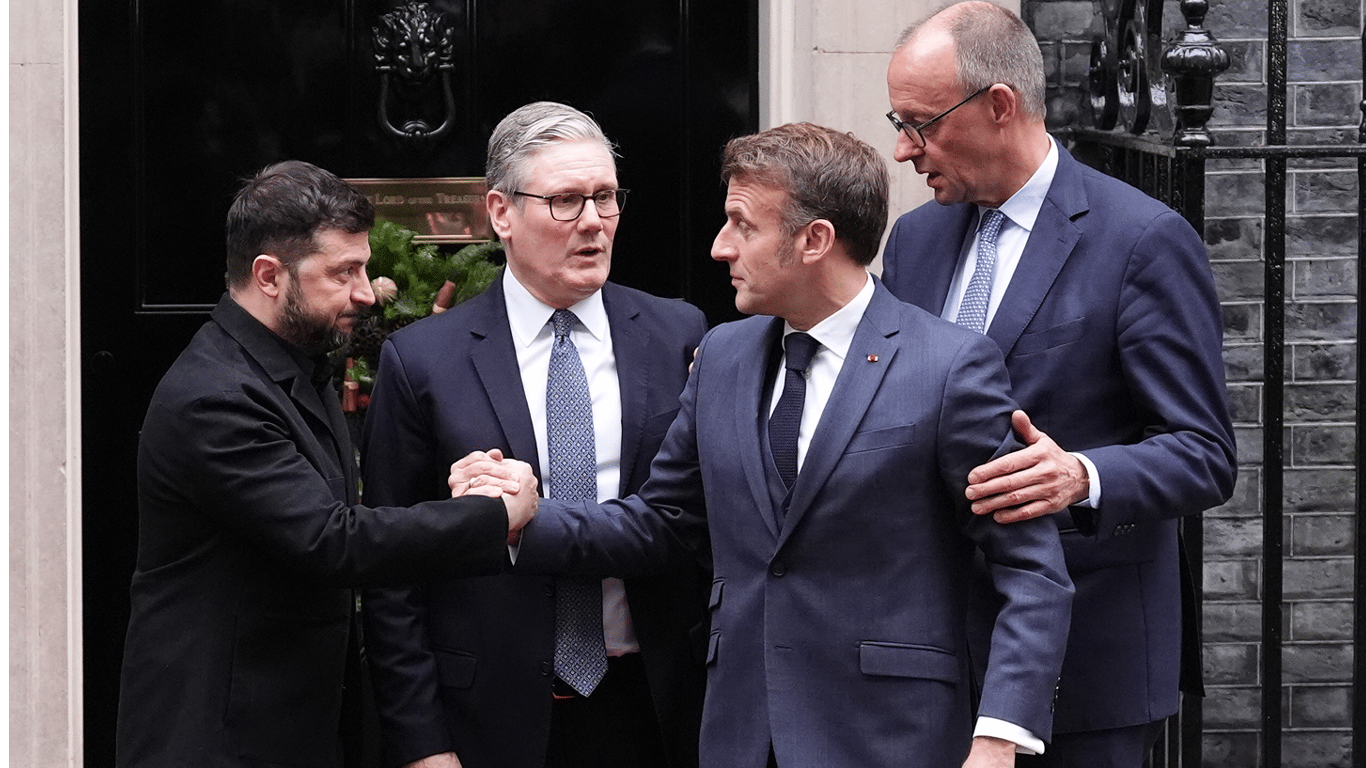
- Top Leaders from France, Britain, and Germany Plan Talks with Zelensky: Is a Peace Deal with Putin on the Horizon?
- War in Ukraine Set to Outlast World War I as Kremlin Signals Interest in Freezing the Conflict
- After Meeting Putin, Russian Oligarchs Pledge 220 Billion Rubles to Fund Ukraine War
- Lavrov Sends a Message to Trump: Russia Is Prepared to Use Ballistic Weapons
- Kremlin Gives Ukraine a Two-Month Ultimatum: Withdraw Troops or Face Consequences