Airlines Change Aircraft Before Departure: What Passengers Should Do.

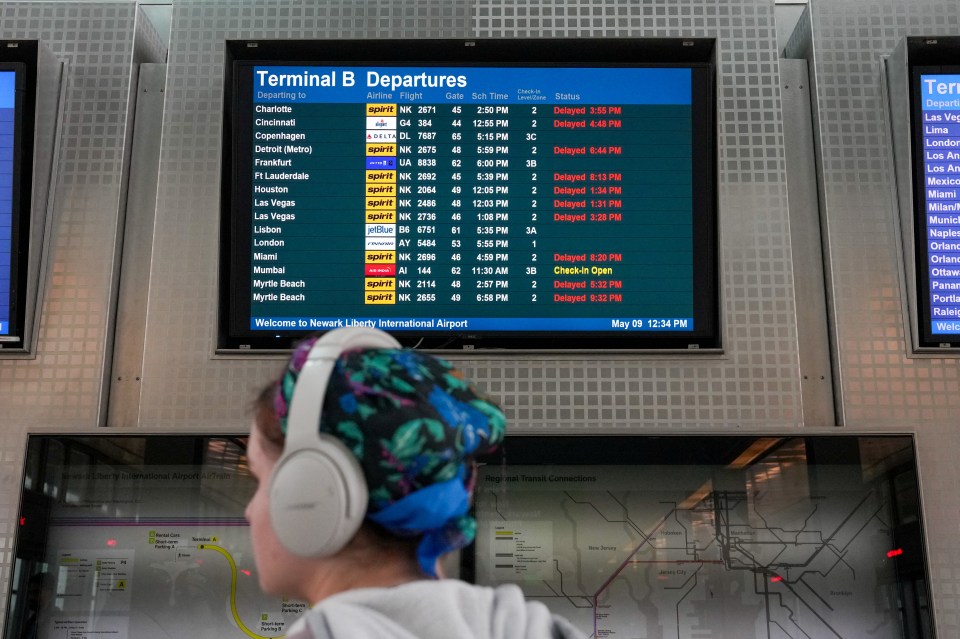
Problems with 'Aircraft Swaps'
According to The Sun: Thousands of passengers are facing issues related to 'aircraft swaps', which often lead to inconveniences.
British travelers booking seats on their flights discover that their seat gets changed, and sometimes even disappears at the last moment.
ReutersThe number of travelers facing issues onboard is on the rise.
According to information from AirAdvisor, approximately 140,000 flights in the UK experience 'equipment changes' annually, where the aircraft is switched immediately before departure.
This leads to the loss of reserved seats, downgrading, or even missing vacations due to overbooked flights when a smaller aircraft replaces a larger one.
'Aircraft swaps' are becoming increasingly common as airlines look to cut costs, resolve technical issues, or respond to delays.
Statistics on 'Aircraft Swaps'
According to AirAdvisor, one to five percent of passengers face aircraft changes 24-48 hours before departure.
During peak periods, this figure reaches five percent, especially for popular carriers like British Airways and Lufthansa.
Low-cost airlines like Ryanair and easyJet are not exceptions, but their issues are less significant as they do not operate aircraft of various sizes.
Many passengers believe that their ticket guarantees a specific aircraft or seat, but in reality, it only ensures a journey between two points in a specific class (e.g., economy class).
Passenger Rights
This is a legal gray area where many passengers are unaware of their rights.
Airlines are currently not obligated to inform passengers of changes to their seats or aircraft unless they are downgraded to a lower class.
This means many passengers do not receive warnings and are left in shock when they arrive for boarding.
"Aircraft swaps may sound like an internal resolution of the airline, but for passengers, it can mean losing money, losing comfort, and even losing vacations," noted Anton Rachenko, aviation expert.Alamy
"What many people do not realize is that while the ticket guarantees a journey in class, it does not guarantee a specific seat or aircraft," he adds.
Anton also pointed out that if you are downgraded during a flight, you are entitled to a partial refund of your ticket.
If you paid for a specific seat that 'disappears' due to a change in aircraft size, you may demand a refund of the amount paid.
If you are denied boarding due to using smaller aircraft, you are entitled to compensation under UK261.
According to UK261, if you are transferred to a lower class, you are entitled to a refund of 30 to 75 percent of the ticket price depending on the flight distance.
My tips: check your airline's app and customer account 24 hours before departure, as changes often appear there before notifications are sent.
 Getty
Getty
Document everything: from screenshots to receipts and boarding passes, as proof is crucial if you need to assert your rights.
If you are assigned an aircraft that you are uncomfortable with flying on, act quickly: many airlines are willing to rebook your flight if you explain your concerns.
Passengers who know their rights can turn an unpleasant surprise into a manageable inconvenience, whereas those who do not often find themselves in uncomfortable situations.
If you lose your paid seat, you can demand a refund for what you paid for it if it is no longer available.
And if you did not pay for a seat, airlines may reassign you in the same class without compensation.
If a smaller aircraft replaces a larger one, any passenger who is denied boarding due to overbooking is entitled to compensation of 250-600 euros (£216.74-£520.18) plus rebooking or a refund.
You likely wanted to fly on a specific aircraft, but you were reassigned to another. Although airlines are not obliged to change your booking, some may rebook it as a goodwill gesture, especially if you respond quickly.
Compensation Rules for Flights
Familiarize yourself with your rights in case of flight delay or cancellation, when you are entitled to compensation, and whether your travel insurance may cover the costs.
What are my rights in case of flight cancellation or delay?
According to UK legislation, airlines are obliged to provide compensation if your flight arrives at the destination more than three hours late.
If you are flying to or from the UK, your airline must offer you a refund or an alternative flight.
You can claim a refund for the portion of the ticket you have not used.
So, if your return flight ticket is canceled, you can get back the full price of the return ticket.
But if the journey is important, your airline must find you an alternative flight. This may even be with another airline.
When am I not entitled to compensation?
The airline is not required to pay you compensation if the flight is canceled due to reasons beyond their control, such as extreme weather conditions.
Disruptions caused by circumstances such as extreme weather, airport or air traffic worker strikes, or other 'extraordinary circumstances' do not qualify for compensation.
Some airlines may extend the definition of 'extraordinary circumstances', but you can challenge this with the regulator Civil Aviation Authority (CAA).
Will my insurance cover me if my flight is canceled?
If you can't get compensation directly from the airline, your travel insurance may cover you.
Policies vary, so you should check the details, but delays of eight to twelve hours usually entitle you to some amount from your insurance company.
Don't forget to get written confirmation of the delay from the airport, as your insurance company will require proof.
If your flight is completely canceled, you are unlikely to receive compensation through your insurance.
New EU rules also mean that Britons will receive less compensation in case of flight delays.
Getty
AirAdvisor advises travelers to keep track of all changes to flights before boarding. This will help avoid stress and disappointment during the journey.
It is important to be knowledgeable about your rights so that when facing issues with changes of aircraft or seats, you can fully utilize them. Knowing the key points related to compensation and passenger rights can significantly ease your journey.
Read also
- Paper Tickets Now Mandatory for Certain International Routes, Ukrzaliznytsia Warns Travelers
- A Hidden 1989 Inscription by Metro Builders at Kyiv’s Golden Gate Station: What Lies Behind the Wall
- Buses from Ukraine to Poland Suspended for 18 Months Due to Repairs at Shehyni-Medyka Border Crossing
- Suitcase delivery to parcel lockers across 8 EU countries launched by InPost – pricing revealed
- Bus Service to Poland via Shehyni Checkpoint to Halt for 18 Months Starting June 15, 2026
- Over 10 Odesa Beach Zones Certified and Ready for Summer Season