Soy in the U.S.: Why 77% of the Crop Goes for Feed, Not Food.

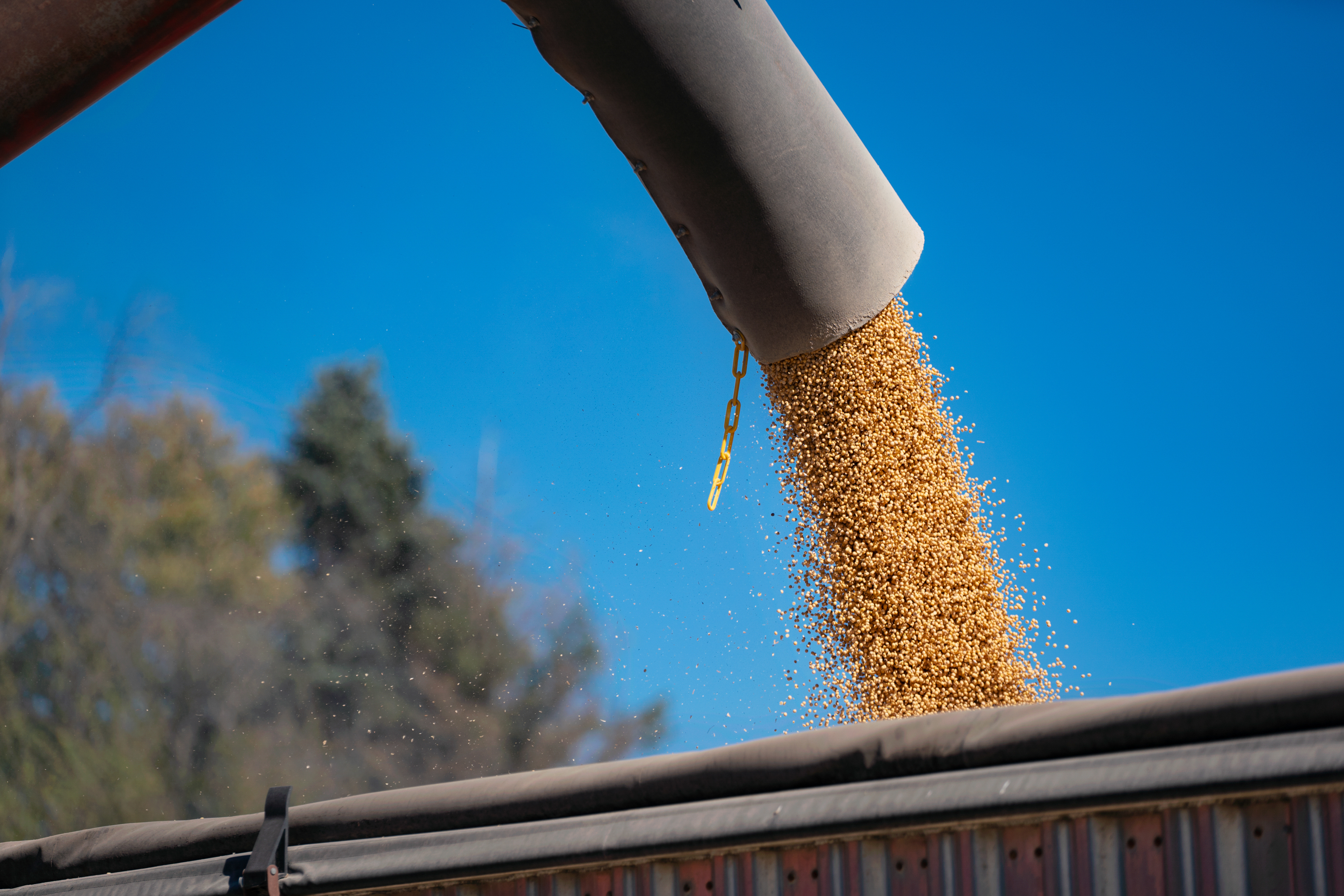
According to Vox: Americans have a strange relationship with soy, one of the most important and popular crops in the world.
Many of us associate soybeans — these protein-rich, bright yellow spheres — with vegetarian products like tofu, soy milk, and veggie patties, while another part of the population is not even aware of their origins. However, it should be noted that practically everyone consumes soy regularly, and if you are not a vegetarian, you probably consume more soy than those who avoid meat.
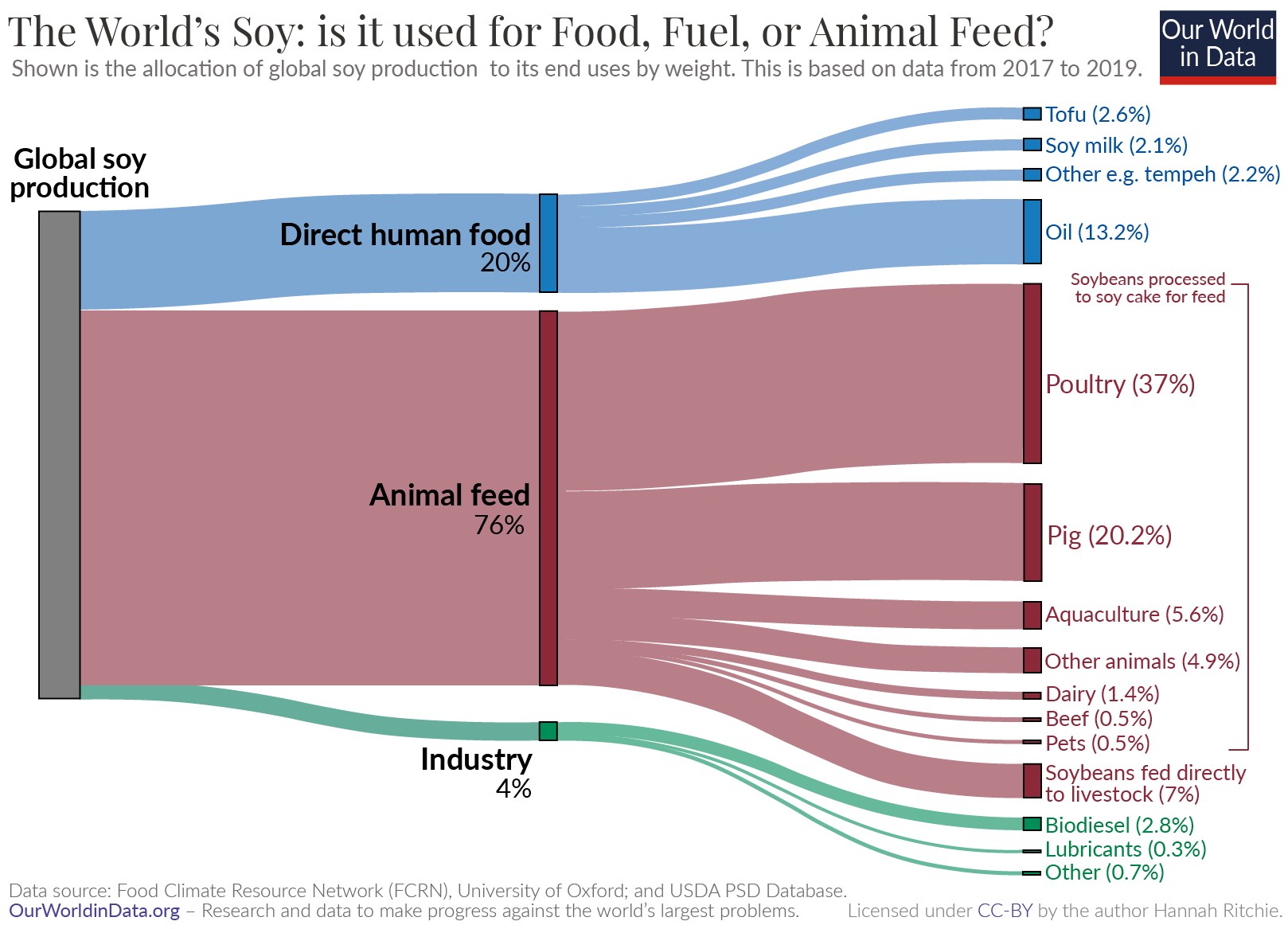
This is because soy is the invisible backbone of the modern meat diet. About 77 percent of the world's soy production is not grown for people, but for billions of chickens, pigs, and cows raised for meat, providing a primary source of protein for livestock.
Constant demand for meat explains why the U.S. produces so much soy. While for many years soy was primarily a crop of East Asia, today most of its cultivation is concentrated in America. As has been seen from recent headlines about the trade war, the U.S. ranks second in the world for soy production after Brazil, with soybeans being the country’s most important agricultural export. Over the last century, these humble beans have transformed into a symbol of American abundance alongside corn syrup and chicken nuggets.
The high demand for soy from various countries, along with concentrated production, gives it geopolitical significance, turning soy into the most traded agricultural commodity. China, once a leading producer of soy, has now become the largest importer, purchasing most of its soy from Brazil and the U.S., primarily to feed industrially raised pigs, chickens, and fish. It is important to note that in some years China purchases the largest volumes of American soy.
The situation in this economic game can change if diplomatic relations start to sour. For instance, when a leader of a major soybean-producing country begins a trade war without objective reasons, it adversely impacts the export sectors. This is exactly the situation American soybean farmers found themselves in. Beijing imposed high tariffs on American soy this year in response to President Donald Trump's aggressive tariffs, effectively destroying soy sales from the U.S. to China. The total value of American soybean exports for the first half of this year has dropped by nearly a quarter compared to 2024. According to recent data from the U.S. Department of Agriculture, Chinese traders have not ordered any tons of American soy from the current harvest year that started on September 1.
American soybean producers, watching as China buys record volumes of soy from Brazil and Argentina, displacing the U.S., are understandably outraged. The White House has hinted at plans to help farmers recoup losses, as was done during Trump’s first trade war in 2018.
The Economic Importance of Soybean Exports
Despite this, there may be less to this quarrel than meets the eye. Soybean exports are not actually critical for the U.S. — the entire agricultural sector constitutes less than 1 percent of our economy — although it is important for local economies in rural states. While Trump’s trade war is seen as senseless and destructive to the economy overall, the reasons why farmers, in particular, are likely to receive subsidies — at the expense of tariff revenues from all Americans — are political, not economic. By traditional logic, we fund agriculture because food production is critically important — after all, we need to eat — but there is no reason (aside from the political influence of farmers from Iowa) to consider exporting pig feed to China a national priority at the level of spending around 10 billion dollars.
Perhaps we shouldn’t be too concerned about the well-being of the soybean industry. As some experts argue, it will likely survive the difficulties. Moreover, soy should be viewed as a great technology capable of sustainably feeding the world’s eight billion people and more if it receives the right resources. The trade war is rather a side effect, but it could take us even further from this goal.
Why We Use Soy
There are sometimes confusing messages online that blame vegans for destroying tropical forests for soy production.
This may come as a surprise, but those messages are not true. Only about 13 percent of world soy production is processed into soy oil consumed by people — usually in processed foods like crackers, cookies, and sauces — and less than 6 percent is used to produce products that you might associate with veganism.
However, it’s not just that more soy is used for meat production than for human products. It is important that soy is used disproportionately and inefficiently for the production of meat products. We spend more land and calories feeding livestock soy than if we consumed this crop directly.
This has led to the rapid increase in meat consumption worldwide over the past few decades, exacerbating the clearing of some ecologically important areas, such as the Amazonian rainforest and Brazilian plains, for raising cattle and their feeds, including soy.
However, it's important to remember that as long as people eat animals, they need to feed them something. Soy, alongside corn, has become one of the most productive sources of protein in the world.
“Don’t blame the soy,” Timothy Searchinger, a senior researcher at Princeton University and a leading expert on the planetary consequences of agriculture, noted. “If it weren't for soy, and we were increasing meat consumption [and] feeding cattle lentils, we would need three times more land to feed that meat with those lentils, and we would all be complaining about lentils.”
In other words, soy is the least bad option for feeding livestock, but livestock themselves are not a good use of soy.
What Does the Trade War Mean for the Future of Soy?
The principle remains unchanged: people consume too much soy for inefficient purposes. However, this does not mean it is good that American farmers are struggling to sell their soy. Since soy is a global market, any soy that China does not buy from the U.S. can be sourced from South America. However, soy from South America is worse for the environment, as there is still significant land clearing for agriculture there.
“If production shifts from the U.S. to Latin America, we face increased carbon emissions and also losses in biodiversity,” noted Searchinger.
It is currently unknown whether the trade war will lead to significant changes in production favoring South America. The question remains: are soy prices in South America high enough to encourage farmers to expand production? However, at this moment, there is some increase in soy prices in Brazil amid a decrease in demand from China.
“I do not think it is an exaggeration to say that such tariffs could encourage more sowing and a change in land use in South America,” remarked Sexton. He also emphasized that the consequences of the trade war are likely to be temporary and unlikely to change the fundamental nature of the global soy market.
Consume Soy
Many global problems of the 21st century, from hunger to climate change and widespread cruelty to animals raised for food, could be resolved if people consumed more soy directly.
Soy crops are the best plant-based alternative to many nutrients found in meat. Even though soy has a reputation as a superfood, many people underestimate it. There is a misconception that consuming soy may be dangerous or 'feminizing' for men, but that is absolutely incorrect.
America needs to have higher ambitions for soy — to view it not just as feed for animals that are kept in terrible conditions, but as a technological treasure capable of improving global diets.
Agricultural innovations have already transformed soy from a niche of East Asia into a mass American commodity. The next stage of transformation should be even greater and worthy of our national pride: turning soy from animal feed back into food for humans.
This story was first published in the Processing Meat newsletter. Subscribe here!
Read also
- 501 Fallen Repatriated to Ukraine; Over 300 Died While in Captivity
- Ukraine Receives 522 Bodies in Its Largest-Ever Repatriation Operation
- Statehood Day Marked Across Ukraine with Prayer Services and Public Gatherings
- From Survival to Growth: How Education and Its People Are Reshaping Kharkiv
- 23 Children Rescued from Occupied Territories: A New Win for Ukraine’s Bring Kids Back UA Initiative
- How Adaptive CrossFit Helps a 3rd Brigade Veteran Master His Prosthetic