India's Strategic Pivot: Cutting Russian Oil Imports While Sealing a Major EU Trade Deal.

A Landmark EU Trade Agreement
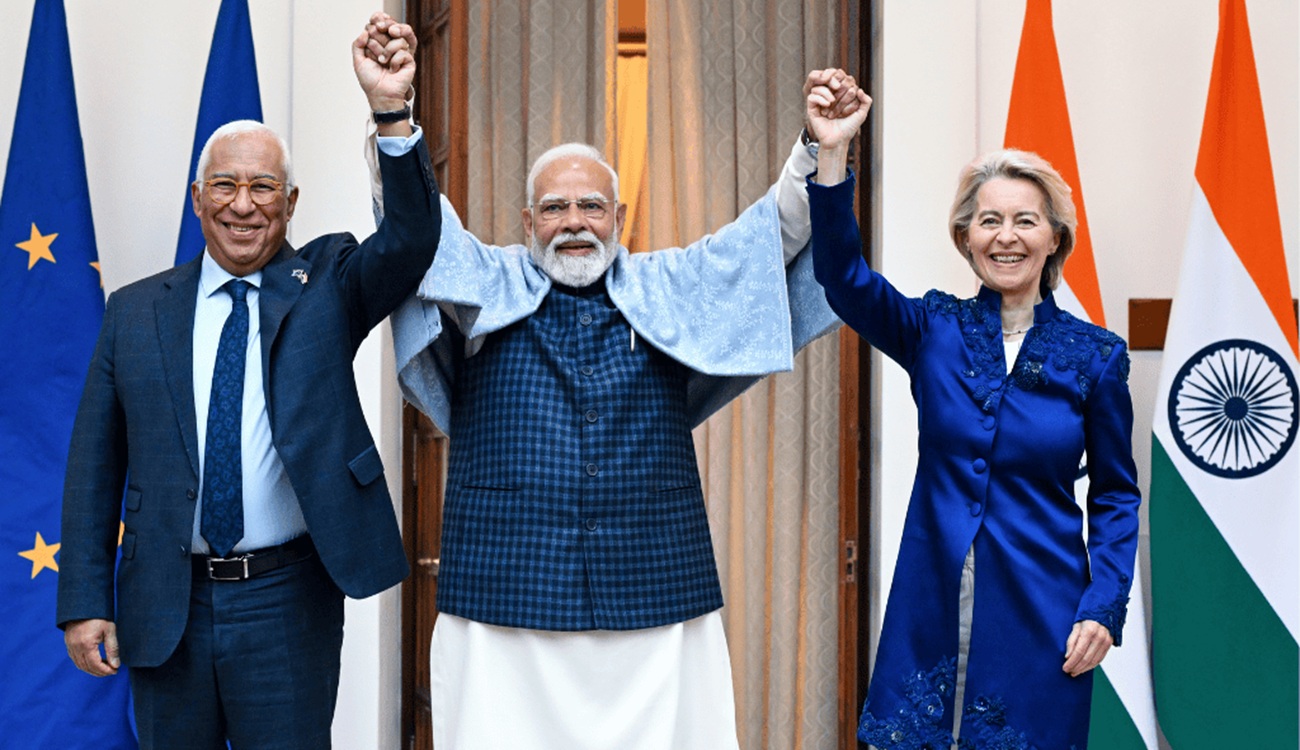
According to UATV: India has signed a major free trade agreement with the European Union, marking a significant economic milestone after nearly two decades of negotiations. This deal is expected to unlock substantial new trade opportunities, with forecasts suggesting European exports to India could double by 2032. Annual trade in goods and services between India and the EU already exceeds €180 billion, highlighting the scale of the existing relationship. This agreement signals a deepening of economic ties between two of the world's largest markets.
A key driver for the projected export growth is the elimination or reduction of tariffs on 97% of goods. This move is set to substantially improve economic relations, fostering development within the Indian economy. Leaders from both sides have emphasized the strategic importance of this pact.
Indian Prime Minister Narendra Modi stated: 'This agreement will open a multitude of opportunities for 1.4 billion Indians and millions of people across Europe.'
Shifting Oil Imports and Global Trade Implications
Concurrently, India is reducing its purchases of Russian crude oil, with imports falling from 1.8 million barrels per day to 1.3 million barrels per day. This shift has led to a sharp increase in the number of tankers idling off India's coast, as noted by expert Scott Bessent, with the volume of Russian oil stored on tankers reaching approximately 140 million barrels. Such a recalibration of energy imports, sourced from 41 countries, has the potential to influence global oil trade dynamics and pricing.
The dual moves of cutting Russian oil imports and finalizing the EU deal underscore a strategic reorientation in India's foreign and economic policy. They demonstrate a clear push for greater diversification of trade partners, which can reduce dependency on individual suppliers. While strengthening India's economic position globally, these changes may also introduce new challenges in international trade and energy security, reflecting the complex balancing act for major emerging economies.
Read also
- The Vanishing Act of Foreign Firms at Russia’s Premier Economic Forum: How the SPIEF Has Transformed
- India Agrees to Halt Russian Oil Purchases in Deal Struck by Trump and Modi
- A New Trade Pact Reshapes a Market of Two Billion: The EU-India Free Trade Agreement
- Drone Attack on Putin’s Residence: What is Known About the Kremlin's Fake and Moscow's True Goals
- China calls on conflict parties to refrain from escalation: what was said in Beijing
- India Deeply Concerned About Attack on Putin's Residence: What Modi Said