Russia's First Foreign Minister Kozirev: Negotiations with Moscow Are Merely a Smokescreen.

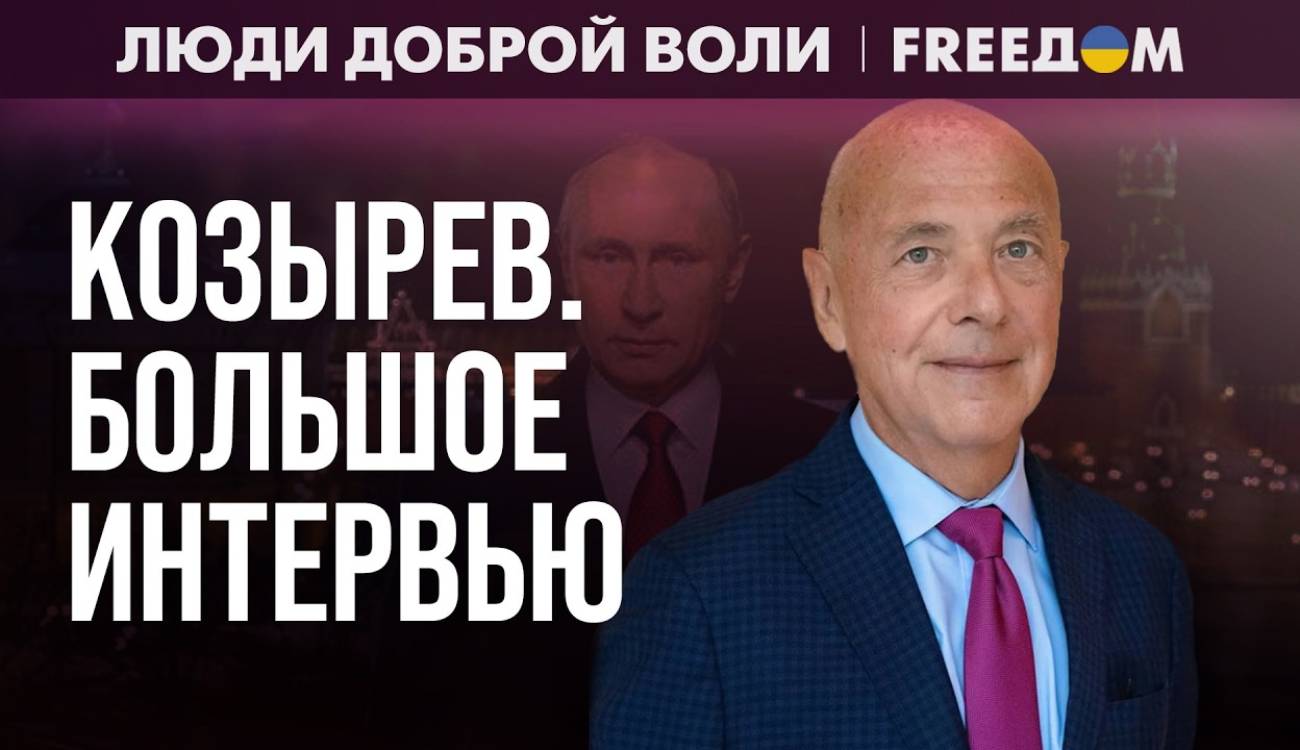
Andrei Kozyrev on International Security
According to UATV: Andrei Kozyrev, Russia's first foreign minister, analyzes critical issues of international security, nuclear disarmament, and the reasons for the failure of democratic transformation in Russia. He argues that a nuclear power, which has obligations to respect Ukraine's territorial integrity, has no right to attack a non-nuclear state. His remarks underscore the vital importance of adhering to international norms and agreements in contemporary conflicts, a principle now under severe strain.
Kozyrev's Background and Views
Born in Belgium in 1951, Andrei Kozyrev graduated from the Moscow State Institute of International Relations (MGIMO) in 1974 with a degree in international relations. During the 1990s, he served on Russia's Security Council and was twice elected to the State Duma. Since 2012, Kozyrev has resided in Miami and is fluent in English, French, and Portuguese. He emphasizes that negotiations between countries yield no results, dismissing them as a 'smokescreen' for continued aggression.
“Negotiations will lead nowhere. Hitler needed to be destroyed, driven into his bunker, and forced to surrender.”
— Andrei Kozyrev
He further states that 'an aggressor can only be forced to stop an invasion, or they must sober up on their own.' He links this stance to nuclear disarmament, noting that Russia's recent suspension of participation in the New START Treaty (START III) signals a crisis in the international security system.
Kozyrev also reflects on the causes of Russia's democratic deficit. He observes that Boris Yeltsin could not withstand pressure from the Russian security services and feared dismantling the old system. In this context, the Budapest Memorandum, which guaranteed Ukraine's security in exchange for giving up nuclear weapons, remains critically relevant. Kozyrev's analysis of international security and the dynamics of negotiation highlights the complexity of modern political realities and the profound challenges facing the world.
Andrei Kozyrev's comments point to deep-seated problems within the international security framework, particularly in light of the Russo-Ukrainian war. His critical view of negotiations as a 'smokescreen' reflects a deep skepticism toward diplomatic efforts in the face of ongoing aggression. This perspective illustrates how historical lessons, like those from the Budapest Memorandum, remain acutely pertinent, shaping perceptions of international commitments and security guarantees today.
Read also
- Russia Shifts from Fuel Exporter to Importer Amid War, Says Zelensky
- Russia has already lost geopolitically: Kovalenko on raw material dependence on China
- Russia breaks military agreements with 11 NATO countries: what this means
- Kostiuk explained why she shook hands with former Russian player Kasatkina
- Kostiuk shook hands with former Russian player Kasatkina after the match
- There was no choice. The tennis player Kasatkina explained why she renounced her Russian citizenship