U.S. Prepares to Deploy a Second Carrier Strike Group to the Middle East.

Pentagon Readies Carrier Strike Group
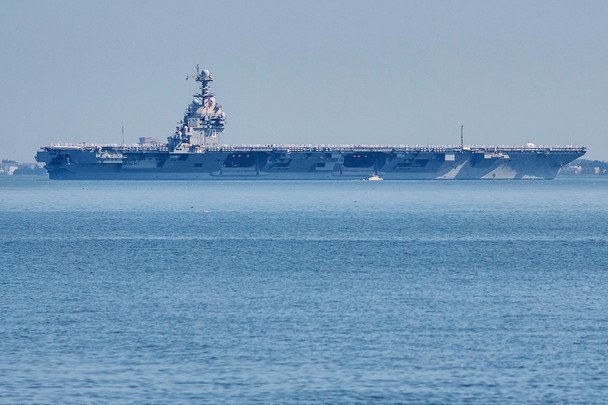
According to TSN.ua: The Pentagon is preparing a second aircraft carrier strike group for deployment to the Middle East, as tensions rise over a potential strike against Iran. U.S. President Donald Trump is considering sending the USS Gerald R. Ford to the region, signaling a readiness for military action. This move underscores the escalating situation and Washington's willingness to project power.
According to reports, the Pentagon has ordered the second carrier strike group to prepare for Middle East deployment. The USS Gerald R. Ford will join a strike group already led by the USS Abraham Lincoln. Notably, the crew of the USS Gerald R. Ford will not be able to return home until late April or early May at the earliest, indicating the extended duration of their mission. This development occurs amidst heightened regional instability and concerns over Iran's nuclear program.
Current U.S. Military Footprint
Currently, the United States maintains approximately 30,000 service members within the U.S. Central Command's area of responsibility. At present, three active aircraft carriers are positioned outside the Middle East:
- USS George Washington in Japan
- USS Abraham Lincoln in the Indo-Pacific Command zone
- USS Gerald R. Ford in the Southern Command zone
It is worth noting that the USS Gerald R. Ford is the world's largest aircraft carrier, measuring over 335 meters in length.
The crew of the USS Gerald R. Ford had initially hoped to return to base in early March, but their deployment has now been extended due to the current international situation. These events highlight the growing U.S. military presence in the region and a posture of readiness to respond to threats.
Shifts in the deployment of American forces to the Middle East point to an escalation of regional tensions, which could impact the global political landscape. The high likelihood of military action against Iran underscores the critical need for diplomacy and international cooperation to prevent conflict. Given the substantial U.S. military presence, the situation remains under close watch, and further steps could have significant consequences for regional stability.
Read also
- Trump threatens 100% tariff on French wine unless digital tax on US firms is scrapped
- Peace Deal Reached Between the U.S. and Iran: Europe Signals Readiness to Lift Sanctions
- Historic U.S.-Iran Deal Announced: What the June 19 Memorandum Entails
- Historic U.S.-Iran Agreement Reached: Key Details of the Signed Memorandum
- Trump and Putin Hold 55-Minute Call: Key Topics Discussed on the Ukraine War
- A U.S.-Iran Peace Deal Could Be Signed Within Hours