




Trump's Negotiations with Putin: What Was Actually Discussed in the Kremlin.

Trump and Putin during negotiations

According to ТСН: Perhaps in 2026. The deadline for nominations is January 31. Therefore, it is unlikely that the Trump administration will be able to secure Putin's consent to the first, but very important step, which precedes any 'peaceful' initiatives – a ceasefire. This concerns both the front and stopping rocket and drone attacks across Ukraine. The visit of Trump's special representative Steve Witkoff and Trump's son-in-law Jared Kushner to Moscow on December 2 vividly confirmed this.

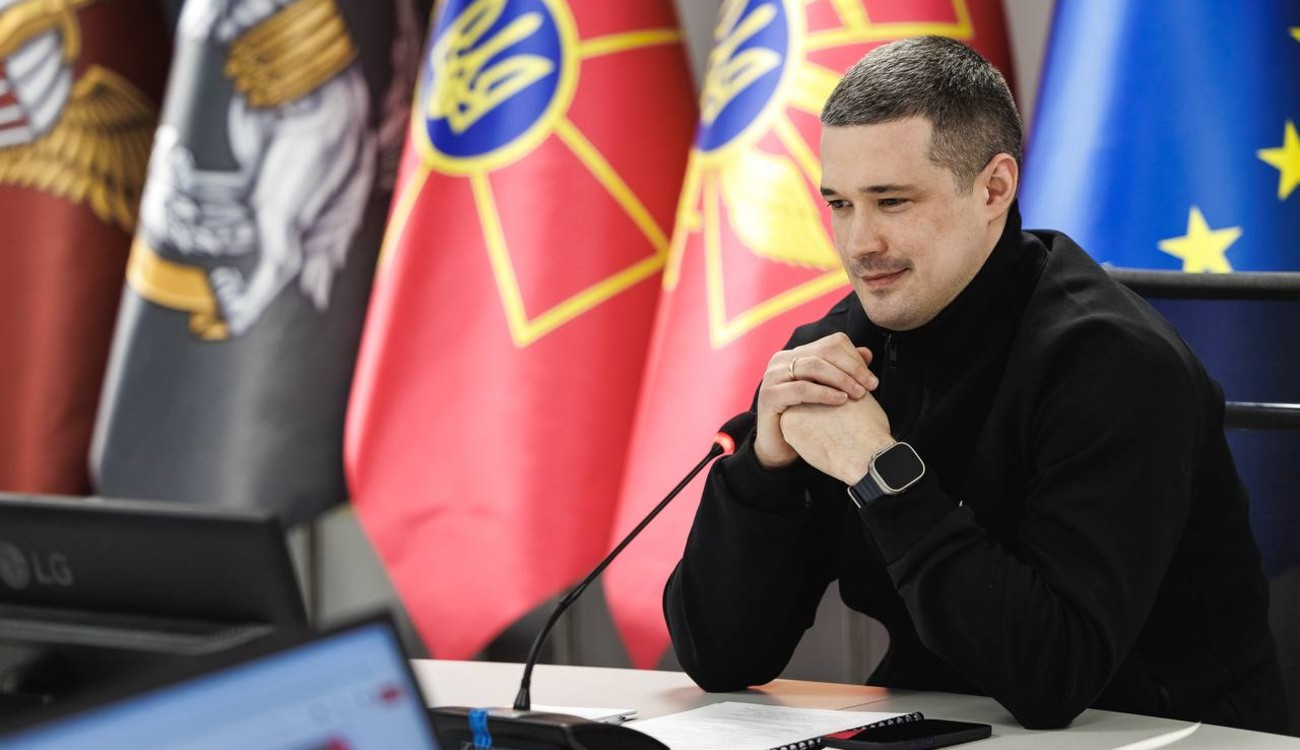
The talks, which took place behind closed doors in the Kremlin, lasted more than five hours. Trump once joked that he does not understand what Witkoff could talk about with Putin for so long. He made this statement during a speech in the Israeli parliament in mid-October, announcing the progress of an agreement on a ceasefire in the Gaza Strip. Witkoff and Kushner were also working on a peace agreement between Israel and Hamas. However, the real settlement remained on paper.

Putin was two and a half hours late for the meeting with Witkoff and Kushner, spending this time threatening Europe with a larger war, which he said 'will be very quick' (presumably hinting at the possible use of nuclear weapons). On December 1, in military uniform, Putin announced the need to 'create a security zone' along the northern border with Ukraine, clearly supporting the group around Trump that is pushing for a quick deal with Russia to strengthen economic ties with Moscow.

Europe understands that Putin has no intention of stopping the war, and that negotiations with the U.S. are needed for him to buy time and weaken Ukraine's support from allies. Does the Trump administration realize this? What did Witkoff and Kushner's visit to Moscow signify?

The New Negotiator: Why Trump Involved Kushner

During a speech in the Israeli parliament in mid-October, discussing his son-in-law Kushner's role in achieving a ceasefire agreement in the Gaza Strip, Trump noted:

‘From time to time we need such a brain. We always invite Jared when we want to make a deal.’

As Trump’s senior advisor, Jared Kushner was involved in the development of the Abraham Accords – a series of agreements to normalize relations between Israel and Arab countries. He, along with his wife Ivanka Trump, was present at the opening ceremony of the U.S. embassy in Jerusalem in May 2018. Thus, Kushner can be considered close to Trump, although he does not currently hold any official positions.

It is difficult to call Kushner and Witkoff real experts on Russia and the region. The White House retained Witkoff among the main negotiators with Moscow after a leak of the transcript of his conversation with Kremlin aide Yuri Ushakov. TCH.ua has already reported how Witkoff translated through Ushakov 'the deepest respect for Putin' and provided recommendations on how Putin should communicate better with Trump.

The Kremlin did not view the strengthening of Witkoff by Trump’s son-in-law very positively.

  • First, Putin was two and a half hours late for the meeting, asking if the American guests enjoyed the walk around Moscow.
  • Second, their negotiations lasted more than five hours. Perhaps Kushner was lectured by Putin on Rurik and Russia’s 'special' history.
  • Third, following the meeting, Yuri Ushakov stated that 'there is no compromise version – there are American proposals, part of which is acceptable and part is not.'

Threats of an Even Greater War: Putin Will Not Stop

Amid Witkoff's sixth visit to Russia, this time with Kushner, The Wall Street Journal reports a growing crisis of trust between the U.S. and its European NATO allies. After a leak of the transcript of Witkoff’s phone conversation with Ushakov, the White House neither denied the information nor disputed the validity of the 'peace' plan with 28 points – a list of demands from Russia regarding Ukraine’s capitulation.

The U.S. positions itself as a mediator in the negotiations between Kyiv and Moscow, disregarding international law. Experts note that America is beginning to act as a mediator between Russia and NATO, as if the U.S. no longer considers itself a full member of the Alliance. The Kremlin, in its 'peace' proposals, demands that Ukraine exclude the drive to NATO from its Constitution and that the Alliance does not accept Ukraine.

The worst part of Witkoff and Kushner's trip to Moscow is Washington’s silence regarding Putin’s public threats about readiness for war in Europe 'right now' and the expansion of Russian attacks on Ukrainian ports and allied vessels that support Kyiv.

‘The most radical solution is to cut off Ukraine from the sea, then 'piracy' (as Putin calls his attacks on Russian tankers) will become fundamentally impossible,

Europe's Position: U.S. Considers 'Territorial' Issues Key

After five hours of negotiations between Putin, Witkoff, and Kushner in the Kremlin, U.S. Secretary of State Marco Rubio noted that the main problem why Ukraine and Russia cannot reach an agreement is 'a territory measuring 30-50 km and 20% of the Donetsk region, which remains under Ukrainian control.' Although Rubio understands that any territorial concessions from Ukraine, as well as U.S. recognition of Russian-occupied territories, may create a dangerous international precedent that will not stop Russia.

According to NBC News, citing a Russian official, Moscow will not agree to a compromise regarding three points of the peace agreement: territorial concessions from Ukraine, limiting the number of the Armed Forces of Ukraine, and recognition by the U.S. and Europe (legal, as Putin has already stated) of occupied Ukrainian territories as Russian. CNN also added to these demands 'Ukraine's aspiration to join NATO.'

During a meeting in Brussels on December 3, Norwegian Foreign Minister Espen Barth Eide stated that Europe will not accept any new 'Yalta'. Finnish President Alexander Stubb emphasized that 'today we are closer to peace than we were yesterday,' and the coming days will confirm whether the negotiations will yield any results. However, according to him, it is unlikely that the conditions for a just peace will be fulfilled.

Polish Foreign Minister Radoslaw Sikorski stressed that the EU's decision on stable funding for Kyiv in the coming years is crucial for the future of the war between Russia and Ukraine. This underscores that on December 2, Trump announced that the U.S. 'will no longer participate in the war from a financial standpoint,' also repeating the fake that his predecessor Biden allegedly provided Ukraine with $350 billion in cash.

‘We are trying to settle this. It’s a tough situation. What chaos… I have to get a Nobel Prize for every war (settlement), but I don't want to be greedy,’

European Commission President Ursula von der Leyen noted that there are two options for financing Ukraine for the years 2026-2027. The first is a 'reparative loan' of 140 billion euros secured by frozen assets of the Central Bank of Russia. The second is EU borrowing, using the EU budget to raise funds in the capital markets. Thus, European allies want to help Ukraine not only cover its budget deficit but also allocate additional funds for the purchase of weapons, including American ones.

Donald Trump previously stated that Europe buys weapons for Ukraine from the U.S. through the PURL mechanism coordinated by NATO. However, the question remains whether changes in this decision will arise if the White House finally understands that a 'peaceful' agreement with Russia cannot be achieved merely through pressure on Ukraine. Thanks to the Western press, there have been recent reports that the U.S. may reactivate its main leverage of pressure on both Kyiv and European partners by blocking the exchange of intelligence data.


Read also

Advertising